New Delhi: Khadi and Village Industries continue to support rural employment, women’s economic empowerment and sustainable production in India, with the government expanding artisan support, product innovation and efforts to improve the sector’s international reach.
It highlighted the role of the Khadi and Village Industries Commission (KVIC) in strengthening traditional livelihoods through skill development, improved production facilities, marketing support and government employment-generation schemes.
The sector combines traditional craftsmanship with decentralised production, creating livelihood opportunities in rural areas while supporting the broader vision of an Atmanirbhar Bharat.
Women Make Up Around 80% of Khadi Artisans
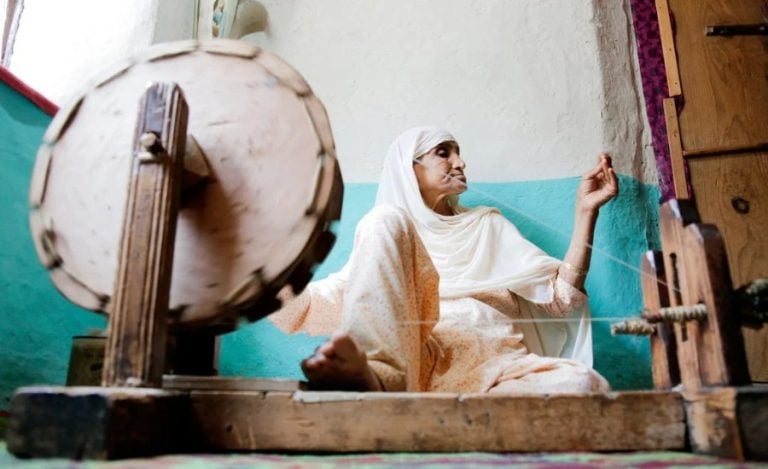
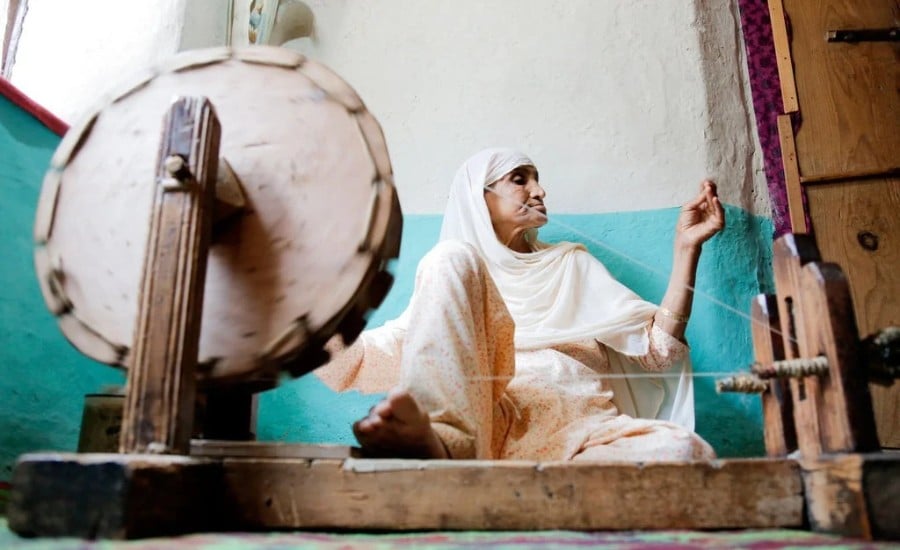
Women account for approximately 80% of the nearly half a million Khadi artisans in the country.
Read Also: KVIC Turns Traditional Skills Into Rural Businesses, 2.46 Lakh Bee Boxes Distributed Since 2017
Women’s participation also extends to several Village Industries initiatives, including:
- Agarbatti industry: Creating opportunities in incense-stick production.
- Handmade paper: Supporting traditional paper-making activities.
- Honey Mission: Promoting livelihoods linked to honey production.
- Service industries: Providing opportunities across local service-based enterprises.
These activities contribute to women’s economic participation and provide opportunities to build sustainable livelihoods.
Khadi Expands Beyond Traditional Clothing
Khadi has increasingly entered contemporary fashion and lifestyle markets, with products ranging from designer saris and bridal wear to shirts, trousers and denim.
The Centre of Excellence for Khadi at the National Institute of Fashion Technology (NIFT), Delhi, has developed 2,129 Khadi design collections across multiple categories.
Other initiatives highlighted in the release include:
- Navyug Khadi: A collection featuring 710 new products.
- Svadha: A wellness and yoga wear collection.
- Product diversification: Expanding Khadi’s appeal among younger consumers and contemporary fashion markets.
The initiatives aim to retain Khadi’s traditional identity while adapting its products to changing consumer preferences.
Government Schemes Support Artisan Incomes
The government supports employment generation in the Khadi and Village Industries sector through schemes such as Khadi Vikas Yojana, Gramodyog Vikas Yojana and the Prime Minister’s Employment Generation Programme (PMEGP).
The support measures include:
- Financial assistance and working capital facilitation.
- Quality raw materials, training and toolkits.
- Wage support and improved working tools.
- Marketing assistance and promotion of digital payments.
- Social security measures for artisans.
The release also cited an evaluation study by the Entrepreneurship Development Institute of India (EDII), Ahmedabad, which found that more than 75% of artisans across the schemes experienced a measurable increase in income following the interventions.
The government has also highlighted the enhancement of spinning and weaving wages from April 2025 as part of its efforts to improve artisan earnings.
Export Push and GI Recognition Strengthen Market Potential
With international demand growing for handmade, traceable and environmentally responsible products, Khadi and other handmade goods offer opportunities for expanding India’s presence in overseas markets.
KVIC has registered as an Export Promotion Council on the Trade Portal of the Consulate General of India in New York and initiated efforts to increase international exposure for Khadi institutions.
The Geographical Indication (GI) tag was awarded to Ponduru Khadi, which is associated with distinctive cotton and traditional spinning and weaving practices.
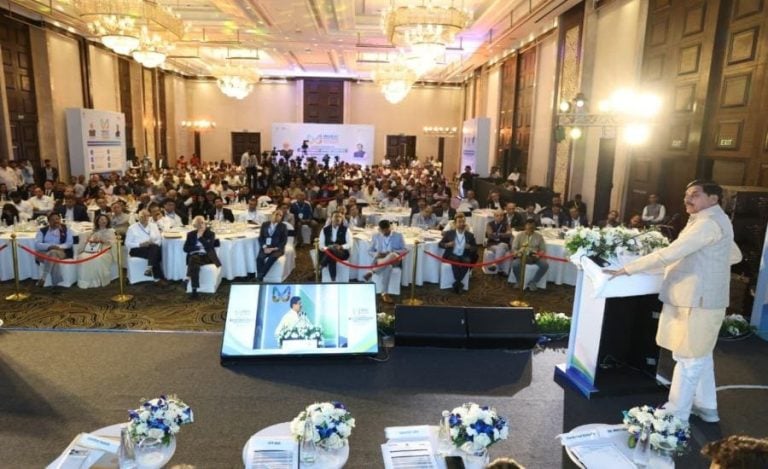
Ponduru Khadi, Bharat Kasturi Cotton, Bengal Muslin and naturally coloured cotton products were showcased at the inaugural BRICS MSME Forum in Agra.
Modernisation Targets Production and Quality
KVIC is also pursuing technology upgrades to strengthen production capacity and improve the quality of Khadi products.
The Central Sliver Plants at Chittadurga in Karnataka and Kuttur in Kerala have completed modernisation and become operational, according to the release.
The Chittadurga plant uses solar energy to meet 50% of its energy requirements, while wind power is being explored as an additional source of renewable energy.
Technology upgrades for Khadi institutions and technology-based Common Facility Centres are also proposed to strengthen Village Industries clusters.
Khadi’s Role in Sustainable Production
Khadi’s reliance on natural fibres, hand spinning and hand weaving forms part of its environmental sustainability proposition. Its decentralised production model also supports local employment and traditional skills.
KVIC, in collaboration with the Indian Council of Agricultural Research–Central Institute for Research on Cotton Technology (ICAR-CIRCOT), is exploring the development of naturally coloured cotton varieties.
The initiative aims to reduce water consumption, chemical pollution and energy use associated with conventional dyeing processes. It also highlighted the potential for recycling and upcycling through hand spinning, including the use of fibres and filaments that may not be suitable for mechanised spinning.
These efforts align with the United Nations Sustainable Development Goals on poverty reduction, decent work, responsible consumption and production, and climate action.
From its historical association with the Swadeshi movement to its current role in fashion, entrepreneurship and sustainable production, Khadi continues to connect traditional skills with emerging market opportunities.
Read Also: Lijjat Papad’s 45,000 Women Artisans Highlighted as KVIC Pushes Local-to-Global Model