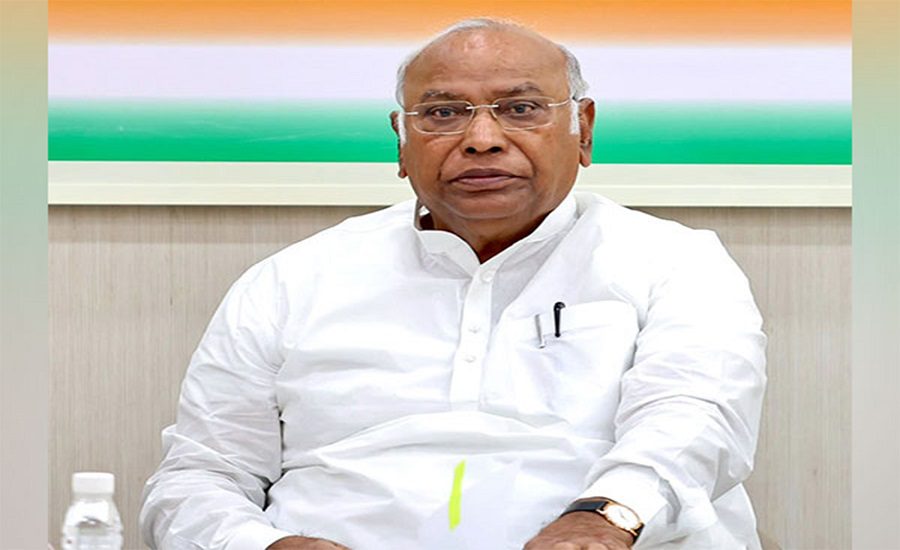
New Delhi: Mallikarjun Kharge has written to Narendra Modi seeking direct intervention to ensure full implementation of last year’s Supreme Court of India judgment granting major service benefits to non-IPS cadre officers in the Central Armed Police Forces (CAPFs).
The letter comes amid unconfirmed reports that the Union Government may introduce legislation to codify deputation of IPS officers in CAPFs — a move that has triggered fresh concern among non-IPS Group A cadre officers who have long fought for parity in promotions and service conditions.
Kharge has warned that any statutory intervention that weakens the Supreme Court verdict could undermine constitutional propriety and demoralise officers who form a crucial part of India’s internal security structure.
Kharge’s Letter to Prime Minister Modi
In his letter dated March 16, Kharge said CAPF officers had approached the court after years of facing difficulties in service conditions and promotion structures.
He noted that after prolonged litigation, the Supreme Court had finally recognised several rights of cadre officers, including granting them Organised Group ‘A’ Service (OGAS) status.
Kharge urged the Prime Minister to ensure that the judgment is implemented fully and in letter and spirit.
He also referred to reports suggesting possible legislative intervention and expressed concern that such a move could dilute the judicial gains achieved by CAPF cadre officers.
Read also: UPSC Tightens DGP Appointment Rules, Makes Supreme Court Nod Mandatory for Delay by States
According to Kharge:
“Such a move would not only undermine the rule of law and constitutional propriety but would also demoralize a cadre that serves as a pillar of our national security.”
At present, however, the government has made no formal announcement regarding introduction of any such bill in Parliament.
What the Supreme Court Had Ruled
In its 2024 judgment, the Supreme Court delivered a major ruling in favour of non-IPS Group A officers serving in CAPFs.
The judgment addressed long-standing grievances over:
• Promotion stagnation
• Service parity
• Cadre management
• Deputation dominance by IPS officers
The Court directed reduction in IPS deputation in CAPFs and also ordered a time-bound cadre review of recruitment and service rules.
A key outcome of the judgment was recognition of CAPF cadre officers as part of Organised Group ‘A’ Services.
This status carries significance because it affects:
• Promotion avenues
• Career progression
• Service parity with other central services
• Eligibility for senior administrative positions
Centre’s Review Petition Was Dismissed
The Ministry of Home Affairs had challenged the May 23, 2024 judgment through a review petition.
However, that petition was later dismissed, strengthening the legal position of non-IPS cadre officers.
The dismissal meant that the original directions of the Supreme Court remained fully effective.
Why CAPF Cadre Officers Continue to Protest IPS Deputation
The issue has remained sensitive because senior positions in CAPFs continue to have large quotas reserved for IPS officers on deputation.
Currently:
• 25% of DIG posts are reserved for IPS officers
• 50% of IG posts are reserved for IPS officers
At higher levels, IPS dominance becomes even more visible.
In practice:
• DIG rank and above include both IPS and cadre officers
• Many cadre officers retire as DIGs
• Some reach IG rank
• Very few reach Additional Director General level
The top post — Director General of CAPFs — continues to be held exclusively by IPS officers.
This has remained one of the biggest grievances of cadre associations.
Promotion Stagnation Remains Core Issue
One of the strongest examples of stagnation surfaced again this week when Rahul Gandhi met Assistant Commandant Ajay Malik, a Central Reserve Police Force officer injured in an IED blast during an anti-Naxal operation in Jharkhand.
Malik joined CRPF in 2011 as Assistant Commandant.
Even after 15 years of service, he remains in the same rank.
This contrasts sharply with IPS officers of the 2011 batch, many of whom have already reached DIG rank.
This disparity had also been highlighted before the Supreme Court by non-IPS Group A officers.
Ajay Malik Case Revives Service Debate
Ajay Malik lost his leg in an IED blast during an anti-Naxal operation in Jharkhand on March 1.
His case has become symbolic of a wider frustration among cadre officers:
• Long service without timely promotion
• High-risk field postings
• Slower progression compared to IPS officers
The issue has gained political attention because it reflects the larger service imbalance under debate.
Political Voices Join the Debate
Apart from Kharge, Sanjay Singh also raised the matter in the Rajya Sabha.
This indicates that the issue is now moving beyond cadre associations into mainstream parliamentary discussion.
Associations Oppose Continued IPS Dominance
Retired Group A cadre associations and serving CAPF associations have repeatedly argued that deputation-heavy leadership blocks natural promotions.
Their main concerns include:
• Senior posts occupied through IPS deputation
• Slow cadre promotions
• Unequal service conditions compared with other Group A services
• Limited access to leadership positions
They argue that without structural correction, Supreme Court gains may remain incomplete.
Why Reports of a New Bill Have Triggered Concern
The speculation over a possible bill has become sensitive because officers fear it may legally preserve IPS deputation patterns despite judicial directions.
Even though no bill has yet been officially announced, the possibility alone has revived old tensions.
If legislation is introduced, it may reopen the larger debate over:
• Operational leadership
• Cadre autonomy
• Internal security administration
• Federal control over central forces
CAPF Leadership Debate Far From Over
The conflict between IPS deputation and cadre promotion has existed for decades across forces such as:
• Central Reserve Police Force
• Border Security Force
• Indo-Tibetan Border Police
• Central Industrial Security Force
• Sashastra Seema Bal
The Supreme Court verdict had temporarily shifted momentum toward cadre officers.
Kharge’s letter suggests that political scrutiny over implementation is now intensifying.