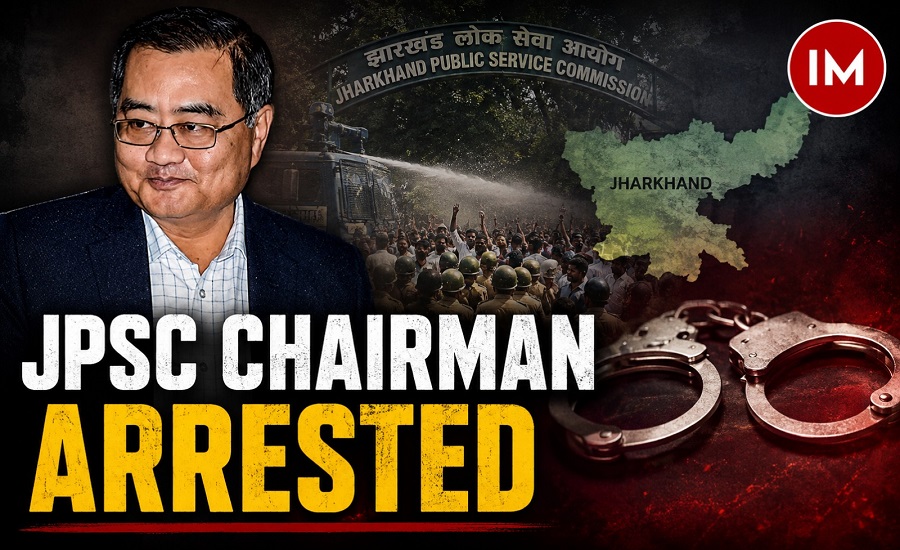
Ranchi: Former Jharkhand Public Service Commission (JPSC) chairman Lalbiaktluanga Khiangte (1988 batch), popularly known as L Khiangte, has been arrested by the state CID in connection with alleged irregularities surrounding the commission’s 14th Civil Services Examination.
The arrest comes amid intense protests by students and job aspirants in Jharkhand, who have been demanding an impartial probe into alleged examination irregularities, including claims of question paper leaks and manipulation.
Khiangte, a retired 1988-batch IAS officer of the Jharkhand cadre, had previously served as the Chief Secretary of Jharkhand before taking charge as JPSC chairman.
His arrest has brought renewed attention to the functioning of the state’s premier recruitment body and the circumstances surrounding the empanelment of TDPL, a company that was reportedly blacklisted, for conducting the 14th Civil Services Examination.
Why Was L Khiangte Questioned?
The former JPSC chairman had been facing questions from the state CID over the selection and empanelment of TDPL for conducting the examination.
Investigators reportedly questioned Khiangte about the circumstances under which the company was brought into the examination process despite concerns surrounding its status.
Before his arrest, he underwent several rounds of questioning by the CID. The interrogation reportedly continued for several hours, with investigators examining his role and the decision-making process related to the examination.
After multiple rounds of questioning, the CID took him into custody on August 10, 2026.
Khiangte Resigned as JPSC Chairman in July
The arrest comes less than three weeks after Khiangte resigned as chairman of the JPSC.
He stepped down from the post on July 22, 2026, following a CID raid at the commission’s office.
At the time, Khiangte had indicated that his resignation was aimed at ensuring that the investigation into the allegations could proceed independently and fairly.
His resignation, however, did not bring an end to the investigation. The CID continued examining the alleged irregularities surrounding the examination process and subsequently questioned him repeatedly.
What Is the TDPL Controversy?
At the centre of the investigation is the alleged empanelment of TDPL, a company reportedly facing blacklisting, for conducting the JPSC 14th Civil Services Examination.
Questions have been raised over how the company was selected and whether the prescribed procedures were followed.
The issue became particularly significant as allegations of irregularities in government recruitment examinations began triggering protests among students and aspirants across Jharkhand.
The CID investigation is now examining the decision-making surrounding the examination process, including the role of officials involved in the selection of the examination agency.
Jharkhand Students Protest Over Exam Irregularities
Khiangte’s arrest comes at a time when Jharkhand is witnessing large-scale protests by JSSC CGL and JPSC aspirants.
Students have taken to the streets in Ranchi, Hazaribagh, Dhanbad, Bokaro and other districts, demanding transparency and accountability in recruitment examinations.
The protesters have raised allegations involving:
- Question paper leaks
- Leaked OMR sheets
- Irregularities in evaluation
- Manipulation of examination results
- Lack of transparency in the recruitment process
The agitation has intensified in recent days, turning examination integrity into a major political and administrative issue in Jharkhand.
Police Use Lathicharge and Water Cannons
The student agitation escalated on August 10 as protesters marched towards the Jharkhand Assembly.
Police reportedly resorted to lathicharge and water cannons after protesters breached multiple barricades while moving from the Old Assembly towards the New Assembly.
Some protesters were reportedly injured during the confrontation.
Student leader Devendra Nath Mahto, who had been on a nine-day hunger strike, also joined the Assembly march after arriving in an ambulance and being brought to the protest site on a stretcher.
The developments have further intensified pressure on the state government to address the students’ concerns.
Government Says Most Demands Accepted
Jharkhand Minister Deepika Pandey Singh said the government had accepted most of the demands that fell within its jurisdiction.
The government has also indicated its willingness to have an inquiry into alleged irregularities conducted under judicial monitoring.
However, cancellation of the JSSC-CGL examination remains a major point of disagreement.
The government has maintained that it cannot simply cancel the examination because the matter is connected with judicial directions.
Opposition Demands CBI Probe
The controversy has also become a political issue.
Jharkhand Leader of Opposition Babulal Marandi has demanded a CBI investigation into the alleged JPSC-JSSC examination irregularities.
Meanwhile, JLKM MLA Jairam Kumar Mahato has extended support to the protesting students and said he would raise their concerns both inside and outside the Assembly.
The political opposition has accused the government of failing to adequately address the concerns of students and job aspirants.
Who Is L Khiangte?
Lalbiaktluanga Khiangte is a retired 1988-batch IAS officer who served in several important administrative positions in Jharkhand.
Born on October 26, 1964, Khiangte hails from Mizoram. He has a background in history and management and spent a substantial part of his career in administrative positions in Jharkhand.
His career included assignments ranging from district administration to senior-level positions in the state government.
He served as Tribal Welfare Commissioner, Additional Chief Secretary and Director General of the Sri Krishna Institute of Public Administration (SKIPA), among other positions.
From District Administration to Chief Secretary
Khiangte began his administrative career in the erstwhile Bihar cadre and served as District Magistrate of Buxarduring the period of unified Bihar.
He later became associated with the Jharkhand cadre following an inter-cadre transfer in 2008.
Over the years, he held several senior positions in the Jharkhand government, eventually rising to the state’s top bureaucratic position.
He was appointed the 24th Chief Secretary of Jharkhand on December 6, 2023, during the tenure of Chief Minister Hemant Soren.
Khiangte remained Chief Secretary until his retirement on October 31, 2024.
After Retirement, He Became JPSC Chairman
His administrative career did not end with retirement.
In February 2025, Khiangte was appointed chairman of the Jharkhand Public Service Commission, the constitutional body responsible for conducting recruitment examinations for various state government posts.
The appointment placed him at the head of an institution responsible for selecting candidates for important government positions.
However, his tenure as JPSC chairman became controversial amid allegations surrounding the 14th Civil Services Examination.
A Long Administrative Career Now Under Investigation
Khiangte’s career spans more than three decades of public administration, including senior positions in district administration, state government departments and the office of Chief Secretary.
His journey can broadly be traced from:
- 1988: Joined the IAS
- District Administration: Served as District Magistrate of Buxar
- 2008: Moved to the Jharkhand cadre
- December 2023: Became Jharkhand Chief Secretary
- October 2024: Retired as Chief Secretary
- February 2025: Appointed JPSC Chairman
- July 22, 2026: Resigned as JPSC Chairman
- August 10, 2026: Arrested by the Jharkhand CID
What Happens Next?
The CID investigation will now focus on the allegations surrounding the examination process, including the role of officials and the empanelment of TDPL.
Khiangte’s arrest is also likely to intensify scrutiny of the JPSC’s decision-making process and the broader recruitment examination system in Jharkhand.
For thousands of students protesting over alleged irregularities, the investigation and its findings could be crucial in determining whether further action is warranted and whether the examination process needs to be reviewed.
At this stage, the allegations against Khiangte and others remain subject to investigation and judicial proceedings. His arrest does not by itself establish guilt.