Bhopal: The Madhya Pradesh government has set a three-year target to dismantle illegal drug networks across the state, with Chief Secretary Ashok Barnwal (IAS: 1991: MP), directing departments to coordinate enforcement, strengthen intelligence gathering and expand anti-drug awareness initiatives.
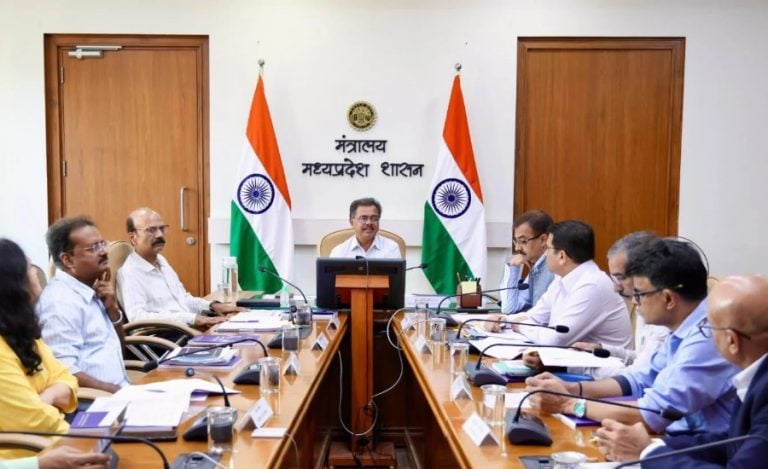
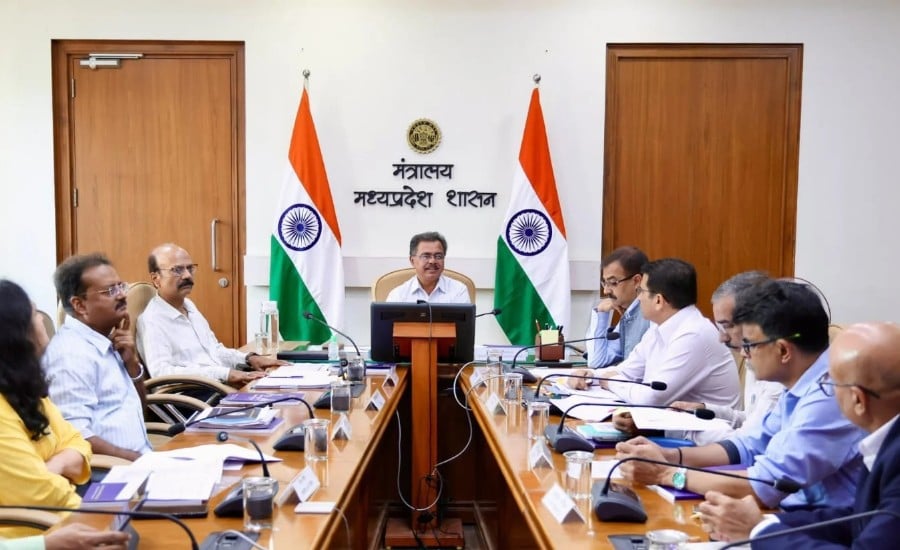
The directions were issued during the fifth State-Level Narcotics Coordination Centre (NCORD) meeting held at the state secretariat in Bhopal. Director General of Police Kailash Makwana (IPS: 1988: MP) and senior officials from various departments, the Narcotics Department and the police attended the meeting.
Barnwal called for a coordinated campaign involving all relevant departments, stating that they should prepare action plans with internal targets for the three-year drive.
He also directed the government to establish anti-drug committees in higher educational institutions with more than 500 students, bringing together teachers, parents, students, the Higher Education Department, the Social Justice Department and the police.
Madhya Pradesh Plans Three-Year Campaign Against Drug Networks
During the meeting, Barnwal emphasised the need to dismantle the entire network involved in the illegal drug trade rather than limiting action to individual cases.
He directed departments to strengthen intelligence gathering and improve coordination among the Narcotics vertical, the Special Intelligence Branch (SIB) and local police.
The departments have been asked to prepare coordinated action plans and set measurable internal targets for the three-year campaign.
The state government also reviewed measures to prevent the diversion of chemical precursors used in industrial processes into illegal drug manufacturing.
Barnwal instructed the Industries, Labour, Health and Home departments to develop a monitoring mechanism or special enforcement teams for chemical factories. Industrial clusters and industry associations are to be identified, with relevant lists shared among departments to facilitate monitoring and action against violations.
Anti-Drug Committees Planned in Colleges With Over 500 Students
The government plans to introduce anti-drug committees in government and private educational institutions with student enrolment exceeding 500.
The proposed committees will include representatives from educational institutions, parents, students, relevant government departments and the police.
Key measures outlined during the meeting include:
- Awareness programmes: Teachers and students will be sensitised about drug use and its consequences.
- Confidential reporting: A mechanism will be developed to protect the identities of students, teachers and others who provide information about drug-related activities.
- Police coordination: The local police station’s beat officer will serve as the nodal officer for the committees.
- School-level campaigns: The government has directed departments to conduct a drug-free school campaign in government and private educational institutions.
- Helpline publicity: The Narcotics Control Bureau’s national helpline, 1933, will be publicised more widely to encourage people to report information about narcotics-related activities.
The directions are intended to involve educational institutions and local communities in the state’s anti-drug efforts.
Over 2.74 Lakh Kg of Narcotic Substances Destroyed in Two Years
During the meeting, officials reported that Madhya Pradesh ranked first nationally in the destruction of narcotic substances.
According to the figures presented, authorities destroyed a total of 2,74,405 kg of narcotic substances during 2025 and up to September 30, 2026.
The year-wise figures were:
- 2025: 1,44,025 kg destroyed in 2,073 cases.
- 2026, up to September 30: 1,30,380 kg destroyed in 2,756 cases.
The substances covered in the reported destruction included opium, morphine and codeine, among others.
Officials also reported that coordinated enforcement by the relevant departments had resulted in the seizure of 50,933 kg of narcotic substances in 2,986 cases registered under the Narcotic Drugs and Psychotropic Substances (NDPS) Act. The cases involved 4,091 accused persons, with the figures covering the period up to September 30, 2026.
18 Illegal Drug Laboratories Dismantled
The meeting reviewed action against clandestine laboratories used for the manufacture of narcotic substances.
Officials reported that the Madhya Pradesh Police, Narcotics Control Bureau (NCB), Directorate of Revenue Intelligence (DRI) and Central Bureau of Narcotics (CBN) had taken action against and dismantled 18 clandestine drug laboratories during 2025–2026.
The meeting also reviewed the use of the NCB’s MANAS portal and national helpline, 1933, through which confidential information relating to narcotics is received.
A total of 811 complaints were reported in Madhya Pradesh during 2025–2026.
Properties Worth ₹446 Crore Attached in NDPS Cases
Authorities have also taken action against assets allegedly linked to illegal drug-related activities.
According to figures presented at the meeting, property worth ₹446 crore was attached in NDPS cases during 2025 and 2026, up to the period covered by the review.
The year-wise breakdown was:
- 2025: ₹300 crore in 54 cases.
- 2026: ₹146 crore in 38 cases.
Officials further stated that 201 special trial cases under the NDPS Act had been placed under monitoring up to September 2026. During the same period, convictions were recorded in eight cases pending before the courts, according to the meeting’s figures.
Government to Monitor Codeine-Based Cough Syrup Supply
The state government has directed the Food and Drug Administration Department to coordinate with the Central Government to obtain information about the production and distribution networks of codeine-based cough syrups and ensure continuous monitoring.
Barnwal also instructed officials to examine the supply and distribution of such medicines and work towards integrating licensing processes.
The directions form part of the broader effort to monitor substances and medicines that may be diverted into illegal channels.
In addition, the Industries, Labour, Health and Home departments have been asked to prepare a coordinated plan to prevent the diversion of chemical precursors used in manufacturing.
The Chief Secretary also directed the Forensic Science Laboratory (FSL) to prepare a plan to ensure that test reports for samples referred under the NDPS Act are received within 15 days.
All Districts to Have De-Addiction Centres
The Social Justice Department has been asked to obtain proposals by October 31 from districts that do not currently have de-addiction centres, with the objective of establishing such facilities in every district of Madhya Pradesh.
Officials reported that 31 de-addiction centres operated by the Social Justice Department and 10 operated by the Health Department were currently functioning in the state.
The meeting also called for information about areas declared drug-free by the Social Justice Department to be shared with district collectors and superintendents of police.
Barnwal directed officials to strengthen intelligence networks, consider increasing incentives for information providers and decentralise powers relating to the handling and disposal of seized substances from the state level to the district level.
Over 2.58 Crore People Participated in Drug Awareness Programmes
The state government also reviewed public awareness initiatives aimed at discouraging drug consumption.
According to the figures presented at the meeting, 30,339 awareness programmes had been organised, involving approximately 2.58 crore participants.
The state’s ‘Nasha Se Doori Hai Zaroori’ campaign also received participation through social media, where it recorded more than 58 crore views, according to officials.
Around 10,000 young people were also connected with various sporting activities as part of the broader awareness effort.
The state government has directed departments to continue coordinating enforcement, prevention, education and treatment measures as part of its campaign against illegal narcotics.
Read Also: Madhya Pradesh Reports ₹12 Lakh Crore in Investment Proposals Implemented, Says CM Mohan Yadav