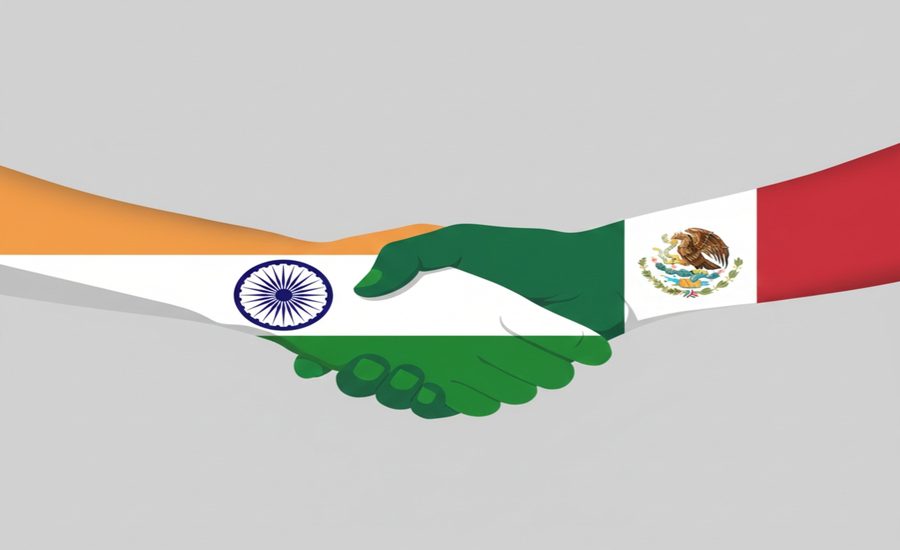
New Delhi: India faces yet another major trade shock as Mexico—one of the fastest-growing markets for Indian exporters—has announced steep tariffs of up to 50% on a wide range of imports from India and several other Asian nations.
The move, approved by the Mexican Senate, comes at a critical time when global trade tensions are already escalating.
For India, which is still grappling with heavy US tariffs imposed earlier, this decision adds a new layer of pressure on key export industries, especially automobiles, auto components, plastics, textiles, steel, and chemicals.
The new tariffs, which will take effect on January 1, 2026, apply to countries that do not have a free trade agreement (FTA) with Mexico. India falls into this category, making several of its fastest-growing export segments vulnerable to heavy duty hikes.
Background of Mexico 50% tariff on India
Over the past decade, India and Mexico have steadily deepened their economic relationship.
Read also: India and New Zealand Conclude Fourth Round of FTA Talks, Aim for Early Trade Agreement
Bilateral trade surpassed $8 billion in FY 2023–24, reflecting rapid growth across automotive, chemicals, pharmaceuticals, electronics and machinery.
India exports a wide spectrum of goods to Mexico, including:
- Automobiles and motorcycles
- Electrical machinery
- Organic chemicals
- Aluminium and steel products
- Pharmaceuticals
- Industrial machinery
Mexico has also become a significant hub for Indian automotive exports.
Companies such as Volkswagen India, Hyundai, Nissan, Maruti Suzuki, Bajaj Auto and TVS depend heavily on the Mexican market for scale and profitability.
But the global trade environment has been shifting rapidly, with rising protectionism in the US and increased scrutiny of supply chains. Mexico’s new decision marks one of the strongest protectionist moves in recent years.
Importance of Mexico 50% tariff on India
According to Reuters and official documents circulated in the Mexican Senate, the new tariff structure is aimed at reducing import dependency and strengthening domestic industries.
The tariff slabs include:
- Up to 50% duty on auto and auto parts
- Up to 50% duty on textiles, plastics, steel, and chemicals
- 35% duty on several other industrial and consumer goods
These hikes will apply primarily to imports from India, China, South Korea, Thailand, and Indonesia — countries without FTAs with Mexico.
The tariff rollout begins on January 1, 2026, giving exporters only a short transition window to adjust supply chains or renegotiate contracts.
Reasons of Mexico 50% tariff on India
Analysts point to two key geopolitical and trade-related reasons behind this aggressive tariff revision:
1. Pressure Linked to the USMCA Review
Mexico is preparing for the USMCA (United States–Mexico–Canada Agreement) review—a crucial evaluation that will determine the future of tariff exemptions and cross-border trade rules.
Experts believe Mexico is trying to:
- Strengthen its domestic manufacturing base
- Demonstrate alignment with US trade expectations
- Reduce reliance on low-cost imports from Asia
- Pre-empt potential US complaints about tariff imbalances
Some observers also argue that the tariffs may be influenced by political efforts to maintain positive relations with Washington.
2. Protectionism and Internal Economic Concerns
Mexico’s government has emphasized protecting:
- Local industries
- Supply chain resilience
- Manufacturing jobs
With rising inflation, supply chain disruptions and increasing competition in its domestic market, Mexico appears to be shielding its industrial sector from cheaper Asian imports.
Mexico 50% tariff on India: Which Indian Sectors Face the Worst Impact
1. Automobile & Auto Components (Most Affected): Mexico is one of the largest markets for Indian-made small cars, bikes, and auto components.
India exports nearly $1 billion worth of automobiles annually to Mexico.
The new 50% tariff could:
- Sharply increase prices for Indian vehicles
- Push buyers toward US, European or local brands
- Hurt profitability for companies like Nissan, Hyundai, Maruti Suzuki and Volkswagen India
- Reduce India’s status as a cost-effective auto manufacturing alternative
Indian auto manufacturers warn that the decision may lead to severe demand contraction and disrupted supply chains.
2. Textiles & Apparel: India’s textile exporters rely heavily on price competitiveness.
A 50% tariff could make Indian garments unviable in the Mexican market compared to products from FTA partners.
3. Plastics, Chemicals, and Organic Compounds: Mexico imports a significant volume of Indian:
- Organic chemicals
- Industrial chemicals
- Plastics & polymer-based goods
A 35–50% tariff will likely force Mexican businesses to shift to local or US-based suppliers.
4. Steel, Aluminium & Industrial Machinery: Indian exports of aluminium, electrical machinery, and basic metals face steep duty hikes, which may reduce order volumes by a large margin.
India’s Larger Trade Context: A Double Blow After US Tariffs
Mexico’s decision comes close on the heels of the United States imposing 50% cumulative tariffs on select Indian products, following:
A 25% tariff on Indian goods: An additional 25% linked to India’s oil purchase decisions and unresolved trade disagreements
The India–US trade deal also remains stuck, further complicating India’s export prospects.
Read also: India and EU Near Deal on Balanced Free Trade Agreement to Boost Trade and Investment- Know More