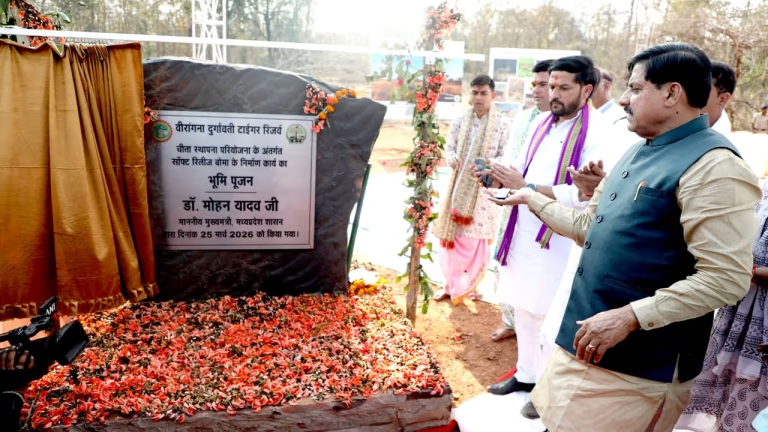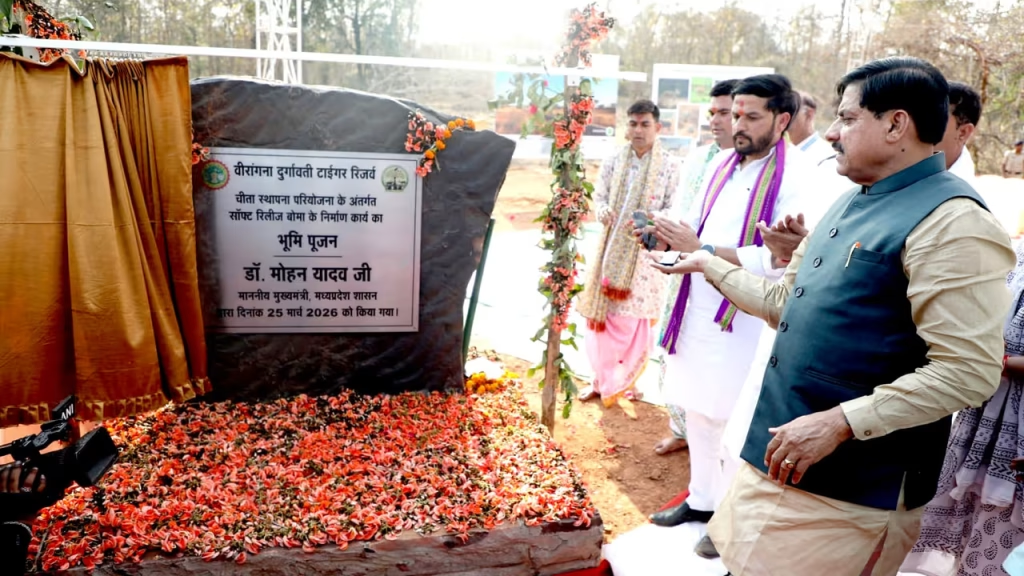
Bhopal: On the occasion of his birthday on March 25, Madhya Pradesh Chief Minister Mohan Yadav inaugurated a major wildlife conservation initiative by performing the Bhoomi Pujan for a soft release boma – an enclosed rehabilitation structure designed for cheetahs – at Veerangana Durgavati (Nauradehi) Tiger Reserve. The event marked another important step in Madhya Pradesh’s growing efforts to strengthen biodiversity conservation and expand wildlife habitats across the state.
Alongside the groundbreaking ceremony, the Chief Minister also released 14 turtles into their natural habitat, underscoring the state government’s broader commitment to protecting multiple species and maintaining ecological balance.
Nauradehi to Become Madhya Pradesh’s Third Major Cheetah Habitat
Addressing the gathering during the event, the Chief Minister said that Nauradehi Tiger Reserve is the largest tiger reserve in Madhya Pradesh and holds strategic ecological importance because of its connectivity with major forest landscapes including Satpura National Park, Kanha National Park and Pench National Park.
He said the reserve offers a naturally suitable habitat for several wildlife species, especially cheetahs, due to its extensive grassland and forest ecosystem. With this project, Nauradehi is expected to emerge as the third major habitat for cheetahs in Madhya Pradesh after earlier conservation efforts in other parts of the state.
The construction of the soft release boma is considered a critical preparatory step before introducing cheetahs into the reserve, as it helps animals gradually adapt to local climatic and ecological conditions before full release into the wild.
14 Turtles Released to Strengthen Aquatic Biodiversity
During the same programme, Chief Minister Mohan Yadav released 14 turtles brought from the Chambal region and Bhopal into water bodies within the reserve area.
He noted that turtles are an important component of aquatic biodiversity and contribute significantly to maintaining the ecological health and beauty of natural water systems. According to him, the conservation of such species is essential not only for biodiversity but also for sustaining long-term environmental balance.
The release forms part of the government’s wider species restoration strategy aimed at protecting aquatic fauna alongside terrestrial wildlife.
Government Stressing Protection of All Forms of Life
The Chief Minister said that the Madhya Pradesh government is working with unwavering commitment toward the conservation of all living beings. He emphasized that wildlife protection policies are being implemented with equal focus on terrestrial animals, aquatic species and birds.
According to him, environmental conservation cannot be limited to a few flagship species alone; instead, every element of biodiversity plays a role in sustaining healthy ecosystems.
He said the government’s approach is rooted in compassion for living beings and in maintaining harmony between human development and ecological preservation.
Earlier Releases of Gharials, Turtles and Vultures Highlight Broader Wildlife Strategy
Highlighting earlier conservation initiatives, the Chief Minister said that the state had already released gharials and 25 turtles in the Kuno region. He added that five vultures had also recently been released into their natural habitat as part of species revival efforts.
Kuno National Park has emerged as one of the key centres for wildlife conservation in recent years, particularly through species restoration projects.
He described these efforts as major milestones in strengthening the state’s wildlife protection network and ensuring that endangered and ecologically significant species continue to survive in their native environments.
Wildlife Tourism to Create Rural Employment Opportunities
The Chief Minister also linked biodiversity conservation with economic opportunity, stating that wildlife tourism is emerging as an important source of employment generation in rural Madhya Pradesh.
He said that under the guidance of Narendra Modi, Madhya Pradesh is making rapid progress across sectors, and eco-tourism is becoming an important pillar of inclusive development.
According to him, tiger reserves and protected forests create livelihood opportunities for local communities through tourism, hospitality, transport, forest-based employment and related services.
He added that wildlife tourism also strengthens public awareness and encourages coexistence between local communities and wildlife.
Forests Derive Their Beauty from Wildlife, Says Chief Minister
Calling wildlife the true identity of forests, Mohan Yadav said forests become meaningful only when they remain rich in biodiversity.
He said the state government is working with a firm commitment toward compassion for living beings, forest conservation and ecological balance, ensuring that future development remains aligned with environmental sustainability.
The launch of the cheetah rehabilitation project at Nauradehi is being viewed as another major step in Madhya Pradesh’s attempt to position itself as a leading state in wildlife conservation and eco-tourism.