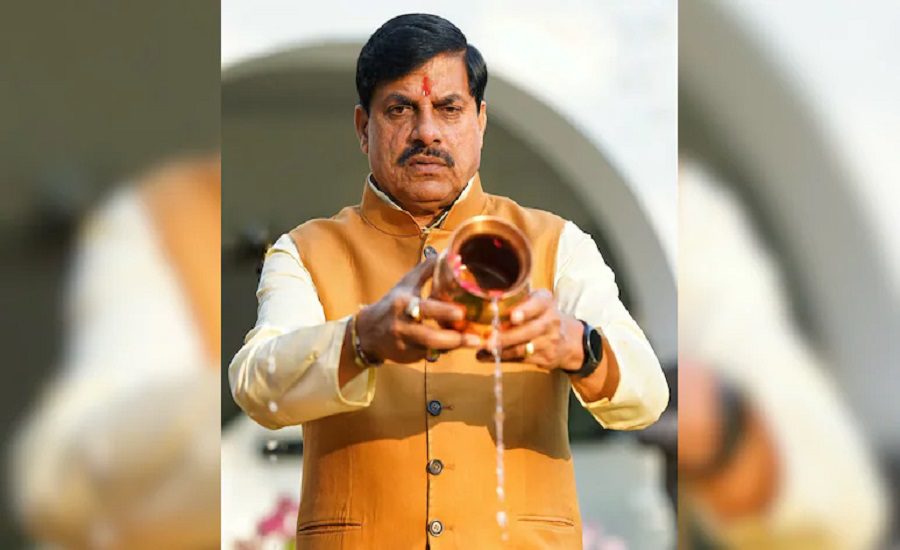
Indore: On Gudi Padwa (Chaitra Shukla Pratipada) on March 19, 2026, Madhya Pradesh Chief Minister Dr. Mohan Yadav inaugurated the third phase of the ‘Jal Ganga Samvardhan Abhiyan’ at the ISKCON Temple in Indore. The statewide campaign aims to strengthen water conservation and management across all 55 districts of Madhya Pradesh, focusing on rivers, ponds, dams, and other water sources.
Massive Statewide Water Conservation Effort
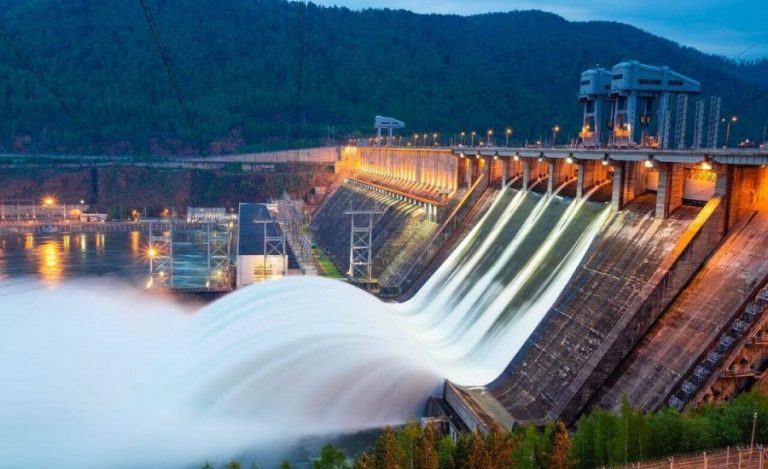
The campaign will run for approximately three and a half months, concluding on June 30, 2026. This year, the state government has set ambitious targets, including the maintenance of over 10,000 check dams and stop dams. Additionally, repair and reinforcement work will be undertaken for small and large dams, ensuring sustainable water storage and irrigation availability.
The government has allocated ₹2,500 crore for this phase, which includes creating new ponds, rejuvenating old water bodies, repairing wells and stepwells, restoring canals, and recharging groundwater in dry riverbeds.
Multi-Departmental Collaboration
A total of 18 government departments are involved in the campaign. The Panchayat and Rural Development Department has been designated as the nodal department, with the Urban Administration & Housing Department serving as co-nodal. Other departments participating include Water Resources, Forests, Narmada Valley Development Authority, Public Health Engineering, Horticulture, Agriculture & Farmers Welfare, MSME, Environment, Women & Child Development, Education, Higher Education, Revenue, Culture, and Public Relations.
District-Level Leadership and Community Participation
At the district level, in-charge ministers will lead the campaign, while district collectors will act as nodal officers. Each district will form a ‘Jal Ganga Samvardhan Committee’ including officers from all involved departments, representatives from NGOs, industry experts, research institutions, respected community leaders, and eminent citizens.
At the block level, sub-divisional officers (Revenue) will monitor campaign activities, and notable local panchayat members will be specially invited to participate in water conservation initiatives.
Key Projects Under the Campaign
- MGNREGA & Watershed Projects: Completion of 86,360 farm ponds, 553 Amrit Sarovars, and 1.5 lakh recharge structures.
- Watershed Development 2.0: Implementation of 2,200 new projects.
- Repair & Renovation: Maintenance of check dams, stop dams, canals, and old ponds under Watershed Development 1.0.
- Afforestation & Green Initiatives: Gap-filling in plantations under Maa Narmada Parikrama Path, Gangotri Green Project, and Ek Bagia Maa Ke Naam.
- Soil Reuse: Silt from ponds and dams will be provided to farmers for agricultural use.
Urban & Rural Integration
In urban areas, the Amrit 2.0 scheme will focus on restoring water structures and initiating new projects. The Forest Department will implement groundwater conservation works like boulder check dams, brushwood check dams, percolation pits, and contour trenches over 1.3 lakh hectares. Water Resources and the Narmada Valley Development Authority will focus on repairing small irrigation projects and cleaning canals.
Ensuring Safe Drinking Water
The Public Health Engineering Department will monitor water quality in schools and Anganwadi centers and implement sanitation and hygiene measures around these sources.
Funding Through Multiple Sources
Alongside departmental budgets, the campaign will leverage MP MP/MLA funds, community participation, and CSR contributions to ensure timely completion of all water conservation projects.
Statewide Impact
The campaign will be implemented across all 55 districts of Madhya Pradesh. With ministers, district collectors, NGOs, and local communities working together, the initiative aims to maximize rainwater harvesting, groundwater recharge, and long-term water sustainability for agricultural and domestic use.
The Jal Ganga Samvardhan Abhiyan represents a major step toward water security in Madhya Pradesh. With an integrated approach spanning urban areas, forests, and rural landscapes, along with ₹2,500 crore investment, this ambitious campaign aims to ensure sustainable water management and empower communities across the state.