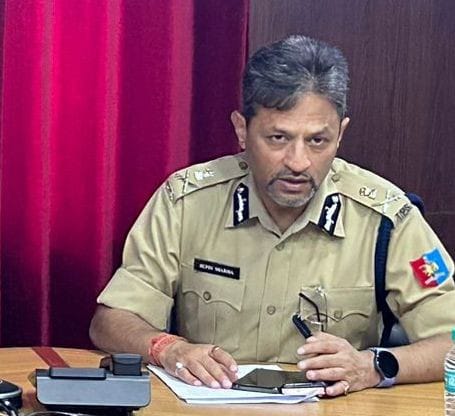
Kohima: Nagaland Director General of Police Rupin Sharma, an IPS officer of 1992 batch, has called for a significant increase in the recruitment of women police personnel, revealing that women constitute less than 10% of the state’s police force, including the Mahila Battalion. Stressing the urgent need for greater representation, he said police stations across the state continue to seek more women officers to investigate and handle crimes involving women.
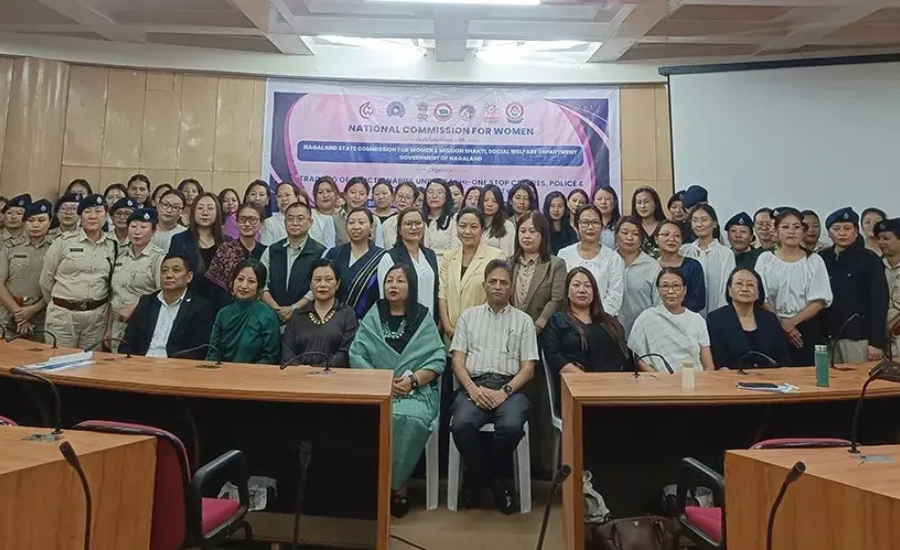
The DGP made the remarks while addressing a training programme for functionaries of Sakhi-One Stop Centres, the police and the District Legal Services Authority (DLSA) at the Police Headquarters in Kohima on Wednesday.
Women Police Strength Remains Low
Highlighting the shortage, Sharma said women account for only 5–7% of the District Executive Force (DEF). The overall representation rises to around 10% only after including personnel from the Mahila Battalion.
He said the current numbers are inadequate to meet the increasing need for women investigators, particularly in cases involving crimes against women.
“Most police stations continue to tell us they need more women police personnel to deal with cases involving women,” the DGP said.
Proposal for 50% Reservation in SI, ASI Recruitment
To bridge the gap, Sharma revealed that the police had proposed reserving 50% of Sub-Inspector (SI) and Assistant Sub-Inspector (ASI) posts for women through the Nagaland Public Service Commission (NPSC) and the Nagaland Staff Selection Board (NSSB) nearly two years ago.
The proposal was aimed at substantially increasing the number of women officers in the force and strengthening gender-sensitive policing across the state.
More Reporting, Not Necessarily More Crime
The DGP observed that while reported cases of crimes against women appear to have increased, the rise is largely due to greater awareness and willingness among victims to approach law enforcement.
According to him, many such incidents were previously resolved within families, clans, villages or customary institutions without being reported to the police.
He welcomed the changing trend, saying more women are now coming forward to report abuse and seek justice.
Sharma also urged society to encourage open discussions on gender-based violence to help break long-standing social prejudices and support survivors.
Need for Better Investigation and Forensic Capacity
The DGP acknowledged that the Nagaland Police has traditionally remained “armed police-centric”, with investigation and forensic capabilities requiring significant improvement.
“There is a need for course correction. We are improving, but it will take time. Unless the mindset changes, the system will not change,” he said.
He stressed that strengthening investigation skills and forensic infrastructure is essential for improving the quality of policing and ensuring effective justice delivery.
Prosecution Remains the Weakest Link
Describing prosecution as the “weakest link” in the criminal justice system, Sharma called for greater participation of government advocates and public prosecutors in training and capacity-building programmes.
He said stronger coordination between investigators and prosecutors would improve conviction rates and enhance the overall effectiveness of the justice system.
The DGP also appealed to victims and their families not to hesitate in registering First Information Reports (FIRs), noting that prompt reporting enables timely investigation and strengthens the legal process.
Crimes Against Women Must Be Reported
Emphasising the need for strict legal action, Sharma said many crimes against women and children show early warning signs that should not be ignored.
He categorically stated that rape cases cannot be settled through customary institutions or village councils and must be reported to the police for investigation under the law.
According to him, ensuring legal accountability is essential for protecting victims and preventing repeat offences.
Focus on Survivor-Centric Support
Addressing the programme, Nagaland State Commission for Women (NSCW) Chairperson W. Nginyeih Konyakstressed that survivors of domestic and gender-based violence should receive empathetic, professional and coordinated support.
She urged officials to maintain confidentiality, dignity and trauma-informed care while dealing with survivors.
Meanwhile, Additional Secretary, Social Welfare and Mission Director, Mission Shakti, Olemjungla Aierinformed participants that:
- Women Helpline-181 and the Child Helpline are operational across Nagaland.
- Sakhi-One Stop Centres have been established in all 17 districts.
- A Shakti Sadan shelter home is providing long-term rehabilitation for women in distress.
NCW-Led Training Programme
The training programme was organised by the National Commission for Women (NCW) in collaboration with the Nagaland State Commission for Women (NSCW) and Mission Shakti.
The initiative focused on strengthening coordination among police, legal authorities and support institutions to ensure timely assistance, protection and justice for survivors of domestic and gender-based violence.