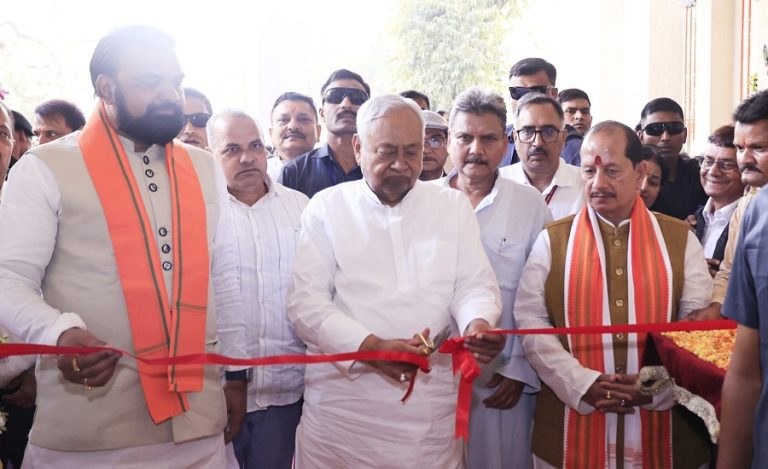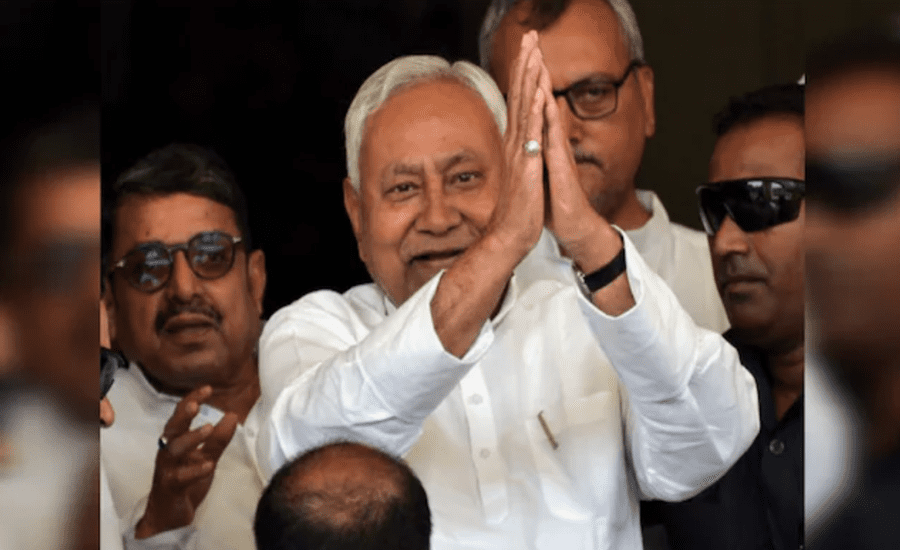
Supaul: Bihar Chief Minister Nitish Kumar addressed a public meeting in Supaul as part of his Samriddhi Yatra, highlighting the state’s developmental milestones since his government assumed office in 2005. Kumar emphasized that Bihar has witnessed a significant transformation in law and order, education, healthcare, employment, and welfare schemes for poor families over the last two decades.
Law and Order Restored Across Bihar
During his address, CM Kumar pointed out that prior to 2005, the state faced widespread lawlessness, with citizens hesitant to venture out after dark. “Earlier, crime and disputes were rampant, and society was rife with conflicts. Today, Bihar has achieved a secure and safe environment,” he stated, crediting sustained governance reforms for establishing law and order in the state.
Read also: Bihar to Introduce Incentive Policy 2026, Plans to Reopen Closed Sugar Mills and Set Up 25 New Units
Education Reforms: Teachers and Institutions Expanded
Kumar underscored the improvement in the state’s education system. He revealed that the number of government teachers in Bihar has increased to 5.24 lakh, with further recruitments ongoing. The expansion of schools and educational infrastructure has enabled more children to access quality education, a stark contrast to the limited opportunities before 2005.
Health Sector Development and Medical Colleges
The Chief Minister highlighted major progress in healthcare:
- Primary Health Centers (PHCs): Patient visits have increased from an average of 39 per month to 11,600 per month, reflecting enhanced medical outreach and service quality.
- Medical Colleges: Bihar currently has 12 operational medical colleges, with 6 new institutions set to be completed this year.
- Private Healthcare Regulation: The government plans to promote private hospital construction while regulating private practice by government doctors to ensure quality healthcare in public facilities.
In Supaul specifically, initiatives include the establishment of Lohia Medical College and Hospital, GNM and paramedical institutes, and engineering, polytechnic, and women’s ITI colleges, aimed at improving education and healthcare access in the region.
Employment Generation and Support for Youth
CM Kumar stated that Bihar has provided employment opportunities to 50 lakh youth so far and plans to generate jobs for 1 crore young people in the next five years. Initiatives include skill development, vocational training, and creating pathways for careers in education, healthcare, and sports.
Welfare Initiatives for Poor Families
The Chief Minister highlighted that around 94 lakh poor families across all communities have been identified through caste-based surveys. Initially, these families received ₹2 lakh in financial aid, which can be increased as per necessity, reflecting the government’s commitment to social welfare.
Solar Energy and Tourism Development
As part of Bihar’s sustainable development goals, Kumar emphasized the installation of solar panels on rooftops of willing households to provide affordable electricity. Additionally, the government is promoting eco-tourism and tourism infrastructure to boost the state’s cultural and economic profile. Plans are also underway to develop Sports City in Patna, providing athletes with training facilities and government employment opportunities.
Supaul’s Development Milestones
Chief Minister Kumar specifically mentioned Supaul’s progress:
- Engineering College, Polytechnic College, and Women’s ITI established.
- Expansion of healthcare with Lohia Medical College and Hospital.
- Initiatives in renewable energy and eco-tourism.
- Skill development programs and educational infrastructure for women and youth.
He reiterated that the government has been consistently working to elevate Bihar over the past 20 years, and efforts will continue to achieve new heights in development, employment, and social welfare.
About Bihar’s Development Agenda
Bihar under Nitish Kumar’s leadership has focused on law enforcement, education, health, employment, and social welfare, coupled with infrastructure development and renewable energy initiatives. Supaul represents a microcosm of the state’s broader strategy to ensure inclusive growth, secure governance, and sustainable development for its citizens.