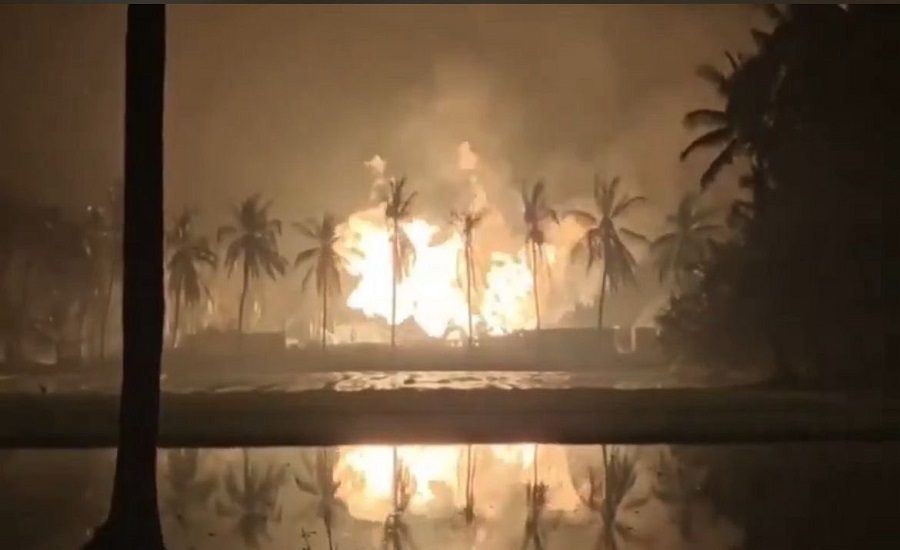
New Delhi: A gas leak incident at Oil and Natural Gas Corporation’s (ONGC) Mori Field in Andhra Pradesh has prompted swift emergency mobilisation, highlighting both the operational risks associated with deep-well workover activities and the company’s crisis response mechanisms. The incident occurred during workover operations at Well Mori-5 and was reported by Deep Industries Limited, the production enhancement contract (PEC) operator managing the site.
While ONGC has not disclosed the exact volume or duration of the gas release, the scale of the response indicates a controlled yet serious operational situation requiring sustained technical intervention.
Remote Location Helps Contain Immediate Risk
ONGC confirmed that the Mori Field is located in a remote area with no human habitation within a radius of approximately 500–600 metres from the wellhead. As a result, no injuries, fatalities, or evacuations have been reported so far.
The geographical isolation has played a crucial role in limiting public safety risks. However, the same remoteness poses logistical challenges, particularly in mobilising specialised equipment and expert personnel to the site within tight operational timelines.
Read also: ONGC Signs MoU with NSTFDC to Invest ₹28 Crore in Digital Education for Tribal Students
Crisis Management Protocols Activated
Following the gas venting, ONGC immediately activated its Crisis Management Team (CMT) and Regional Crisis Management Team (RCMT), deploying them to the field to oversee response operations. Initial measures include cooling operations, a standard safety procedure designed to stabilise well pressure and reduce escalation risks.
The operational focus has now shifted to well-control preparations. ONGC has indicated that conventional well-control measures are being pursued, with capping operations kept as a contingency if initial efforts do not succeed.
International Experts and Advanced Interventions Considered
Signalling an escalation in response strategy, ONGC is coordinating with international well-control specialists and preparing for their mobilisation, subject to on-site technical assessments. Advanced well-intervention methods, including specialised casing-cutting and high-pressure well-control techniques, are under active evaluation.
Such procedures are typically deployed in complex scenarios involving unexpected reservoir behaviour or high-pressure formations and require expertise from globally experienced intervention firms.
Equipment Mobilised from Regional Hubs
To support sustained operations, ONGC has begun mobilising critical equipment from Narsapuram, a key logistics and operational hub for the company’s eastern assets. This mobilisation suggests that the incident may require extended intervention rather than immediate containment alone.
Technical teams from ONGC’s headquarters in New Delhi are closely monitoring developments and participating in real-time decision-making as the situation evolves.
Operational Context and Sector Implications
The Mori Field is part of ONGC’s onshore and shallow-water asset base in the Bay of Bengal region. Workover operations—routine interventions carried out to enhance or restore production in mature wells—carry inherent risks, particularly when encountering high-pressure zones or complex subsurface conditions.
The incident also comes amid heightened scrutiny of operational safety in India’s upstream oil and gas sector. Given ONGC’s dominant role in domestic hydrocarbon production, any prolonged disruption could have implications for production schedules and broader energy planning.
ONGC has stated that further updates will be issued as assessments continue, though no timeline has been provided for well stabilisation or resumption of normal operations.
About ONGC
Oil and Natural Gas Corporation Limited (ONGC) is India’s largest exploration and production company and a Maharatna Central Public Sector Enterprise under the Ministry of Petroleum and Natural Gas. Accounting for over 70 per cent of India’s domestic crude oil and natural gas production, ONGC plays a critical role in ensuring the country’s energy security while maintaining a strong focus on operational safety and environmental responsibility.