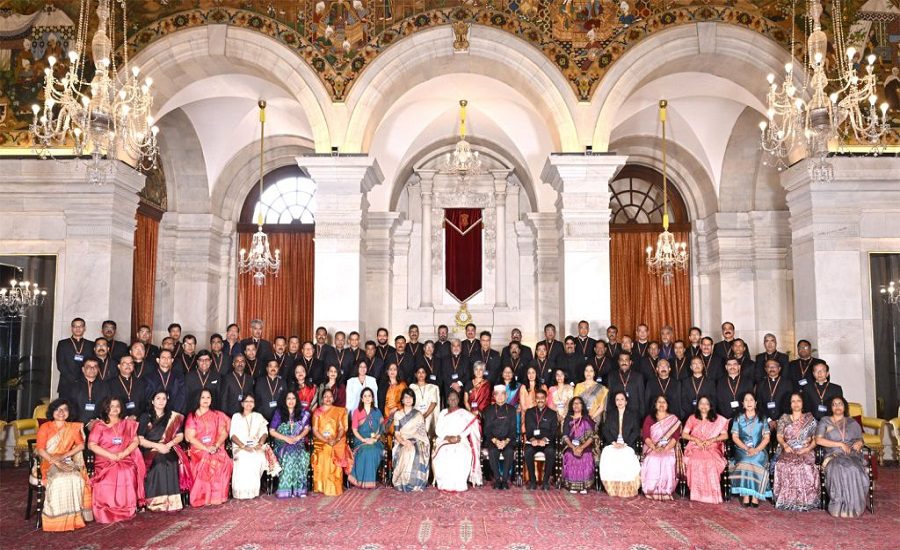
New Delhi: In a significant interaction at Rashtrapati Bhavan, Droupadi Murmu on Monday addressed officers inducted into the Indian Administrative Service (IAS) from State Civil Services, who are currently undergoing the 128th Induction Training Programme at Lal Bahadur Shastri National Academy of Administration (LBSNAA).
Describing their induction as a defining moment in their careers, the President said the transition into the IAS marks not merely a change in designation but a profound expansion of responsibility and national duty.
A Shift from Regional Administration to National Custodianship
President Murmu emphasised that their new roles demand a broader, pan-India perspective that transcends departmental boundaries and dismantles administrative silos.
“You are no longer administrators of a particular region; you are the custodians of governance standards that must be upheld across the nation,” she told the officers.
She stressed that every decision they take must align with the larger national vision of building a “Viksit Bharat” by 2047, underscoring that their collective professionalism, coordination, and commitment will play a decisive role in strengthening governance and delivering development outcomes.
Read also: UPSC Opens Correction Window for Civil Services Exam 2026; Edits Allowed Till March 3
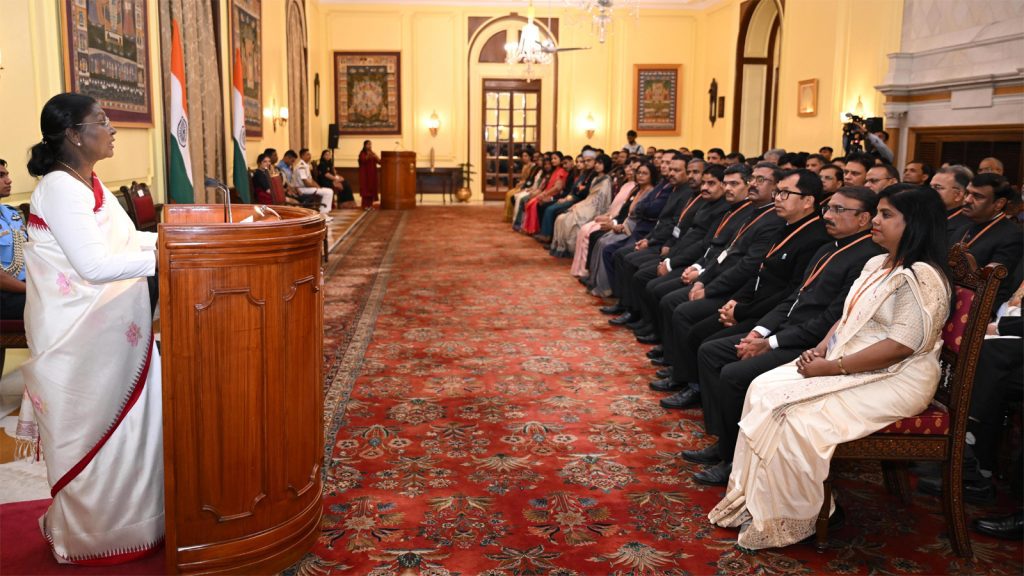
Building on Two Decades of Grassroots Experience
Highlighting the officers’ professional journeys, the President noted that most of them had spent nearly two decades serving in State Civil Services, working extensively at the grassroots level.
She observed that this experience had given them deep insights into local challenges, administrative systems, and citizen expectations. As IAS officers, however, they would now shoulder broader responsibilities — translating policies into effective implementation while fulfilling the aspirations of citizens across diverse regions.
She urged them to be guided by the spirit of “Nation First” in all their administrative decisions and policy interventions.
Inclusive Development: No One Should Be Left Behind
Reiterating the importance of inclusive growth, President Murmu said India’s transformation into a developed nation would only be meaningful if its benefits reach the most vulnerable and deprived sections of society.
She urged the officers to ensure that no community is left behind due to geographical, social, or economic disadvantages. According to her, inclusive governance must be the cornerstone of their administrative approach as India moves toward its long-term development goals.
Sustainability and Climate-Resilient Governance
The President also underlined the urgent need to prioritise sustainability and climate resilience in governance frameworks.
“As senior administrators, you must champion green practices, promote climate-adaptive governance, and ensure sustainable development,” she said.
She pointed out that the decisions taken today will determine the quality of life for future generations, making environmentally responsible governance a critical component of their leadership.
Leveraging Technology with Human Sensitivity
In the context of modern governance, President Murmu encouraged the officers to adopt emerging technologies to enhance service delivery and administrative efficiency.
She specifically highlighted the importance of AI-driven solutions, e-governance platforms, digital grievance redressal mechanisms, and real-time analytics in improving transparency and responsiveness.
However, she cautioned that technology should not replace human judgment. Instead, it must be complemented by empathy, fairness, and sensitivity toward citizens’ needs.
Upholding Integrity and Personal Well-being
The President further advised the officers to uphold the highest standards of integrity, transparency, and accountability in public service. She urged them to exercise authority with compassion and fairness, recognising the trust placed in them by the nation.
Acknowledging the demanding nature of administrative roles, she also reminded them to prioritise their physical, mental, and emotional well-being, ensuring they remain resilient and effective leaders throughout their careers.
Nation’s Expectations and a Vision for the Future
Concluding her address, President Murmu extended her best wishes to the officers and expressed confidence in their ability to contribute meaningfully to India’s progress.
She noted that the nation looks to them with great hope and said their dedication, wisdom, and compassion would be instrumental in shaping a stronger, more inclusive, and forward-looking India.