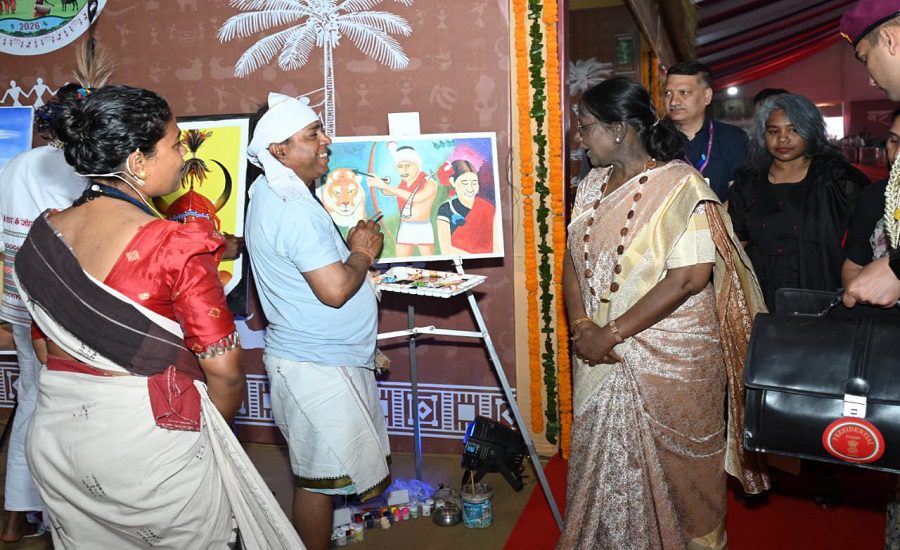
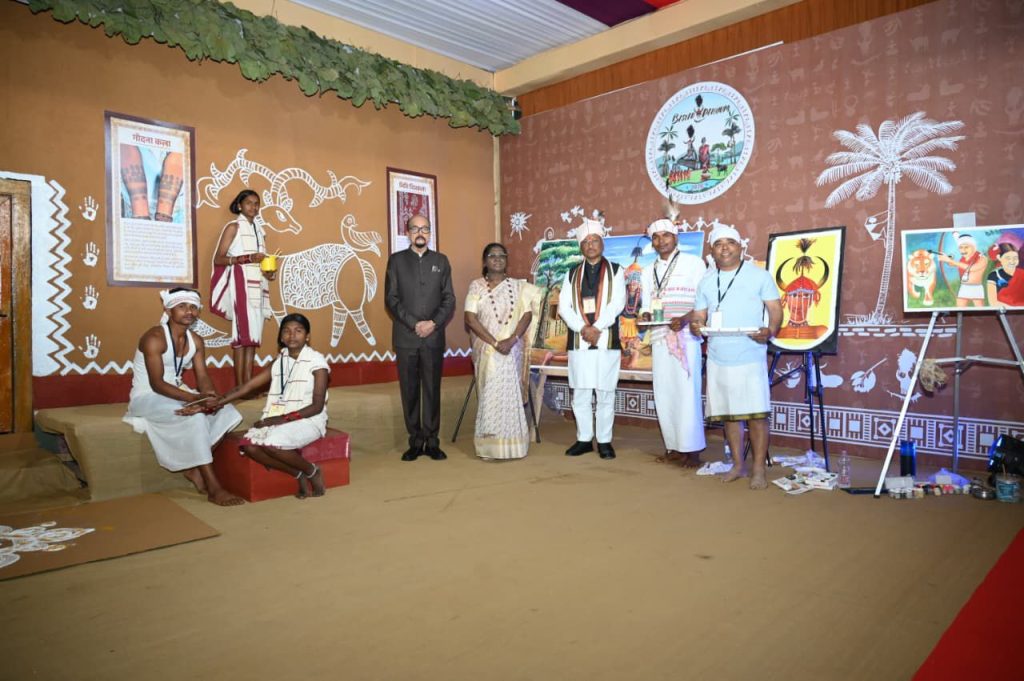
Raipur: President Smt. Droupadi Murmu, who arrived in Chhattisgarh to attend the inaugural ceremony of Bastar Pandum, on Friday visited a grand exhibition celebrating the rich tribal traditions, art, and cultural heritage of Bastar. The exhibition offered a comprehensive glimpse into the centuries-old lifestyle, creativity, and indigenous knowledge systems of the region’s tribal communities.
During her visit, the President toured several exhibition stalls and interacted with local artisans and residents, seeking detailed insights into the traditional crafts, artworks, and cultural practices on display.
Bastar Pandum a Global Platform for Tribal Heritage: President Murmu
President Murmu described Bastar Pandum as a powerful and meaningful platform for preserving tribal heritage and presenting it to a global audience. She appreciated the initiative for highlighting the cultural depth of Bastar and acknowledged the role of local communities in keeping their traditions alive through art and craftsmanship.
Dhokra and Terracotta Art Reflect Ancient Tribal Craftsmanship
One of the major highlights of the exhibition was the Dhokra metal art display, which drew special appreciation from the President. Dhokra art, an ancient tribal craft based on the lost-wax casting technique, vividly reflects themes inspired by nature, folk deities, and rural life.
Each Dhokra artifact is entirely handcrafted using samadi clay, beeswax, brass, wire, furnaces, and traditional cleaning tools, making every piece unique. Alongside this, terracotta figurines showcasing folk beliefs, village life, and traditional customs added a strong visual narrative to the exhibition.
Wood, Bamboo, Sisal, and Iron Crafts Showcase Indigenous Skills
The exhibition also featured impressive displays of wood carving art, created using teak, bija, sivnar, and sal wood. Artisans demonstrated intricate craftsmanship using traditional hand tools, producing sculptures rooted in cultural and religious traditions.
President Murmu also visited stalls showcasing sisal art and jute-based handicrafts, as well as everyday and decorative items crafted from bamboo, reflecting sustainability and traditional utility. The wrought iron artworks, known for their rustic elegance and durability, particularly caught her attention.
Tribal Jewelry and Attire Highlight Cultural Identity
A stall displaying tribal jewelry received special attention from the President. The handcrafted ornaments—made from silver, pearls, conch shells, and various metals—symbolize the identity, social customs, and cultural legacy of Bastar’s tribal communities.
At another stall, young men and women showcased the traditional attire and ornaments of major Bastar tribes, including Dandami Madia, Abujhmaria, Muria, Bhatra, and Halba, offering visitors a living representation of tribal heritage.
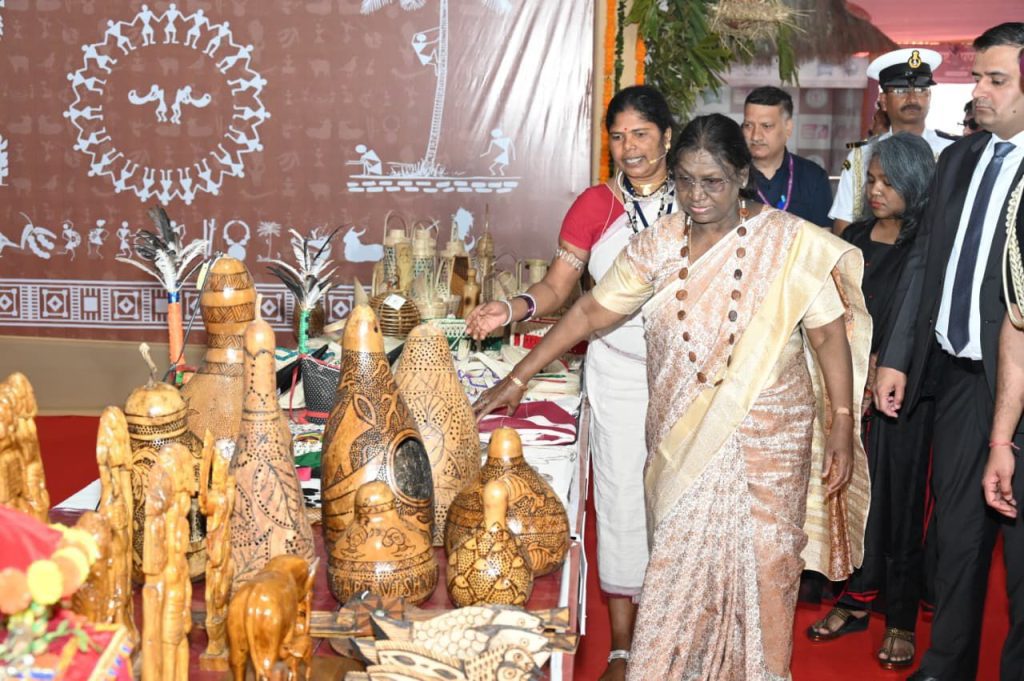
Tumba Art and Musical Traditions on Display
The exhibition also featured Tumba Art, displaying traditional musical instruments and decorative items made from dried gourds. These instruments form an integral part of tribal rituals, celebrations, and storytelling traditions.
Tribal Paintings Portray Life, Nature, and Beliefs
President Murmu visited a dedicated gallery of Bastar tribal paintings, which depicted forests, folk deities, festivals, and everyday life using simple colors and symbolic forms. This art form serves as a visual archive of tribal history and cultural memory, passed down through generations.
Local Tribal Cuisine Offers Taste of Bastar’s Food Culture
The local cuisine stall showcased traditional food items and beverages consumed by tribal communities in daily life. Among the displayed delicacies were Jondhari Lai ke Laddu, Jondhra, Mandia Pej, Amta, Chapda Chutney, Bhenda Chutney, Kulthi Dal, Pan Bobo, and Tikur, along with traditional beverages such as Landa and Sulfi.
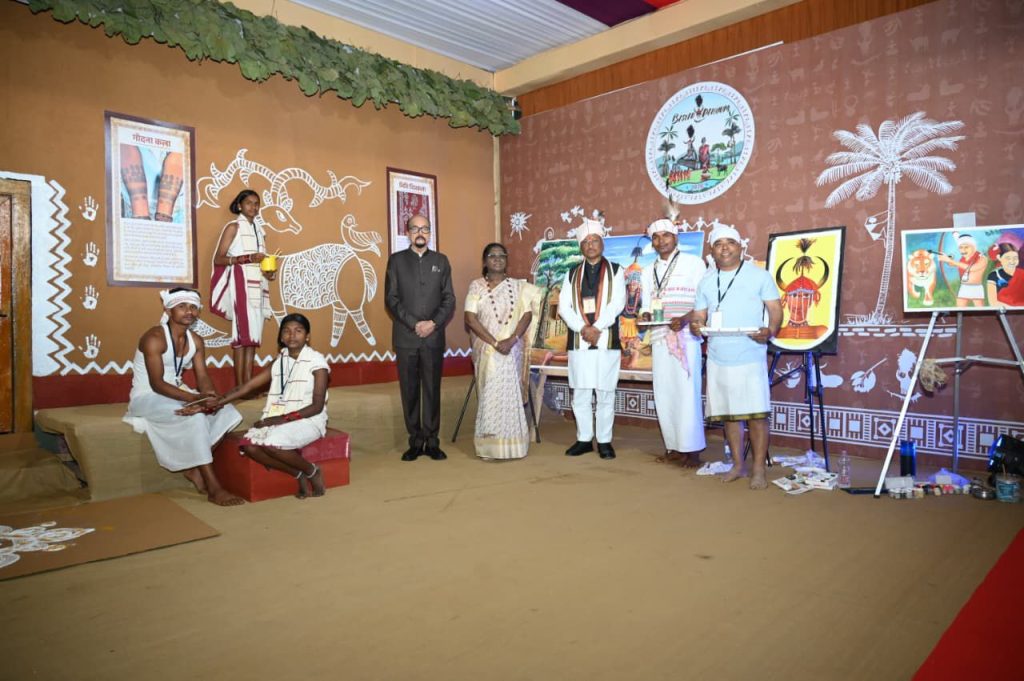
Folk Paintings and Literature Capture Bastar’s Cultural Essence
The exhibition concluded with a display of folk paintings, photographs, and literature highlighting Bastar’s natural beauty, tribal history, daily life, and cultural traditions. These exhibits offered a comprehensive perspective on the region’s heritage and its deep connection with nature.
Celebrating Bastar’s Living Tribal Legacy
The grand exhibition at Bastar Pandum stood as a vibrant celebration of Bastar’s living tribal traditions, reflecting the creativity, resilience, and cultural pride of its indigenous communities. President Murmu’s visit underscored the national importance of preserving and promoting India’s tribal heritage.