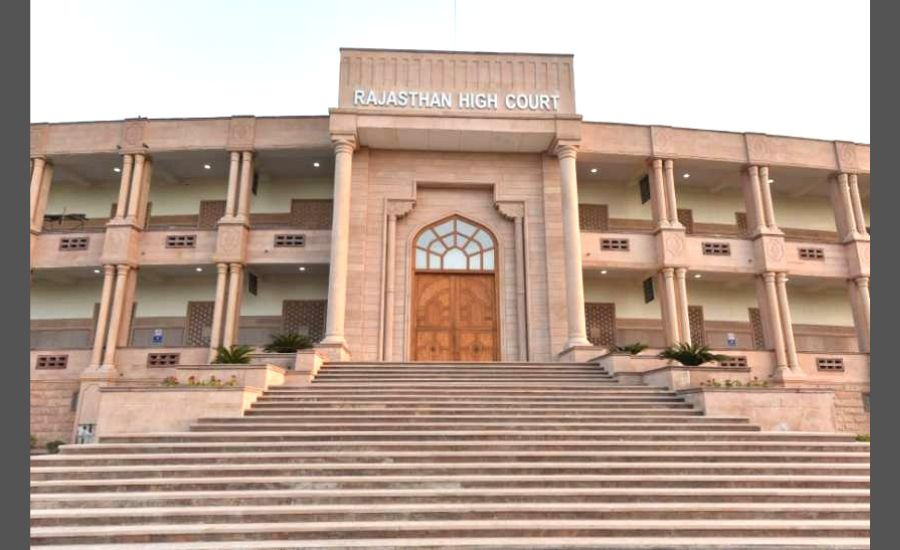
Jaipur: The Rajasthan High Court has clarified a critical point of civil service law by holding that a public servant cannot simply resign to avoid disciplinary proceedings. This decision reinforces accountability in government service and strengthens disciplinary mechanisms against absenteeism and misconduct.
In a recent judgment, the Court refused to accept the resignation of a Rajasthan Administrative Service (RAS) officer who tried to resign amid an inquiry, and upheld his dismissal from service.
Background of the Public Servant Resignation Ruling
The case arose when a RAS officer submitted his resignation just as disciplinary action for prolonged absenteeism and misconduct was underway. The State Government did not accept the resignation immediately and continued with the inquiry process. The officer challenged both the rejection of his resignation and the subsequent order removing him from service.
The Rajasthan High Court, presided over by Justice Anand Sharma, examined whether a public servant can use resignation as a shield against disciplinary proceedings — a step that could effectively frustrate the enforcement of conduct rules and service discipline.
Public Servant Resignation Ruling: Key Legal Issues in the Verdict
The court focused on two main legal questions:
1. Does resignation automatically halt disciplinary proceedings?
The High Court ruled that resignation does not create a vested right in an employee to stop or defeat disciplinary action, especially when official conduct and absenteeism are under investigation. The Court observed that service rules and conduct standards of government employees are meant to ensure public accountability and cannot be sidestepped through unilateral actions by the employee.
2. Can a public servant evade accountability by quitting?
The judgment clarified that public servants are bound by service rules until the resignation takes effect. If resignation is tendered in the midst of a disciplinary inquiry, the employer (government) has the discretion to decide on acceptance and can continue the inquiry before finalizing resignation. This is to prevent misuse of resignation as a tool to avoid consequences for misconduct.
Public Servant Resignation Ruling : Court’s Reasoning
The court pointed out that accepting a resignation at a time when serious charges are pending would undermine the very purpose of service discipline. Public service carries a fiduciary duty and adherence to conduct rules that protect public interest and the reputation of government institutions. Permitting resignation to halt inquiries would encourage deliberate absenteeism and other misconduct by employees in sensitive positions.
The High Court also emphasised that service rules and departmental procedures must maintain fairness but also ensure that employees do not exploit procedural loopholes to avoid accountability.
Implications of the Judgment
This judgment carries wide legal and administrative significance:
- It reaffirms that disciplinary proceedings are an integral part of public service law and cannot be bypassed by an employee’s unilateral actions.
- Departments can reject resignations when serious charges are pending, especially in cases of misconduct or prolonged absenteeism.
- The ruling strengthens administrative discipline and ensures public servants remain accountable until formal service separation.
Legal experts believe that this judgement will act as a deterrent against manipulation of resignation processes in other states as well. By clarifying the position on resignation during inquiries, the High Court has helped set a benchmark in service jurisprudence in India.
Read also: Rajasthan High Court Forms Five-Judge Panel to Examine Saturday Working Days Amid Bar Opposition