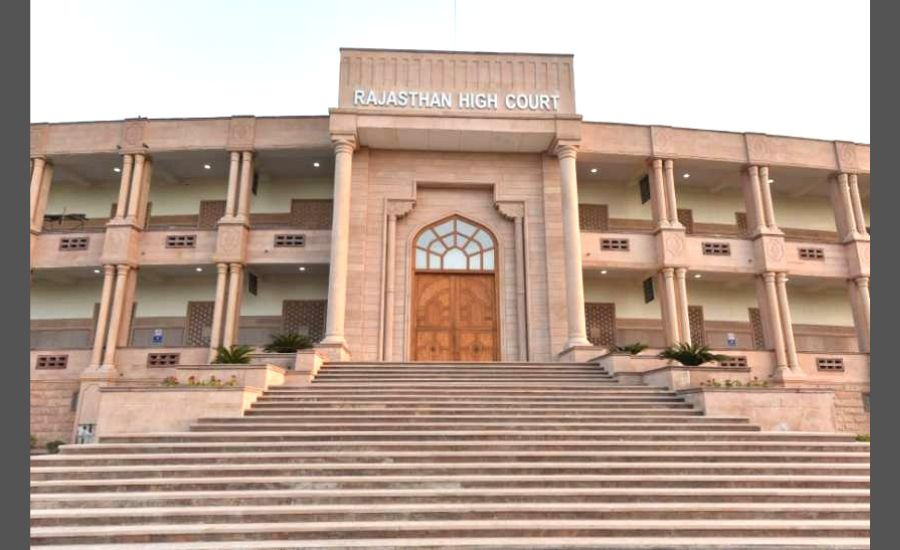
Jaipur/Jodhpur, Rajasthan — In response to widespread protests by lawyers, the Rajasthan High Court has formed a five-judge committee to examine and review its controversial decision to make two Saturdays per month regular working days for judicial business.
The move follows a significant strike and boycott of court proceedings by the legal fraternity across both Jaipur and Jodhpur benches, which drew strong opposition and highlighted concerns over justice delivery, workload pressures, and procedural fairness.
Details of Rajasthan High Court Working Saturdays Ruling
On January 7, 2026, Acting Chief Justice Sanjeev Prakash Sharma constituted a committee of five senior judges to evaluate whether the Full Court’s earlier directive — mandating Saturdays as working days — should be reconsidered or modified.
Judges appointed to the panel include:
- Hon’ble Mr. Justice Sameer Jain
- Hon’ble Mr. Justice Kuldeep Mathur
- Hon’ble Mr. Justice Anil Kumar Upman
- Hon’ble Mr. Justice Yogendra Kumar Purohit
- Hon’ble Mr. Justice Sunil Beniwal
The committee has been instructed to consult with bar association leaders and senior members of the legal profession, and submit a comprehensive report by January 21, 2026. After review, the Full Court will decide the fate of the Saturday working directive.
Background of Lawyers’ Strike and the Saturday Working Order
The controversy erupted as the Rajasthan High Court reopened after the winter break in early January amid directives that two Saturdays every month would be designated as working days — a move many lawyers said was imposed without sufficient consultation with stakeholders.
Bar associations across both Jaipur and Jodhpur expressed strong resistance, citing concerns related to:
- Inadequate consultation with the Bar before implementation
- Increased workload for lawyers already stretched
- Impact on family life and personal well-being
- Logistical concerns involving litigants from distant and rural areas
- Strain on support staff and court infrastructure
On January 5, 2026, lawyers abstained from work in protest, leading to adjourned hearings, reduced court activity, and escalating tensions between the bench and bar.
Legal Fraternity’s Position and Representation
Legal professionals and bodies such as the Rajasthan High Court Advocates Association and Bar Council of Rajasthan previously submitted formal representations outlining their objections.
According to the bar community, the Saturday working order was implemented without meaningful discussion and failed to address the practical realities faced by advocates.
They urged that:
- Saturdays are critical for preparation of weekly cases
- Extended court weeks limit time available for alternative dispute resolution mechanisms
- The directive could negatively affect quality of justice delivery and mental health of stakeholders
The lawyers’ representation also suggested alternatives such as better case management through listing reforms, technology adoption, and filling judicial vacancies rather than imposing additional working days.
Judicial Administration and the Path Forward
The formation of the review committee signifies the court’s attempt to balance administrative objectives — such as reducing case pendency — with the concerns of the legal community.
While the High Court has emphasized the need to improve justice delivery timelines and reduce backlog, the evolving dialogue with lawyers signals a potential rethink on institutional priorities and stakeholder engagement processes.
Some key outcomes to watch as the review progresses:
- Judicial panel’s recommendations by January 21, 2026
- Close assessment of the operational impact of Saturday working directives
- Full Court deliberation and final decision based on report
- Possible revisions to court calendar and procedures
What are the Impacts of Rajasthan High Court Working Saturdays Ruling
The lawyers’ boycott and subsequent panel formation have significant implications:
- Litigants face delays as cases are postponed or adjourned
- Uneven court calendars may disrupt planning for hearings
- Legal professionals express concern over workflow imbalance
Stakeholders from rural constituencies have also voiced that mandated Saturday hearings could impose additional burdens related to travel and accommodation.
Effective resolution will require careful calibration between judicial efficiency and equitable access to justice.