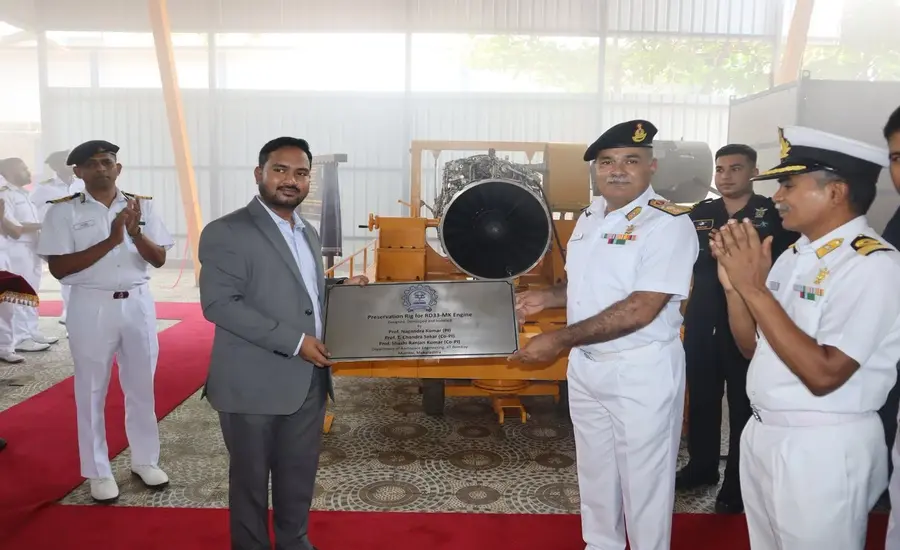
New Delhi: The RD-33MK engine facility has been inaugurated by the Indian Navy in Goa to improve the operational readiness of its MiG-29K fighter fleet.
This new facility is a major step toward strengthening maintenance efficiency and reducing downtime of critical naval aircraft engines.
The RD-33MK engines power the MiG-29K, which is the backbone of India’s aircraft carrier-based air power. By focusing on better preservation and lifecycle management, the Navy aims to ensure higher availability of combat-ready aircraft and long-term sustainability of its aviation assets.
What is the New RD-33MK Engine Facility?
The newly inaugurated facility is a dedicated preservation bay designed specifically for RD-33MK aero engines used in MiG-29K fighter jets.
Read also: Explained: Why Indian Navy Is Investing in Expendable Aerial Targets That Will Be Destroyed Mid-Air
- It allows controlled storage and preservation of engines
- Helps prevent damage due to environmental factors like humidity and salt air
- Improves maintenance planning and turnaround time
Such facilities are critical for naval aviation, where aircraft operate in harsh maritime conditions.
Why RD-33MK Engines Are Important
The RD-33MK is an advanced turbofan engine used in MiG-29K naval fighters.
- Provides higher thrust and better fuel efficiency
- Designed for aircraft carrier operations
- Has improved durability and service life (around 4000 hours)
These engines power India’s frontline carrier-based fighters deployed on ships like INS Vikramaditya and INS Vikrant.
Why Does India Need for the RD-33MK Engine Facility
The Indian Navy has faced challenges with the MiG-29K fleet in the past, especially related to maintenance and engine reliability.
- Earlier reports highlighted engine defects and low serviceability rates
- Harsh sea conditions (salt and sand) increase wear and tear
- Lack of local repair infrastructure caused delays in maintenance
This new facility directly addresses these issues by enabling better storage, maintenance, and lifecycle management.
How This Facility Will Help
The preservation facility is expected to bring several operational benefits:
1. Higher Aircraft Availability
Better engine preservation means fewer failures and more aircraft ready for missions.
2. Faster Maintenance Turnaround
Engines can be maintained and reused more efficiently, reducing downtime.
3. Cost Savings
Local maintenance reduces dependence on foreign suppliers and lowers costs.
4. Improved Combat Readiness
Ensures that carrier-based fighters remain mission-ready at all times.
According to defence sources, such infrastructure acts as a “maintenance efficiency enabler” for the MiG-29K fleet.
Part of India’s Larger Defence Strategy
This development aligns with India’s broader push for:
- Indigenisation in defence maintenance
- Strengthening naval aviation capabilities
- Reducing dependency on foreign OEMs
Earlier steps like collaboration with Hindustan Aeronautics Limited (HAL) for engine repair support also highlight this direction.
What is the Importance of RD-33MK Engine Facility
The Indian Naval Air Arm plays a key role in:
- Aircraft carrier-based strike missions
- Maritime defence and surveillance
- Power projection in the Indian Ocean
Improving engine maintenance infrastructure directly boosts these capabilities.
Read also: NASM-MR Missile Explained: Range, Variants, Timeline, Capabilities and MiG-29K Integration Details