Alwar: In a major conservation move aimed at protecting wildlife from rising pollution levels, Sariska Tiger Reserve in Alwar may soon phase out petrol and diesel vehicles from its forest routes and replace them with CNG-powered buses.
The proposal, prepared by the Forest Department under the leadership of Sangram Singh Katiyar, aims to create a pollution-free environment for the reserve’s wildlife, including its growing tiger population.
At present, Sariska houses 52 tigers, tigresses, and cubs, along with over 300 leopards, making environmental protection inside the reserve increasingly critical.
Forest Department to Seek Supreme Court Approval
Forest officials said permission from the Supreme Court of India will be required before CNG buses can begin operating inside the protected forest zone.
According to Sangram Singh Katiyar, emissions from petrol and diesel vehicles are affecting the ecological balance of the reserve and may be harming wildlife health, especially respiratory systems of animals living deep inside the forest.
Once approval is granted, private vehicle movement inside core routes may be significantly restricted.
Electric Bus Plan Failed After 15 Months
The move comes after an earlier plan to introduce 30 electric buses failed to take off.
The original proposal covered the route from Sariska’s Sadar Gate and Tehla Gate to Pandupole Hanuman Temple.
Tenders were issued through Rajasthan State Road Transport Corporation, but no company submitted bids for nearly 15 months.
Officials cited:
- technical difficulties
- lack of charging infrastructure
- operational uncertainty inside forest terrain
as key reasons for the failure.
The department has now chosen CNG as a practical alternative.
Pandupole Temple Route Under Special Focus
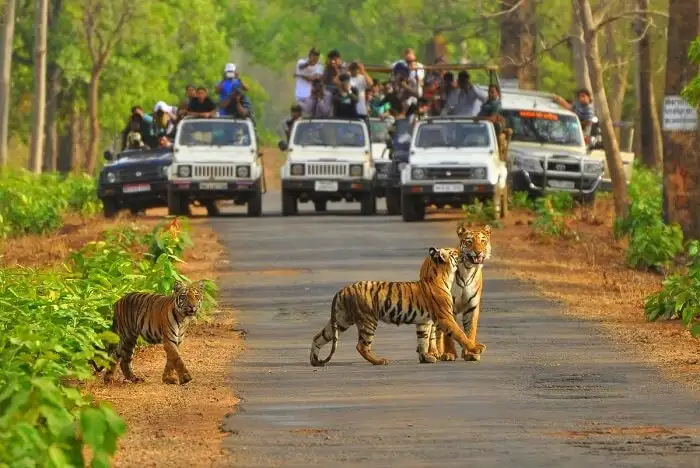
The road leading to Pandupole Hanuman Temple, located deep inside Sariska forest, sees massive yearly footfall.
Every year, lakhs of devotees visit the temple using private vehicles, which has led to:
- rising air pollution
- increased traffic noise
- disturbance to wildlife corridors
The proposed CNG buses are expected to become the main transport mode for pilgrims and tourists.
Once operational:
- private vehicle entry may be restricted
- forest noise levels may decline
- animal movement may improve
Why Pollution Control Has Become Urgent in Sariska
Wildlife officials say the reserve’s growing tiger population requires stronger habitat protection.
At present, Sariska Tiger Reserve has:
- 11 male tigers
- 17 tigresses
- 24 cubs
In addition, the reserve supports:
- over 300 leopards
- Nilgai
- Sambar deer
- Chital
- Langurs
- Monkeys
Experts believe vehicle pollution directly affects long-term breeding conditions.
CNG Move Could Become National Model
Forest authorities believe the transition could make Sariska one of India’s first major tiger reserves with near-zero conventional vehicle movement on major internal routes.
If implemented successfully, the model may influence policy in other reserves.
Officials say the long-term goal is:
- lower emissions
- safer tourism
- better wildlife survival
- improved forest tranquillity
Read also: Kuno Becomes India’s Cheetah Breeding Hub, Preparations Underway for Relocation to Nauradehi