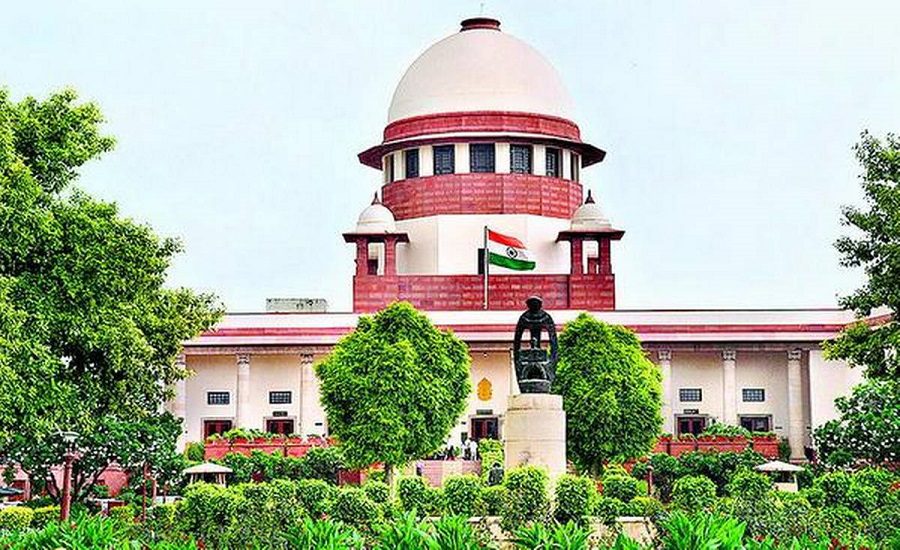
New Delhi: In a landmark decision, the Supreme Court has clarified that candidates belonging to Scheduled Castes (SC), Scheduled Tribes (ST), Other Backward Classes (OBC), and Economically Weaker Sections (EWS) are eligible to be considered for general category government job posts if they meet the cutoff marks stipulated for the general category.
The ruling, delivered by a bench of Justices Dipankar Datta and Augustine G. Masih, draws inspiration from the Supreme Court’s historic Indra Sawhney verdict of 1992, which had granted 27% reservation to OBCs in government jobs.
Background of the Case
The case arose from a recruitment process conducted by the Rajasthan High Court, which had barred reserved category candidates from being appointed to general category posts, even if their marks exceeded the cutoff for the general category.
The High Court had argued that allowing SC/ST/OBC/EWS candidates to be considered for general category posts would amount to granting them a “double benefit”—first through reservation and second through selection in the general category.
However, a division bench of the Rajasthan High Court had earlier ruled in favor of the reserved category candidates, asserting that merit should not be ignored. The High Court then appealed to the Supreme Court.
Supreme Court Judgment
Writing the judgment, Justice Dipankar Datta emphasized, “We hold that the word ‘open’ connotes nothing but ‘open’, meaning thereby that vacant posts which are sought to be filled by earmarking it as ‘open’ do not fall in any category.”
The Supreme Court upheld the division bench’s decision, stating, “The availability of reservation doesn’t operate as a bar for a reserved category candidate from being considered on merit against the unreserved category.”
The Court further clarified the process:
If a reserved category candidate scores more than the cutoff for the general category in the cumulative assessment (written test plus interview), they should be considered in the general category.
If the cumulative score falls short of the general category cutoff, the candidate would be considered under the reserved category to which they belong.
Significance of the Verdict
This decision is being hailed as a major win for meritorious candidates from reserved categories. By allowing them to compete for general category posts based on their performance, the Supreme Court has:
Recognized merit over rigid reservation rules: The judgment emphasizes that candidates cannot be denied opportunities purely on the basis of their caste or category when they outperform others.
Redefined “General Category” seats: Vacant positions marked as open can now truly reflect merit-based selection without discrimination.
Strengthened fair recruitment practices: This ruling could influence recruitment policies across all government departments, ensuring that merit is properly rewarded.
Experts note that while reservations remain essential to ensure representation of disadvantaged groups, this judgment balances affirmative action with the principle of meritocracy.
Conclusion
The Supreme Court’s ruling ensures that candidates from SC, ST, OBC, and EWS categories who excel academically or in competitive examinations are not deprived of opportunities in general category posts. It is expected to impact recruitment policies nationwide and reaffirm the principle that merit should always have its due place in public employment.
Read also: Explained: Why the Supreme Court Is Ending Endless Hearings and What Changes From 2026