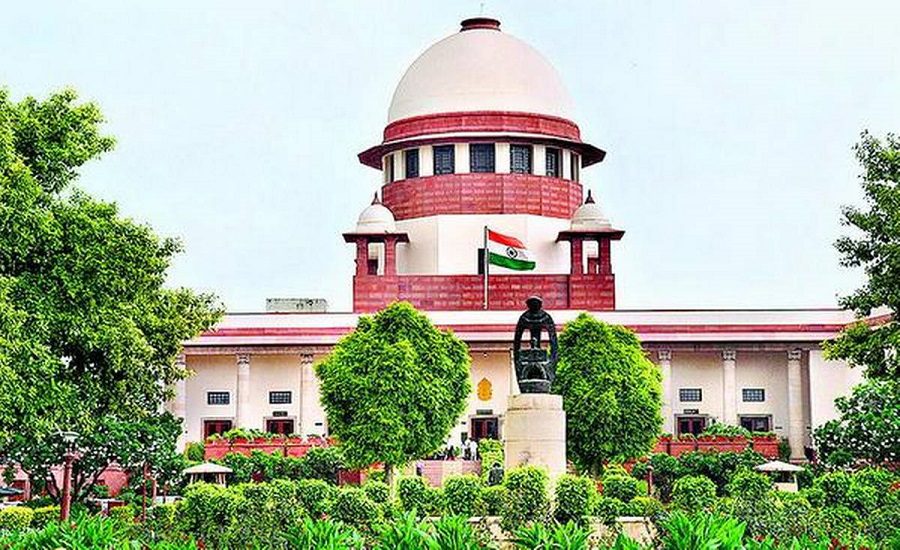
New Delhi: The Supreme Court imposed ₹5 lakh cost on the Union Government in a landmark order after finding that a senior Indian Revenue Service (IRS) officer’s appointment as a Member (Accountant) of the Income Tax Appellate Tribunal (ITAT) was unjustly delayed and obstructed for nearly ten years.
The apex court described this conduct as a “targeted departmental vendetta”, setting aside the previous selection decision and directing a fresh process free of bias within strict timelines.
Background of Captain Pramod Kumar Bajaj ITAT Appointment Case
In 2014, Captain Pramod Kumar Bajaj, a former Army officer who later joined the Indian Revenue Service, was ranked All-India No.1 by a Search-cum-Selection Committee (SCSC) for appointment as Member (Accountant) of the ITAT — a crucial judicial body dealing with direct tax disputes. Despite this recommendation and subsequent judicial orders, the Government failed to issue the appointment letter for years.
Read also: Who Can Investigate Corruption Cases Against Central Officers? Supreme Court Explains the Law
The government repeatedly stalled the process, citing adverse Intelligence Bureau reports related to a matrimonial dispute — allegations that were later held to be baseless.
Even after a reconstituted SCSC reaffirmed his merit in 2018, authorities launched vigilance proceedings, placed him on an “Agreed List” (suggesting integrity concerns), and ultimately compulsorily retired him shortly before superannuation — a move the Supreme Court quashed in 2023.
Supreme Court’s Strong Criticism of Government Conduct
In its recent hearing, a Bench comprising Justice Vikram Nath and Justice Sandeep Mehta heavily criticized the central government for “rank procrastination” and deliberate obstruction in complying with court directions. The apex court described the government’s conduct as a “sordid tale of targeted departmental vendetta” that veered into high-handedness and mala fide action.
The Court was particularly disturbed by the repeated delays and procedural hurdles that prevented Captain Bajaj from getting his rightful appointment, despite multiple judicial directives from the Central Administrative Tribunal (CAT), the Allahabad High Court, and the Supreme Court itself.
Question of Bias: Controversial Role of Committee Member
One of the most telling reasons for the apex court’s decision was the inclusion of an “officer” in the fourth selection committee — an officer who had previously been involved in contempt proceedings initiated by Captain Bajaj due to government non-compliance of court orders.
The Supreme Court found this to be a reasonable apprehension of bias, violating fundamental principles of natural justice.
The Bench noted that “even one member of the selection committee suffering from bias can vitiate the entire selection process,” and held that this committee’s rejection of Bajaj’s candidature could not stand.
Captain Pramod Kumar Bajaj ITAT Appointment Case: Court Orders Fresh Selection and Imposes Cost
Given the deliberate delays and hurdles, the Supreme Court imposed a cost of ₹5 lakh on the Union Government, to be deposited in the Court Registry and later paid to Captain Bajaj. It directed the Department of Personnel and Training (DoPT) to reconstitute the SCSC within four weeks, ensuring the biased officer is excluded. Further, the outcome of the newly convened committee must be communicated within two weeks of its meeting.
The Court’s order also set aside the previous minutes of the SCSC meeting held in September 2024 and restored Bajaj’s right to be considered afresh for the post he had rightfully earned years ago.
Read also: Explained: Why the Supreme Court Imposed ₹25,000 Cost on the Union of India