https://indianmasterminds.com

ADVERTISEMENT
ADVERTISEMENT

Who Can Investigate Corruption Cases Against Central Officers? Supreme Court Explains the Law

The Supreme Court of India has ruled that a state agency can investigate corruption cases against Central Government officers without prior CBI permission, reinforcing state powers under the Prevention of Corruption Act.
Advocate Dhanya Kumar Jain
Indian Masterminds Stories

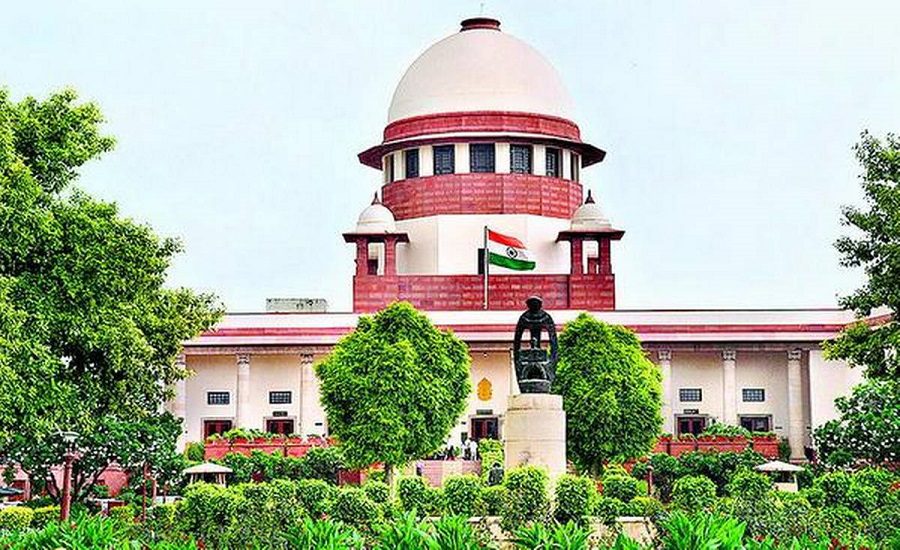
New Delhi: The Supreme Court of India has delivered a landmark judgment affirming that a state agency can investigate corruption cases against Central Government officers under the Prevention of Corruption Act, 1988.

The verdict makes it clear that state police and anti-corruption units do not need prior approval from the Central Bureau of Investigation (CBI) before probing or filing charges against central government employees.

The ruling overturns the understanding that central investigative agencies have exclusive rights over such probes. It opens the door for state authorities to independently pursue corruption allegations involving central officers, so long as the alleged offences fall within territorial and statutory jurisdiction.

Background of the Supreme Court Ruling on Prevention of Corruption Act

The Supreme Court was hearing a challenge to a decision of the Rajasthan High Court that upheld the authority of the State Anti-Corruption Bureau (ACB) to register and investigate a corruption case against a central government employee stationed in Rajasthan. The petitioner had argued that only the CBI, under the Delhi Special Police Establishment Act, could investigate offences committed by central officers.

Read also: Disproportionate Assets Case: ACB Questions Relatives of Suspended IAS Vinay Kumar Chaubey Over Alleged Black Money

The Supreme Court examined the interplay between the Prevention of Corruption Act (PC Act), 1988 and the Code of Criminal Procedure (CrPC), 1973, holding that state police agencies have lawful powers to investigate corrupt conduct wherever it occurs within their territorial limits.

Key Legal Findings on Supreme Court Ruling on Prevention of Corruption Act

The Supreme Court clarified that the CBI does not have exclusive jurisdiction to probe corruption cases involving central government officers. This means states can act independently without waiting for a CBI sanction or directive.

2. Statutory Basis Under the PC Act and CrPC

The bench noted that the Prevention of Corruption Act, 1988, does not expressly restrict investigations by state agencies when the offence occurs within the state’s territorial jurisdiction.

Combined with Sections 4 and 156 of the Code of Criminal Procedure, which allow police to investigate cognizable offences, this empowers state police to act.

3. Validity of Chargesheets by State Agencies

Chargesheets filed by state agencies against central government officials will not be deemed invalid merely because the CBI was not involved in the investigation. This fosters greater autonomy for states in anti-graft actions.

What are the Implications Supreme Court Ruling on Prevention of Corruption Act

State police forces and state anti-corruption bodies such as the Anti-Corruption Bureau (ACB) can directly act against allegations of bribery and other corrupt practices by central officers within state boundaries. This adds speed and flexibility to law enforcement.

Reduced Dependency on Central Agencies

Previously, many states depended on the CBI to initiate and conduct investigations, which often led to delays or jurisdictional disputes. Now, state agencies can proceed on their own, provided they follow due procedure under law.

Potential for Increased Probes Nationwide

The judgment could lead to an increase in corruption probes involving central officials, particularly in states with robust anti-corruption units. States with well-staffed vigilance departments may now lead inquiries independently.
Read also: Drug Inspector Recruitment Explained: Why the Supreme Court Barred States From Changing Drug Inspector Qualifications


Indian Masterminds Stories
ADVERTISEMENT
ADVERTISEMENT
Related Stories
ADVERTISEMENT
ADVERTISEMENT
NEWS
SECL
SECL Wins Performance Excellence Award 2025–26 for Operational Excellence at 26th CEOs Conference
PMGSY-IV
PMGSY-IV Launch in Odisha: Shivraj Singh Chouhan Announces 827 New Roads Worth Rs 1,700 Crore in Rayagada 
cm bhupendra patel
Gujarat Gaurav Diwas 2026: CM Bhupendra Patel Announces Rs 7.5 Crore Development Push for Surat 
IAS-IPS
Pratyasha 2.0: AASU, NESO Launch Initiative to Train Indigenous IAS, IPS Officers in Northeast
Navi Mumbai Fake IAS Officer Case
Rajasthan Bureaucracy Set for Major Changes as 10 IAS Officers Retire in 2026; Chief Secretary V. Srinivas Among Key Names
cm bhupendra
CM Bhupendra Patel Inaugurates Vibrant Gujarat Exhibition 2026 in Surat Showcasing Industrial Growth and Green Energy
cm dhami
CM Pushkar Singh Dhami Announces New Old Age Homes, Senior Citizen Welfare Expansion in Uttarakhand
cm dhami
Uttarakhand CM Pushkar Singh Dhami Approves ₹1,252 Crore Projects for Kumbh 2027, Infrastructure & Education Boost
ADVERTISEMENT
ADVERTISEMENT
Videos
Punjab’s Welfare Push Backed by Surging Revenues Harpal Singh Cheema
Punjab’s Welfare Push Backed by Surging Revenues
vandana
IRS Vandana Sagar: From Academic Excellence to International Tax Leadership and a Champion’s Mindset
Pawan Sareen
Truth Behind India’s LPG Supply Strain Amid Rising Demand and Global Uncertainty 
ADVERTISEMENT
UPSC Stories
Himanshu Tembhekar IDAS UPSC CSE
How to Crack UPSC in Marathi Medium: Himanshu Tembhekar’s Strategy, Challenges, and Success
Himanshu Tembhekar shares his UPSC strategy, challenges of Marathi medium, Prelims tips, and how he cleared...
WhatsApp Image 2026-04-27 at 5.48
Wedding Celebrations Turn Bigger as Suvan Sharma Becomes Jammu’s UPSC Topper
J&K topper Suvan Sharma secured AIR 148 in UPSC CSE 2025 in his sixth attempt, improving from AIR...
WhatsApp Image 2026-04-25 at 7.02
Born Without a Forearm, Kerala’s Daughter Secures AIR 167 in UPSC CSE 2025
Born without a forearm, Kerala’s Kajal Raju improved from AIR 910 to AIR 167 in UPSC CSE 2025 after four...
CSR NEWS
school edcil
EdCIL Boosts Rural Education with New Classrooms and Sanitation Facilities in Varanasi School
Classroom & Sanitation Upgrade: EdCIL Strengthens Education Infrastructure in Varanasi
ntpc
₹7.19 Crore Healthcare Upgrade: NTPC Sipat Strengthens Bilaspur’s Medical Infrastructure
Big Boost to Healthcare: The initiative was highlighted during an event attended by Tokhan Sahu, Union...
ews
DVK Foundation Launches Scholarship Programme for EWS Students at BGIS Vrindavan
BGIS Vrindavan Partners with DVK Foundation for EWS Student Scholarships
ADVERTISEMENT
ADVERTISEMENT
ADVERTISEMENT
Latest
SECL
SECL Wins Performance Excellence Award 2025–26 for Operational Excellence at 26th CEOs Conference
PMGSY-IV
PMGSY-IV Launch in Odisha: Shivraj Singh Chouhan Announces 827 New Roads Worth Rs 1,700 Crore in Rayagada 
ADVERTISEMENT
ADVERTISEMENT
ADVERTISEMENT
ADVERTISEMENT
ADVERTISEMENT
ADVERTISEMENT
ADVERTISEMENT
Videos
Punjab’s Welfare Push Backed by Surging Revenues Harpal Singh Cheema
vandana
Pawan Sareen
ADVERTISEMENT
ADVERTISEMENT