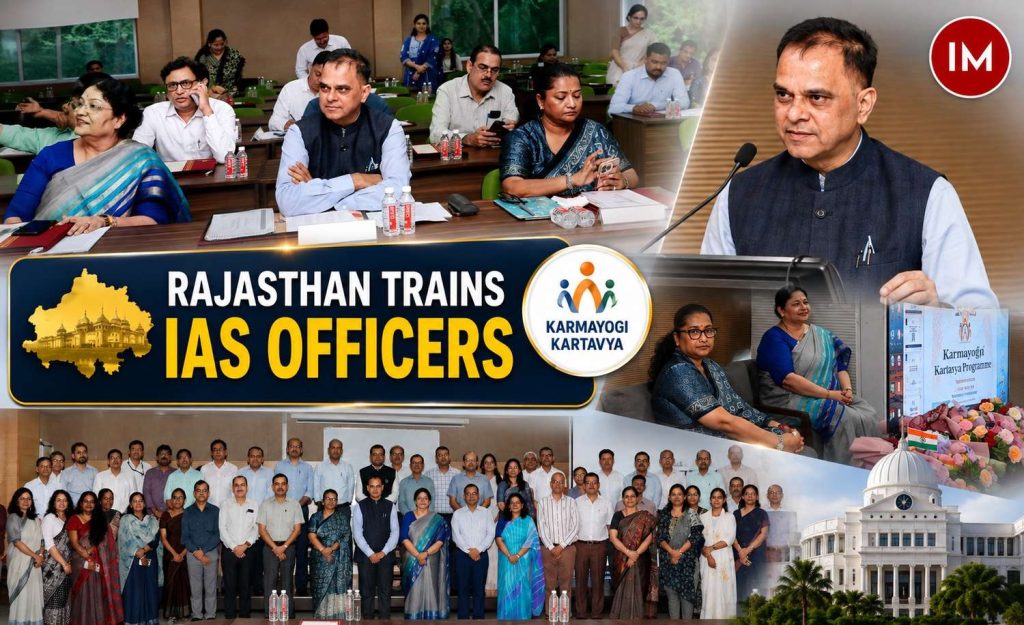
Jaipur/New Delhi: A special workshop under the ‘Karmayogi Kartavya’ programme was organised in Rajasthan for 70 IAS officers (Secretary rank), with a focus on strengthening administrative capabilities and preparing the state’s governance system to meet emerging and future challenges.
The workshop, held under the Rashtriya Karmayogi Karyakram (RKK) of the National Programme for Civil Services Capacity Building – Mission Karmayogi, covered key areas including behavioural competencies, work styles, technology adoption, and citizen-centric administration.
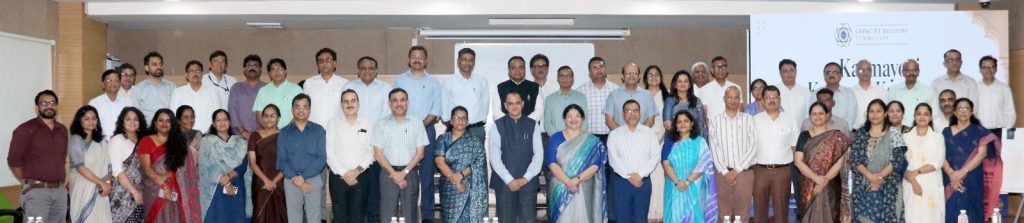
The programme was conducted at the Harish Chandra Mathur Rajasthan State Institute of Public Administration (HCM RIPA), Jaipur, where 70 Secretaries to the Government of Rajasthan successfully completed all four prescribed modules of the programme on August 10.
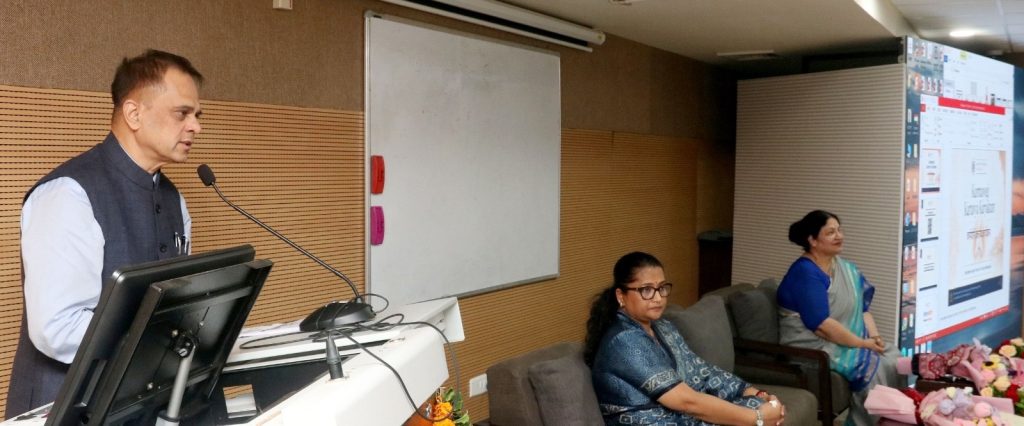
Addressing the workshop, Rajasthan Chief Secretary V. Srinivas, a 1989-batch IAS officer, said the initiative goes beyond conventional training and is designed to equip civil servants with the capabilities required for the next generation of governance.
“This is a major milestone for Rajasthan under Mission Karmayogi. We are the first state to conduct the Rashtriya Karmayogi Karyakram for 70 Secretaries of Rajasthan,” Mr. Srinivas told Indian Masterminds.
Karmayogi Kartavya Goes Beyond Conventional Training
The workshop sought to strengthen the capacity of senior civil servants by equipping them with contemporary skills and competencies, while encouraging a more technology-enabled, responsive, and citizen-focused approach to governance.
IAS Srinivas said the ‘Karmayogi Kartavya’ programme is not limited to training officers, but represents a comprehensive effort to prepare the administrative machinery for the changing requirements of governance.
Read Also: Rajasthan Seeks Repatriation of 4 Senior IAS Officers From Centre; Rajeev Singh Thakur Among Names
According to the Chief Secretary, the objective is to develop institutions that are more proactive, effective and citizen-centric.
He stressed that the changing nature of governance requires administrative officers to approach their responsibilities with greater depth, initiative and responsiveness.
The programme seeks to equip officers not only with technical capabilities but also with the appropriate mindset, behavioural competencies and work styles required for effective public administration.
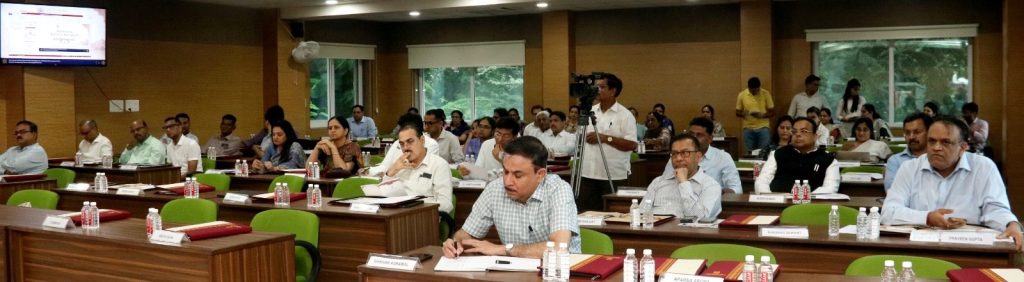
Focus on Transforming Officers’ Work Style
A major focus of the workshop was the transformation of the work culture and approach of administrative officers.
The programme emphasised the need to develop employees into ‘Karmayogis’ – dedicated public servants committed to public service.
Another key area was the transition from a role-based approach towards a rule-based approach, alongside greater use of technology to transform workplaces and administrative processes.
The emphasis on technology is aimed at helping government officers adapt to rapidly changing systems and use digital tools to improve efficiency and service delivery.
Chief Secretary Calls for Proactive Administration
Speaking about the impact of such programmes, Chief Secretary Srinivas said capacity-building initiatives encourage officers to engage with their responsibilities in a more proactive and deeper manner.
He also highlighted the importance of guidance and interaction with experienced officers, saying that such exposure can instil positive energy among participants and contribute towards building a more effective governance system.
The broader objective, he indicated, is to ensure that administrative institutions remain equipped to respond to changing public expectations and emerging governance challenges.
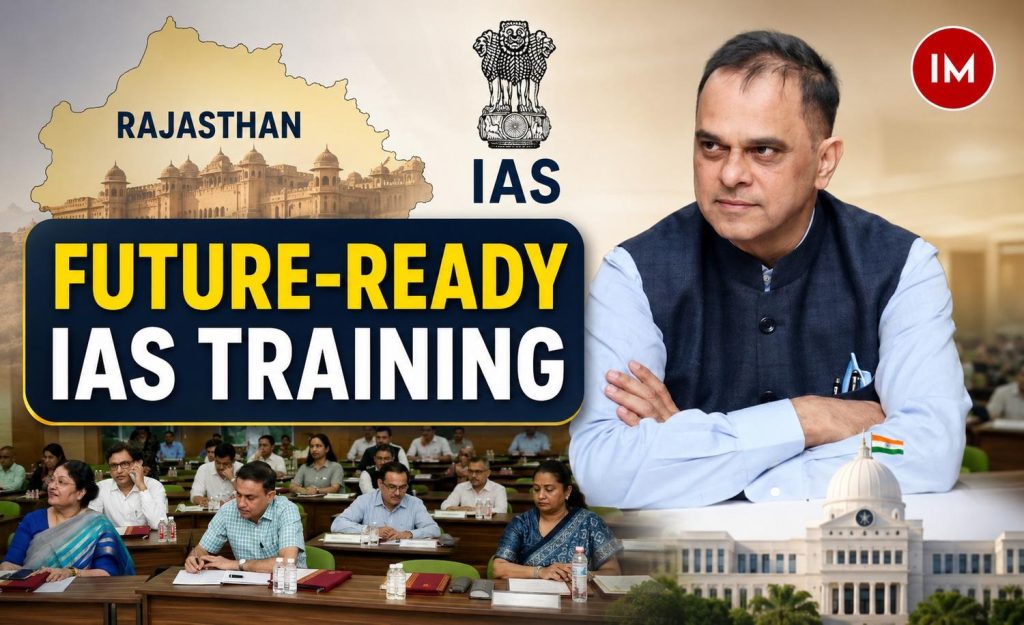
HCM-RIPA Highlights Future Administrative Challenges
Shreya Guha, Director General of the Harish Chandra Mathur Rajasthan State Institute of Public Administration (HCM-RIPA), said the workshop was designed to strengthen the capabilities of participating officers and prepare them for future administrative challenges.
She underlined the importance of continuous capacity building in the civil services, particularly as governance becomes increasingly complex and technology-driven.
According to Guha, such programmes can play an important role in creating a future-ready, effective and responsive bureaucracy.
Capacity Building Commission Focuses on Changing Citizen Needs
Chandralekha Mukherjee, Principal Advisor at the Government of India’s Capacity Building Commission, said the Karmayogi programme, launched five years ago, is aimed at preparing government officers for evolving and future administrative requirements.
She said the programme focuses on developing the competencies, mindsets and work styles needed by civil servants to respond effectively to changing circumstances.
The training also places emphasis on understanding the evolving needs of citizens, promoting innovation and improving effectiveness in government functioning.
Mukherjee stressed that the ultimate goal is to make administration more responsive and citizen-centric.
Four Modules Successfully Completed by 70 Officers
All 70 IAS officers participating in the Rajasthan workshop successfully completed the four prescribed modules.
The training brought together different aspects of professional and behavioural development, with particular attention to:
- Behavioural competencies and work styles
- Technology-enabled workplace transformation
- Citizen-centric administration
- Future-oriented governance and administrative effectiveness
The workshop reflects the broader emphasis on continuous capacity building within the civil services and the effort to equip officers with skills suited to the changing demands of public administration.
Towards Future-Ready Governance
The Rajasthan workshop under Karmayogi Kartavya comes against the backdrop of growing expectations from government institutions to deliver faster, more efficient and citizen-focused services.
The emphasis on behavioural change, technology adoption, innovation and responsiveness indicates an effort to move beyond conventional administrative training.
With 70 IAS officers completing the prescribed modules, the programme aims to strengthen the state’s administrative capacity and create a pool of officers better prepared to deal with future governance challenges and changing citizen expectations.