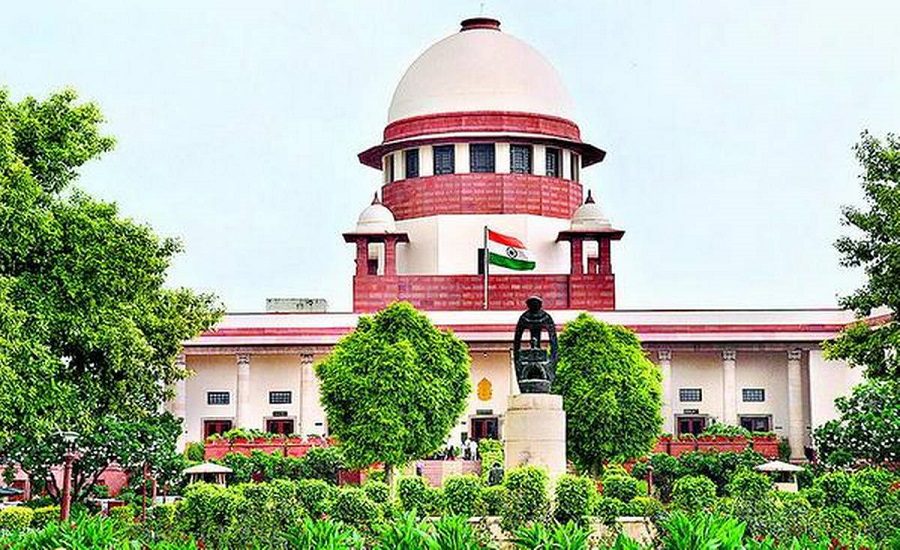
New Delhi: The Supreme Court of India has asked the Law Commission of India to recommend measures for the speedy execution of arbitral awards. The move comes after a commercial dispute remained under litigation for more than 24 years over the enforcement of an arbitral award.
The Court said that arbitration loses its purpose when successful parties face years of delays before receiving the benefits of an award. The proposed study may help identify legal and procedural problems and suggest ways to make award enforcement faster and more effective.
Supreme Court Highlights Delays In Arbitration Award Enforcement
On October 28, 2026, a three-judge bench of the Supreme Court, comprising Justices Vikram Nath, Sandeep Mehta and Aparesh Kumar Singh, asked the Law Commission to examine the existing legal framework for enforcing arbitral awards.
Read also: Election Commission’s New Form 7 Guidelines: What Every Voters Need to Know
The Court observed that delivering an award quickly is not enough. The successful party must also be able to receive the money or other benefits awarded within a reasonable time.
The bench highlighted that lengthy enforcement proceedings can weaken arbitration as an alternative to traditional court litigation.
What Triggered The Supreme Court’s Intervention
The case arose from an international commercial arbitration dispute between Iraq-based Royal Construction Company Pvt. Ltd. and National Projects Construction Corporation.
The arbitral award was issued in 2002. However, even after more than 24 years, the parties were still involved in legal proceedings concerning its enforcement.
The prolonged dispute highlighted the difficulties that can arise when a party tries to enforce an award after the arbitration process has ended.
The Court stressed that a successful party should not have to face another prolonged legal battle to obtain the benefits of an award.
Why The Supreme Court Wants Changes In The Current Arbitration Award Enforcement System
The Supreme Court explained that the effectiveness of arbitration depends not only on how quickly an award is passed but also on how efficiently it is enforced.
Under Section 36 of the Arbitration and Conciliation Act, 1996, arbitral awards are enforced in the same manner as court decrees, subject to the applicable legal requirements.
This means that the process generally relies on the execution procedures followed by civil courts under the Code of Civil Procedure, 1908.
The Court indicated that problems within this process may cause unnecessary delays and prevent successful parties from recovering their awarded amounts on time.
Key Areas The Law Commission Will Examine
The Supreme Court identified several important issues that require closer examination. The Law Commission has been asked to study the existing framework and consider possible legal or procedural improvements.
1. Identification And Disclosure Of Assets
The Commission may examine how the assets of a person or organisation required to pay under an arbitral award can be identified and disclosed more effectively.
Better procedures could help courts deal with recovery proceedings more efficiently.
2. Better Coordination Of Enforcement Procedures
The Court highlighted the need to improve coordination between different methods used to execute an award.
A more organised process could help reduce procedural difficulties and unnecessary delays.
3. Repeated And Delaying Objections
The Commission may also examine how repeated objections that unnecessarily delay execution proceedings can be addressed.
At the same time, genuine legal objections and the legitimate rights of the parties must continue to receive proper consideration.
4. Faster Completion Of Execution Proceedings
Another important issue is the time taken to complete enforcement proceedings.
The Commission may consider ways to make the process more time-efficient so that successful parties do not have to wait for years to receive the benefits of an award.
Arbitration Award Enforcement: Law Commission May Study International Practices
The Supreme Court also asked the Law Commission to study how other countries enforce arbitral awards.
The Commission may examine whether India should follow separate enforcement procedures for domestic and foreign arbitral awards or adopt a common framework with suitable safeguards.
The purpose is to identify effective practices that could improve recovery while protecting the legal rights of parties against whom awards are enforced.
The Commission may then recommend changes to legislation or court procedures, wherever necessary.
How Section 36 Of The Arbitration And Conciliation Act, 1996 Works
Section 36 provides the legal framework for enforcing arbitral awards in the same manner as court decrees, subject to the provisions of the Act.
In practical terms, a party seeking to enforce an award may need to approach the competent court for execution.
The Supreme Court’s observations indicate that the execution stage requires greater attention because delays can continue even after an award has survived legal challenges.
The Court wants the enforcement system to better support the purpose of arbitration: resolving disputes effectively and allowing successful parties to obtain the benefits of their awards without unreasonable delay.
Read also: Law Commission Conference 2026: Key Details On Legal Reforms And Federalism
FAQs
Section 36 provides for the enforcement of arbitral awards in the same manner as court decrees, subject to the applicable provisions of the law. It forms an important part of the legal framework for executing arbitral awards in India.
The Supreme Court asked the Law Commission to study the enforcement process because lengthy execution proceedings can prevent successful parties from receiving the benefits of arbitral awards within a reasonable time.
No. The Court has requested a study and recommendations from the Law Commission. Any improvement will depend on the recommendations and any subsequent legislative or procedural changes that may be adopted.