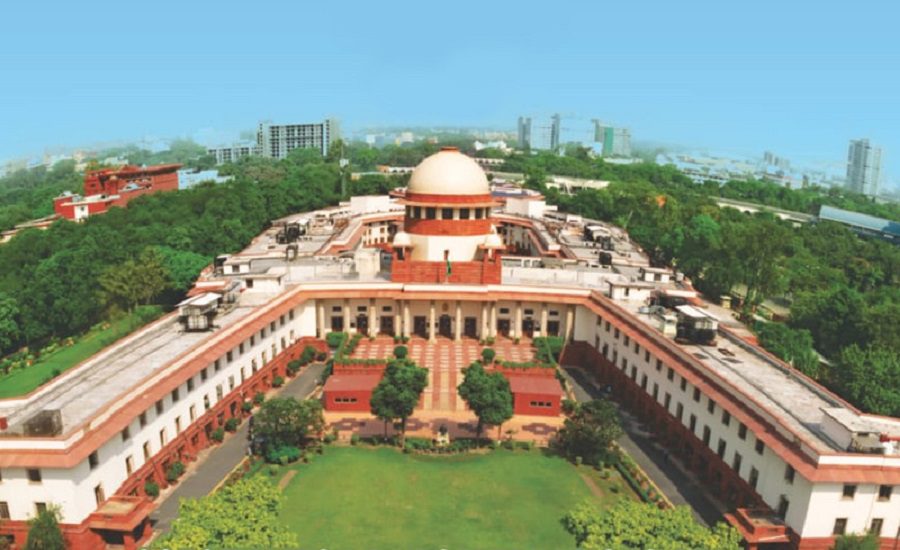
New Delhi: In a significant judicial development that could reshape India’s reservation landscape, the Supreme Court of India sought responses from the Union government and all State governments on a plea that seeks exclusion of the “creamy layer” from reservations afforded to Scheduled Castes (SCs) and Scheduled Tribes (STs). However, the top court made it clear that it is not yet hearing the case on its merits and has instead focused on procedural aspects for the time being.
What Is the Creamy Layer Principle?
The term “creamy layer” refers to members within a social group who, despite belonging to backward classes, have achieved relatively higher social, educational, and economic status, making them less in need of reservation benefits.
Read also: Former CJI BR Gavai Advocates Creamy Layer Principle for Scheduled Castes Reservations
Originally developed in the context of Other Backward Classes (OBCs), this principle excludes relatively affluent individuals from reservation benefits to ensure that the truly disadvantaged benefit from affirmative action.
Notably, under current law, the creamy layer criterion does not apply to SCs and STs — meaning all individuals from these groups, regardless of economic standing, continue to receive reservation protections.
The Supreme Court Hearing on Creamy Layer SC/ST Quota
The matter was heard by a Constitution bench comprising:
- Chief Justice of India Surya Kant
- Justice Joymalya Bagchi
- Justice Vijay Bishnoi
During the hearing, the court admitted several intervention applications, including one from the All India SC/ST Employees of the Railways, which opposed the plea.
Chief Justice Kant expressed surprise that even employees in Class III and Class IV positions were part of the opposing group, underscoring the complexity of views emerging from within the reserved communities.
Petition’s Core Argument on Creamy Layer SC/ST Quota
The writ petition — filed by Advocate Ashwini Kumar Upadhyay — argues that reservation was conceived as a remedial and compensatory measure to uplift the most backward segments of society. The petition asserts that over time, economically advantaged members within the SC/ST categories have continued to benefit from reservation without any distinction based on economic criteria, which, in its view, undermines the constitutional objective of substantive equality.
Drawing on debates from the Constituent Assembly, the petitioner contended that reservation was not intended to benefit the children of influential or economically secure individuals. He emphasized that reservation’s core aim was to correct historical injustices and promote substantive equality through targeted support for the most marginalized.
Court’s Position: Not a Merits Hearing Yet
The Supreme Court stressed that at this stage, it is not adjudicating the merits of the petition. Instead, it has granted a six-week period to the Centre and state governments to file detailed responses. The court called for comprehensive stakeholder inputs before any substantive evaluation, recognizing the deep policy implications and the sensitive nature of reservation laws.
Chief Justice Kant noted:
“Today, we are not hearing anything on merits. We would like to have the opinion of every stakeholder. These are also policy matters.”
The Larger Context: Reservation Policy and Legal Precedents
This latest development in the creamy layer debate follows earlier judicial and academic discourse on the reservation framework in India:
State of Punjab v. Davinder Singh (2024)
In a landmark 2024 judgment, a seven-judge Constitution Bench held that Scheduled Castes and Scheduled Tribes are not homogenous groups, and that sub-classification within these categories is constitutionally permissible — including applying the creamy layer principle to ensure equitable distribution of benefits among SCs and STs.
Historical Framework
The creamy layer concept was first used in the context of OBC reservations in the Indra Sawhney v. Union of India (1992) case, with judiciary and policy discourse recognizing that exclusion of affluent members from benefits helps better target affirmative action.
Read also: Explained: Why the Supreme Court Is Re-Examining Creamy Layer in SC/ST Reservation