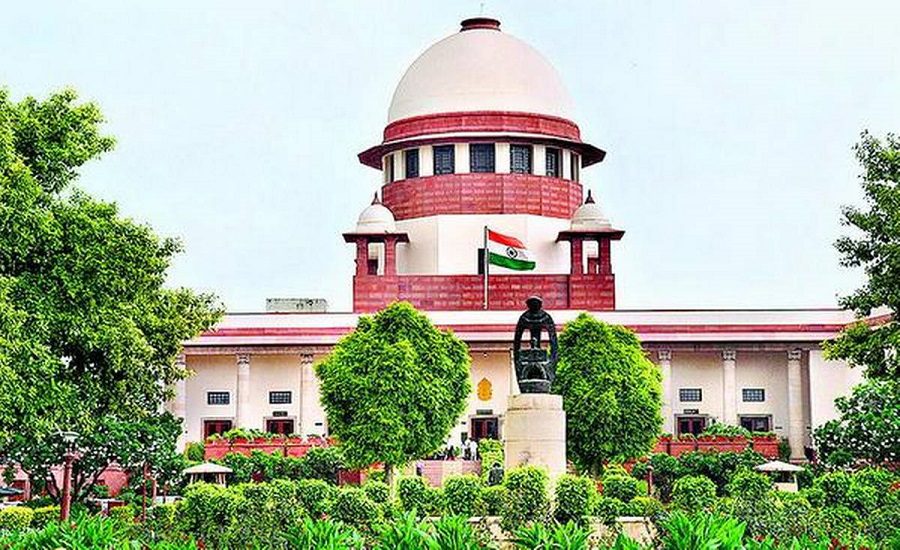
New Delhi: The Supreme Court on Monday dismissed the Delhi government’s appeal challenging a Delhi High Court order that directed retrospective payment of enhanced remuneration to law researchers attached to the Delhi High Court.
A Bench comprising Chief Justice of India Surya Kant and Justices Joymalya Bagchi and Vipul M Pancholi upheld the High Court’s direction to increase the monthly remuneration of law researchers from ₹65,000 to ₹80,000 with effect from October 1, 2022.
The case is titled The Government of NCT of Delhi vs. Rushant Malhotra & Ors.
Background of the Dispute
The dispute originated from an August 2023 decision by a committee of judges of the Delhi High Court approving a proposal to enhance the remuneration of law researchers from ₹65,000 to ₹80,000 per month, effective October 1, 2022.
The proposal was approved by the Chief Justice of the High Court and forwarded to the Government of NCT of Delhi for necessary approval.
While the government eventually approved the salary hike on September 3, 2025, it made the increase applicable prospectively from September 2, 2025, instead of retrospectively from October 2022.
Meanwhile, some law researchers had approached the High Court seeking implementation of the enhanced remuneration with retrospective effect. The High Court allowed their plea and directed payment of arrears from October 1, 2022.
Delhi Government’s Arguments
Challenging the High Court order, the Delhi government argued before the Supreme Court that:
Under Article 229(2) of the Constitution, while the Chief Justice has the authority to frame service rules for High Court staff, any decision involving salaries and allowances requires approval of the Governor.
Since such payments are drawn from the Consolidated Fund of the State, financial implications — including retrospective effect — cannot be treated as a mere administrative formality.
Retrospective implementation would impose an additional financial burden of approximately ₹9.45 crore on the State exchequer.
Fixing a cut-off date for financial benefits is an executive function, and fiscal constraints are valid grounds for prospective implementation.
The government contended that by directing retrospective payment, the High Court effectively imposed a substantial unbudgeted liability without allowing the State to exercise its constitutional financial role.
The plea was filed through advocate Swati Ghildiyal.
Supreme Court’s Decision
The Supreme Court, however, dismissed the appeal and upheld the High Court’s direction for retrospective payment of enhanced remuneration from October 1, 2022.
With this order, eligible law researchers will now receive arrears corresponding to the enhanced monthly remuneration of ₹80,000 from the specified date.
Key Takeaways
- Law researchers’ monthly pay increased from ₹65,000 to ₹80,000.
- Enhancement effective from October 1, 2022.
- Supreme Court dismissed Delhi government’s plea against retrospective implementation.
- Estimated financial impact: ₹9.45 crore on the State exchequer.