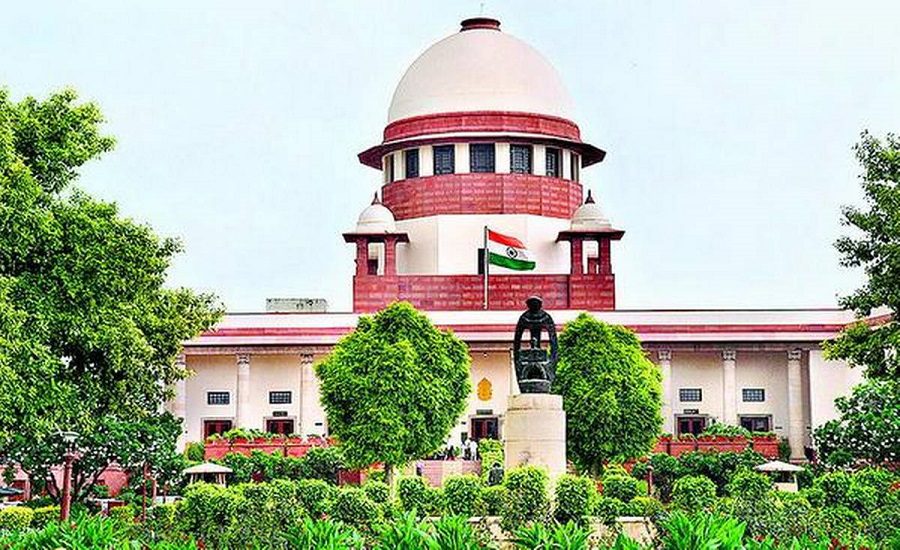
New Delhi: In a major move aimed at bolstering the efficiency of India’s criminal justice system and preventing procedural delays, the Supreme Court of India has directed that all chargesheets, challans, and final reports filed in criminal cases must explicitly disclose whether there are cross-cases or related cases arising from the same sequence of events.
The bench, comprising Justice Rajesh Bindal and Justice Manmohan, underscored that this transparency in criminal filings will empower trial courts to identify connected matters early and take appropriate judicial steps — including clubbing trials — to ensure timely justice and prevent “avoidable situations” that prolong litigation.
Background of Mandatory Disclosure of Cross Cases in Chargesheets
India’s judiciary has long grappled with an overwhelming backlog of cases, with millions pending at various levels of trial and appellate courts, leading to what legal experts describe as a “crisis of delayed justice.” Causes include procedural abuses, fragmented case records, re-filings, and separate trials for factually similar incidents — notably cross-FIRs where opposing parties lodge multiple complaints against each other.
Cross-cases typically arise when two or more criminal complaints stem from the same sequence of events but are filed independently by different parties — often leading to duplicative trials, conflicting witness testimonies, and inconsistent verdicts.
Before this directive, courts and police often did not disclose these connected cases in the initial chargesheets, leaving trial judges unaware of related criminal matters.
This oversight often meant that two related cases proceeded on vastly different timelines — as highlighted by the Supreme Court during arguments.
Case at the Heart of the Directive: Lalji Mishra & Ors. v. State of Uttar Pradesh & Anr.
The Supreme Court’s judgment emanates from an appeal concerning two criminal matters arising from the same incident in Uttar Pradesh in 2009, where cross-FIRs were registered by opposing parties.
In the matter, one case had progressed to final arguments at the sessions trial stage, while the other, filed as a separate complaint before a magistrate, had barely begun.
The appellants sought that both matters be clubbed together and tried by the same sessions court given the overlapping factual matrix, common witnesses, and shared legal issues. However, the Allahabad High Court’s order rejecting the plea to club the trials highlighted systemic friction rooted in insufficient disclosure of linked cases at the investigation and charge framing stage.
Supreme Court’s Rationale for Mandatory Disclosure of Cross Cases in Chargesheets
Delivering the directive, the bench noted that the absence of cross-case disclosure resulted in an anomaly where one case made significant progress while the other lagged, threatening the coherence of final adjudication and raising concerns about procedural fairness.
Key Observations by the Court
Mandatory Disclosure: Every chargesheet, challan, or final report must clearly state whether a cross-case or related case exists.
Judicial Efficiency: Early disclosure enables trial courts to club related cases, schedule hearings effectively, and avoid contradictory or piecemeal findings.
Justice Delivery: Identifying connected matters early aligns with the broader goal of expeditious justice — a foundational principle in criminal jurisprudence.
The bench emphasized that such procedural clarity is not merely administrative but foundational to preventing “avoidable situations” where one connected case concludes while another remains pending, potentially undermining the integrity of verdicts.
Impact of Mandatory Disclosure of Cross Cases in Chargesheets on the Criminal Justice System
This directive could have far-reaching implications for multiple stakeholders:
For Law Enforcement Agencies
Police and investigation agencies will now need to conduct more thorough incident mapping during investigation to identify linked FIRs, cases, or sequential complaints arising out of the same facts.
For Prosecutors
Public prosecutors will be required to flag all related cases while filing chargesheets, helping courts make informed decisions early in the judicial process.
For Courts
Judges will have a clearer picture of related litigation, enabling:
- Clubbing of trials
- Avoidance of inconsistent orders
- Reduced adjournments due to late discovery of related cases
Legal analysts believe that these measures align with broader judicial reforms aimed at reducing judicial pendency and safeguarding the rights of accused, victims, and society at large.
Read also: JJ Act Shockwave: Allahabad High Court Rules Child Welfare Committee Can Only Report, Not Order FIR