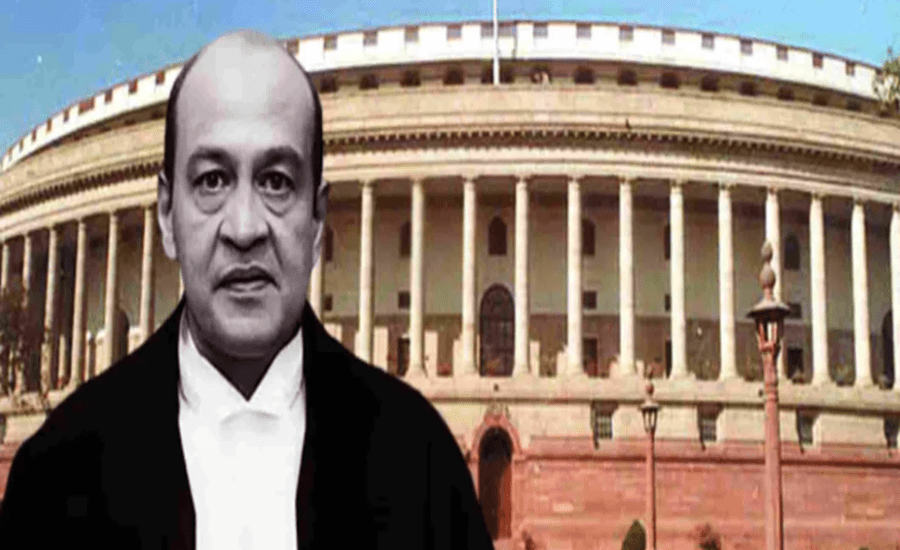
New Delhi: The Supreme Court of India on Thursday reserved its decision on a high-stakes constitutional legal battle involving Justice Yashwant Varma, a sitting judge of the Allahabad High Court.
The petition challenges the legality of a three-member inquiry committee formed by the Lok Sabha Speaker to investigate alleged misconduct against him following the discovery of unaccounted cash at his official residence.
Background of Justice Yashwant Varma Case
In March 2025, a significant cache of burnt cash was discovered in an outhouse of Justice Varma’s official residence in New Delhi during a fire-fighting intervention.
Read also: Big Move in Justice Yashwant Varma Cash Row: Advocate Karan Umesh Salvi Joins Inquiry Team
The extraordinary find sparked nationwide controversy, prompting the Supreme Court to order preliminary inquiries and ultimately initiate what evolved into deeper scrutiny.
After internal in-house proceedings — which concluded that there was “secret or active control” exercised by Justice Varma over the recovered currency — Parliament took an active role.
Under the Judges (Inquiry) Act, 1968, a motion seeking impeachment was introduced in both the Lok Sabha and the Rajya Sabha on July 21, 2025.
However, while notices were presented in both Houses, procedural disagreements soon emerged between the two chambers over whether a valid motion had been admitted — setting the stage for the current legal challenge.
Core Legal Challenge in Justice Yashwant Varma Case
Justice Varma’s petition argues that:
The Lok Sabha Speaker’s unilateral formation of a probe committee did not comply with the mandatory consultative or joint admission procedures outlined in the Judges (Inquiry) Act, especially when notices were simultaneously filed in both Houses.
The committee’s constitution was procedurally infirm, potentially violating statutory protections afforded under Section 3(2) of the Act that guide how and when an inquiry panel may be formed.
The Rajya Sabha’s rejection of the impeachment motion and the role of the Deputy Chairman in that process were also challenged as outside the statute’s intent.
Justice Varma’s legal team argued that strict compliance with statutory procedure is essential to ensure fairness and prevent arbitrary or one-sided parliamentary actions against sitting members of the judiciary.
Supreme Court Proceedings in Justice Yashwant Varma Case
A judicial bench comprising Justices Dipankar Datta and Satish Chandra Sharma heard the petition.
Key highlights of the oral arguments included:
Petitioner’s Stand
- The existence of simultaneous motions required admission by both Houses before any committee could be formed.
- The rejection of the Rajya Sabha motion by the Deputy Chairman should not have precluded a joint committee.
- The Speaker’s rushed action may have denied procedural due process under the Act.
Respondent’s Defense
- The purpose of the statute in avoiding multiple contradictory committees justified the Speaker’s actions.
- No demonstrable prejudice had been caused to Justice Varma by the committee’s formation alone.
Judicial Observations
The Supreme Court noted possible infirmity in the committee’s constitution but also questioned whether the challenged procedure could, on its own, justify quashing the entire inquiry at this stage.
What’s at Stake: Judicial Accountability Vs. Separation of Powers
This case touches upon core constitutional principles:
- Judicial independence and protections from arbitrary proceedings.
- Parliament’s power to investigate and impeach judges under statutory authority.
- Separation of powers and statutory precision in complex constitutional processes.
Legal analysts suggest the Court’s judgment could redefine how parliamentary committees are constituted and whether existing statutory language sufficiently protects due process in impeachment-related inquiries.
Next Steps: Reserved Verdict and Its Implications
The Supreme Court’s reserved judgment is yet to be pronounced. Once delivered, it may clarify:
- Whether the Lok Sabha Speaker’s formation of the inquiry panel was lawful.
- The statutory requisites for joint action between Lok Sabha and Rajya Sabha on impeachment motions.
- The future of impeachment proceedings against sitting judges.
Observers expect the judgment to set an important precedent for parliamentary oversight of the judiciary and constitutional checks and balances.