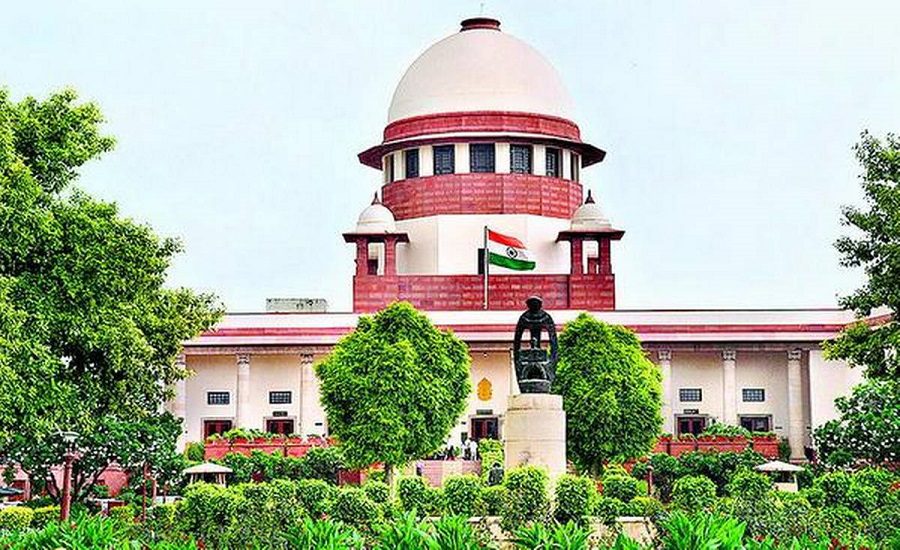
New Delhi: The Central Government has strongly opposed a Public Interest Litigation (PIL) in the Delhi High Court seeking a reduction in the Goods and Services Tax (GST) on air purifiers, asserting that judicial directions on fiscal matters would be unconstitutional and violate the doctrine of separation of powers.
Background of Air Purifier GST PIL Case
The petition, filed by Advocate Kapil Madan, argues that in light of the extreme air pollution emergency in Delhi and the National Capital Region (NCR), air purifiers should be treated as essential items rather than luxury goods.
The plea requests that air purifiers be classified as “medical devices,” and that their GST rate be cut from 18% to 5%.
The petitioner contends that such a tax reduction would improve access for vulnerable communities and reflect the “necessity” of clean air in public health emergencies.
Centre’s Arguments on Air Purifier GST PIL Case
In a detailed counter-affidavit filed on January 4, 2026, the Union Government countered the PIL on several legal and constitutional grounds:
1. GST Authority Lies Solely with the GST Council
The Centre emphasised that decisions on:
tax rates, product classification, and any reductions or exemptions
are constitutionally entrusted to the GST Council, established under Article 279A of the Indian Constitution.
It argued that courts do not have the authority to substitute themselves for designated constitutional bodies in economic and fiscal matters.
Any attempt to do so would contravene the constitutional framework of cooperative federalism whereby both the Union and state governments collectively decide GST policy.
2. Judicial Intervention Would Violate Separation of Powers
The government stressed that issuing a judicial directive to lower GST or compel the GST Council to hold meetings would amount to judicial overreach, violating the doctrine of separation of powers — a fundamental constitutional principle that prevents the judiciary from exercising functions meant for the executive or legislative branches.
Counsel argued that if courts could set or alter tax rates, it would reduce the GST Council to a “rubber stamp,” undermining its constitutional mandate.
3. PIL Alleged to Be Motivated with Regulatory Reclassification Hidden Agenda
The Centre labelled the PIL as “colourable and motivated”, suggesting its true aim was not public interest but to achieve regulatory reclassification under the pretext of tax relief.
It further argued that if air purifiers were classified as medical devices:
- their import, manufacture, sale, and distribution would be regulated under the Drugs and Cosmetics Act, 1940, and
- the Medical Device Rules, 2017, potentially restricting market availability and favouring entities with licences.
Court’s Earlier Observations on Air Purifier GST PIL Case and Next Hearing
Earlier during the hearings on December 24 and 26, 2025, the Delhi High Court noted the severity of the air pollution situation in the capital and raised questions about the high tax rates on air purifiers.
The Court had suggested that the GST Council be urged to convene an urgent meeting to consider adjusting the GST slab — recognising the health implications of prolonged exposure to poor air quality. However, with the Centre’s robust pushback, the court scheduled further arguments for January 9, 2026, with a focus on constitutional questions and fiscal authority limits.
Economic and Public Health Implications
Air purifiers, widely used in Delhi NCR especially during the winter months when air quality often deteriorates to hazardous levels, remain taxed at 18% GST under tariff heading HSN 8421, according to government documentation. In comparison, many medical devices attract a lower 5% GST under headings HSN 9018–9022.
Public health advocates have argued that reducing GST on such devices could lower consumer costs and expand access, particularly for lower-income households struggling with pollution-related health issues. But the government’s concern about market distortion and regulatory controls highlights the complexity of tax policy reform in India.
What Happens Next?
The Delhi High Court’s decision in this matter — whether to uphold the Centre’s stance or entertain judicial suggestions on GST policy — could have significant implications for fiscal federalism, environmental health policy, and the scope of judicial power in India.