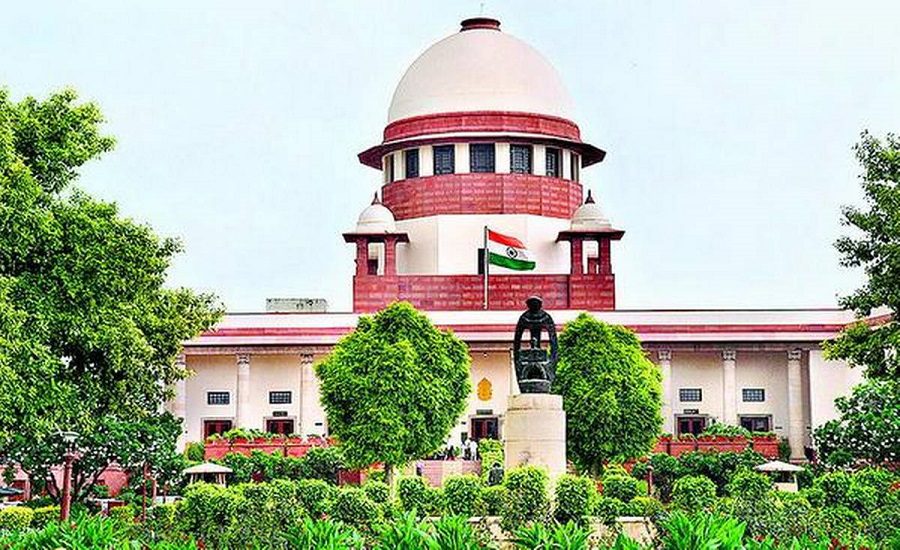
New Delhi: The Supreme Court of India on Thursday stayed the new University Grants Commission (UGC) regulations on anti-discrimination in higher education until further orders. The order came during a public interest litigation (PIL) challenging the rules, which critics say discriminate against general category students.
A bench comprising Chief Justice Surya Kant and Justice Joymalya Bagchi raised concerns over the regulations, stating:
“We have achieved so much in the direction of a casteless society. Are we now moving in the opposite direction?”
The bench further questioned the vague definitions within the rules, noting that they could be misused, and urged the government to reconsider provisions like separate hostels for SC/ST students, pointing out that some communities in the reserved categories are already well-off.
“The definition of the rules is completely vague. It can be misused. Some experts may suggest amendments. We are trying to create an independent and equal environment in universities,” the court added.
Read also: Public Safety at Risk: Supreme Court Slams States Over Ineffective Stray Dog Sterilisation
Provisions of the UGC Regulations
Under the UGC Regulations 2026, all higher education institutions are required to form equality committees, which must include representation from:
- SC, ST, and OBC communities
- Women
- Persons with disabilities
Critics argue that general category students are excluded, effectively making them permanent “perpetrators” of caste-based discrimination, while considering OBCs as potential victims. The petitioners challenged Section 3(c) of the rules, which defines caste-based discrimination against SC, ST, and OBC communities, as violating Article 14 of the Constitution.
Nationwide Student Protests
The new UGC rules have sparked protests across multiple states.
- Delhi: Students staged demonstrations outside Delhi University’s North Campus.
- Uttar Pradesh: Students affiliated with various organisations held road sit-ins at Lucknow University’s New Campus, chanting slogans.
- Kanpur: A protestor, Bharat Shukla, shaved his head in a symbolic protest against the rules.
Police forces have been deployed at protest sites to maintain law and order, as demonstrations continue to gain momentum.
Support and Opposition
While opposition voices and student groups claim the rules are vague and discriminatory, Tamil Nadu Chief Minister M.K. Stalin voiced support on social media, calling the regulations a welcome step towards reforming the higher education system:
“The UGC Regulations 2026, though a belated step, is a welcome move towards reforming the higher education system, which has been plagued by discrimination and apathy.”
Meanwhile, Union Education Minister Dharmendra Pradhan assured the public that the regulations will not be misused and that no student will face discrimination under the new framework.
Supreme Court Next Steps
The Supreme Court will next hear the case on March 19, 2026, and the current stay will remain in effect until then. The court emphasized the need for clarity in the rules, to prevent division and ensure an inclusive, equal educational environment across India.
Key Points
- Supreme Court stays UGC Regulations 2026 on anti-discrimination in higher education
- Bench notes rules are vague and potentially misusable
- Equality committees mandated, with representation from SC, ST, OBC, women, and persons with disabilities
- General category students not included, raising concerns about discrimination under Article 14
- Protests across Delhi, Uttar Pradesh, and Kanpur
- Tamil Nadu CM supports regulations; Union Education Minister assures no misuse
Next hearing scheduled for March 19, 2026
Read also: Uniform Retirement Age for Judges? Supreme Court’s Latest Signal to Jharkhand High Court