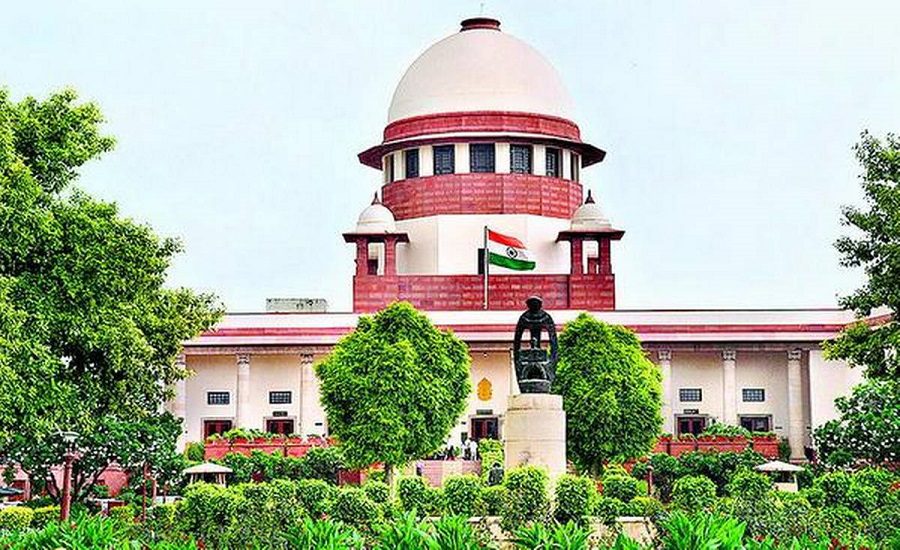
New Delhi/ Jharkhand: In a significant move stirring discussions on judicial workforce policy in India, the Supreme Court of India has asked the Chief Justice of the Jharkhand High Court to consider, administratively, a plea seeking enhancement of the retirement age of judicial officers.
The request came while the Supreme Court declined to directly entertain a petition from a Jharkhand judicial officer seeking to increase the age of superannuation from 60 to 61 years. This development highlights ongoing debates around judicial service norms and uniformity of retirement policies across states.
Judicial Officers Retirement Age: Supreme Court Seeks Administrative Review
A Constitution bench comprising Chief Justice of India (CJI) Surya Kant along with Justices Joymalya Bagchi and R. Mahadevan heard the plea brought forward by Mr. Ranjeet Kumar, a District Judge serving in Jharkhand.
Read also: Why Supreme Court Refused SC/ST Reservation in Bar Councils: Full Story Behind the Landmark Decision
Rather than hear the plea on merits, the Supreme Court directed that the matter is better suited for administrative consideration by the Jharkhand High Court itself.
The bench declined to judicially entertain the request to raise the retirement age through a writ petition, noting that such changes require service rule amendments following policy decisions.
Supreme Court Emphasizes Policy Over Judicial Oversight
While acknowledging the points raised, the apex court took a clear stance that judicial officers’ retirement age and related service conditions are matters falling within executive domain and policy frameworks.
CJI Surya Kant observed that while uniformity in service conditions is desirable, increasing the retirement age isn’t something that the judiciary should decide through judicial intervention. Instead, the High Court’s administrative side — in consultation with the State Government — should explore the issue considering its implications and wider uniformity concerns.
Administrative Route Suggested
The Supreme Court granted liberty to the petitioner to approach the Chief Justice of the Jharkhand High Court. This approach encourages administrative review involving:
- Data gathering from other states regarding retirement age policies
- Consultation with the Jharkhand State Government
- Consideration of appropriate amendments to service rules, if applicable
This direction reflects judicial restraint, allowing institutional stakeholders to assess whether policy change is justified.
Judicial Officers Retirement Age : What the Petitioner Argued
Mr. Kumar’s petition challenged the existing retirement age of 60 years for judicial officers under the Jharkhand Service Rules. His legal team argued that in other states, such as Telangana, district judges already enjoy an extended retirement age of 61 years.
The counsel stressed the need for uniformity across the judicial cadre, claiming there is “no intelligible differentia” to justify divergent retirement ages between states.
Broader Context of Judicial Officers Retirement Age
This development is part of a larger national conversation. In recent years, other states and judicial bodies have also sought retirement age adjustments for judges and judicial officers:
- In Madhya Pradesh, the Supreme Court previously clarified there was no legal impediment to increasing the retirement age of district judges to 61 years, urging the MP High Court to take an administrative call.
- The Telangana High Court’s request for clarification on a similar issue influenced discussions on uniform retirement age standards.
The push for uniform service terms often ties to efforts to enhance judicial efficiency, tackle case pendency, and ensure equitable working conditions across states. Retirement age adjustments are seen by some as one measure to retain experienced judicial manpower.