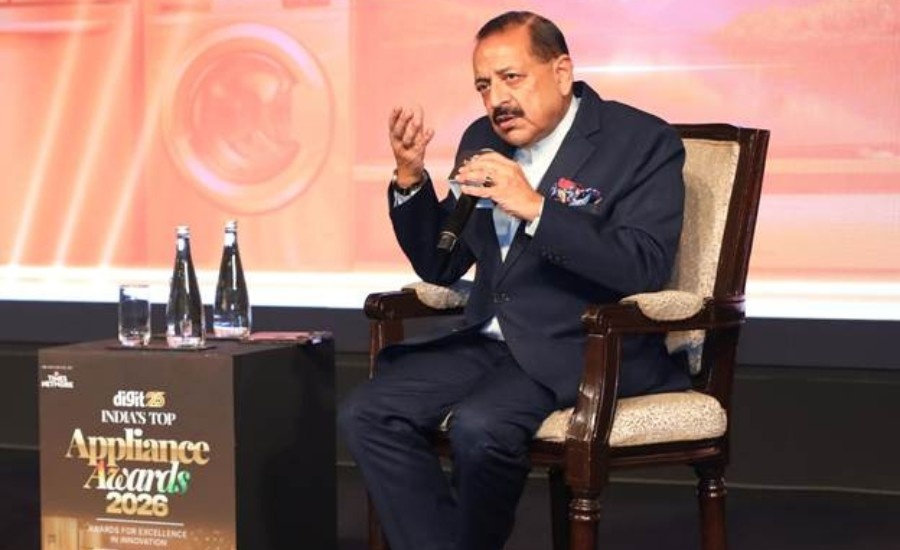
Kolkata: Union Minister of State (Independent Charge) for Science and Technology Jitendra Singh has called for a new industry–research partnership model in which potential commercial partners are brought into projects from the planning stage itself, saying early industry involvement can help make technologies more market-ready and accelerate commercialisation.
Speaking to CEOs, chief scientific officers and chief operating officers at the 6th RISE Conclave at CSIR-Indian Institute of Chemical Biology (CSIR-IICB), Kolkata, Singh said industry should work alongside research laboratories from the beginning of technology development. The conclave is being held on September 6–7 under the theme “Driving Innovation & Entrepreneurship for Viksit Bharat 2047.”
Industry to Shape Technology at Planning Stage
Singh said bringing commercial partners into R&D projects early would allow market requirements and practical considerations to influence the technology while it is still being developed.
According to the Minister, industry participation at this stage can provide inputs on:
- Market demand and user requirements
- Product design and commercial viability
- Environmental sustainability
- Supply-chain requirements
- Technology scaling and deployment
The approach is aimed at preventing situations where a technology reaches the market but later requires major modifications to meet actual user or industry requirements.
Critical Minerals Emerge as Key Industry Priority
Discussions at the conclave also focused on technologies related to critical minerals and strategic materials. Industry representatives sought support from CSIR laboratories for developing and scaling indigenous technologies.
Key areas discussed included:
- Rare-earth extraction and processing
- Permanent magnets
- Recycling of critical minerals
- Lithium beneficiation
- Recovery of vanadium and titanium
- Exploration of critical minerals in eastern India
Singh emphasised the need to make greater use of technological capabilities being developed across CSIR laboratories and other government scientific institutions.
Push for Common R&D Platforms
The Minister also suggested creating a common R&D facility for the foundry sector, with industry players collectively identifying their requirements and the government facilitating the platform.
He encouraged steel-sector companies to come together and approach the government with specific technological requirements so that a suitable collaborative research platform could be developed.
Space Technology, Antivenom Also Discussed
Industry representatives also raised issues related to space technology and specialised optical components. Singh sought details on the concerns and indicated that relevant matters could be taken up with the Department of Space.
The discussions also touched on indigenous production of anti-snake venom. Bengal Chemicals and Pharmaceuticals raised the possibility of reviving domestic production, citing the distinct snake species and requirements of eastern India.
A startup working in the snakebite and venom technology space presented solutions for identifying snake species involved in bites and developing new antivenom technologies.
Singh welcomed the innovation but stressed that such technologies must undergo scientific validation and clinical trials before wider adoption, with patient safety remaining a key consideration.
Government Offers Continued Industry Engagement
Singh called on companies to move beyond broad discussions and present specific, actionable technology requirements to government departments and scientific institutions.
He also stressed that industry engagement should continue beyond formal conclaves, with companies encouraged to approach the concerned institutions whenever they have specific requirements or suggestions.
The approach outlined at RISE reflects an effort to strengthen the link between scientific research, industry adoption and commercialisation, with CSIR laboratories positioned as technology enablers and the government as a facilitator.