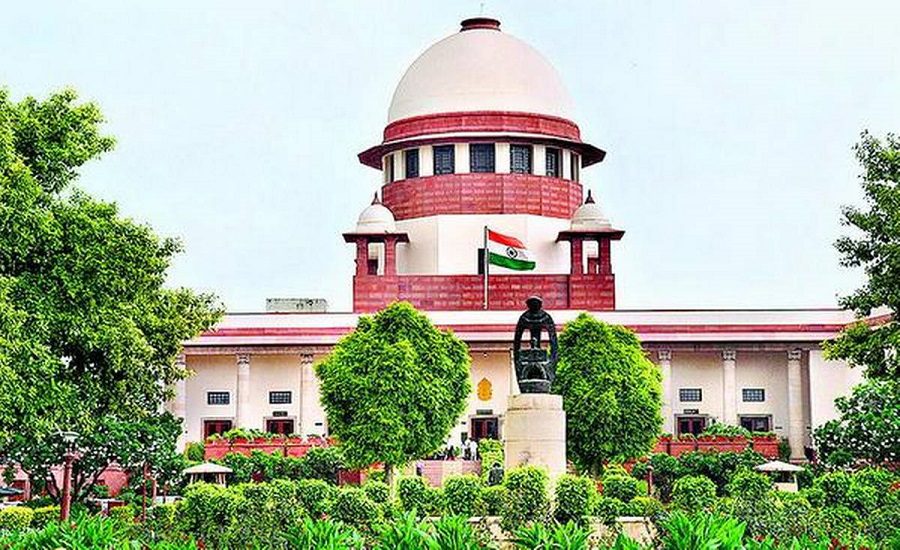
New Delhi: The Supreme Court of India (SC) has delivered a significant ruling that could reshape how educational qualifications are assessed in recruitment — particularly where the actual curriculum studied, rather than the formal degree title, is determinative.
In the judgment handed down on December 6, 2025, the Court held that a candidate cannot be disqualified solely because their degree lacks the specific title demanded, provided that the candidate studied the required core subjects during their course.
At the heart of the decision is a reinterpretation of what qualifies as a valid “postgraduate degree in Statistics” — highlighting substance over form in recruitment eligibility criteria. The ruling has broader implications for candidates across India who may have been denied jobs or appointments due to rigid interpretation of degree titles.
Background of the Curriculum vs Degree Case
The case originated from a 2012 recruitment advertisement for the post of Monitoring and Evaluation Consultant, which stipulated a requirement of a “Postgraduate degree in Statistics.”
Read also: Madhya Pradesh High Court Fines A Senior IPS Officer for Obstructing Murder Case Probe
The appellant was an individual who held an M.Com (Master of Commerce) degree. As part of his M.Com curriculum, he studied Business Statistics and Indian Economic Statistics as principal subjects.
Based on this educational background, he was initially appointed on a contractual basis in 2013 for the post in question.
However, roughly a year into his service, an 8-member inquiry committee terminated his appointment on the grounds that his M.Com degree — not being titled “Statistics” — did not meet the advertised eligibility criteria.
The appellant challenged this decision in the Madhya Pradesh High Court. The High Court repeatedly set aside the termination, but the state government reissued termination notices based on the same reasoning. Frustrated by the repeated dismissals, the appellant finally approached the Supreme Court.
Thus began a protracted legal battle over whether a rigid title-based interpretation of a “degree in Statistics” should override the reality of what the candidate had studied during his post-graduate course.
Supreme Court’s Reasoning: Substance Over Form
A bench comprising Sanjay Karol and Vipul M. Pancholi delivered the judgment. The Court’s reasoning centered on several key principles:
- Focus on Curriculum, Not Just Title: The Court observed that insisting solely on the title of the degree — without examining the actual curriculum — amounts to “elevating form over substance.”
- Contextual and Purposive Interpretation: According to the Court, the expression “Postgraduate degree in Statistics” must be interpreted contextually and purposively. In the facts of this case, where the candidate had indeed studied statistical subjects, a narrow, literal reading of “Statistics degree” would be unreasonable.
- Avoiding an Impossible Standard: The Court noted that no government university in Madhya Pradesh (and possibly elsewhere) offered a post-graduate degree titled “M.Com (Statistics)”. Requiring such a formal title would create an “impossible standard” — effectively barring anyone from eligibility.
- Judicial Oversight in Contractual Termination: Observing that the appellant had been dismissed purely on eligibility grounds, the Court asserted that when a contractual employee is terminated on the “sole ground of ineligibility,” the Court is justified in examining whether that ground was factually correct and whether relevant material had been properly considered.
Based on this reasoning, the Court reinstated the appellant to his position, effectively ruling that the earlier termination was arbitrary and unjustified.
Major Significance & Wider Implications of Curriculum vs Degree Case
1. Changing the Paradigm of Recruitment Eligibility: This ruling signals a shift from strict, form-based eligibility checks to a more substance-oriented evaluation of educational qualifications. For many aspirants whose degrees may not carry the “exact” title, but who studied the relevant subjects, this judgment can provide a powerful precedent.
2. Relief for Candidates Denied Jobs on Technicalities: There may be many individuals across India who were denied jobs or had their services terminated because their degree titles did not match rigidly worded advertisements — despite having studied the relevant subjects. This decision gives them hope and a legal basis to challenge such disqualifications.
3. Recruitment Authorities Must Revisit Criteria Formulation: Government departments, agencies, and other employers issuing job advertisements will now need to re-evaluate how they draft qualification requirements. Overly narrow wording may no longer hold against legal scrutiny if it excludes otherwise eligible candidates.
4. Judicial Precedent Affirming Flexibility in Interpretation: The Court’s emphasis on purposive interpretation adds to a growing body of jurisprudence where courts favour functional substance over formalistic labels. Notably, this is in line with earlier rulings where higher qualifications were not deemed grounds for rejection merely because a lower degree was prescribed.
Key Observations & Possible Critiques
Potential for Ambiguity: While emphasizing curriculum over title provides flexibility, it could also introduce subjectivity and uncertainty. What constitutes “sufficient study” of a core subject might vary, leading to legal disputes.
Challenges for Recruiting Bodies: Employers — especially state departments — may have to evaluate transcripts, course content, and syllabi rather than rely on degree titles, potentially complicating the verification process.
Possibility of Flood of Litigation: The decision could open the floodgates to litigation from unsuccessful candidates, as many may now challenge rejections based on rigid degree-title requirements.