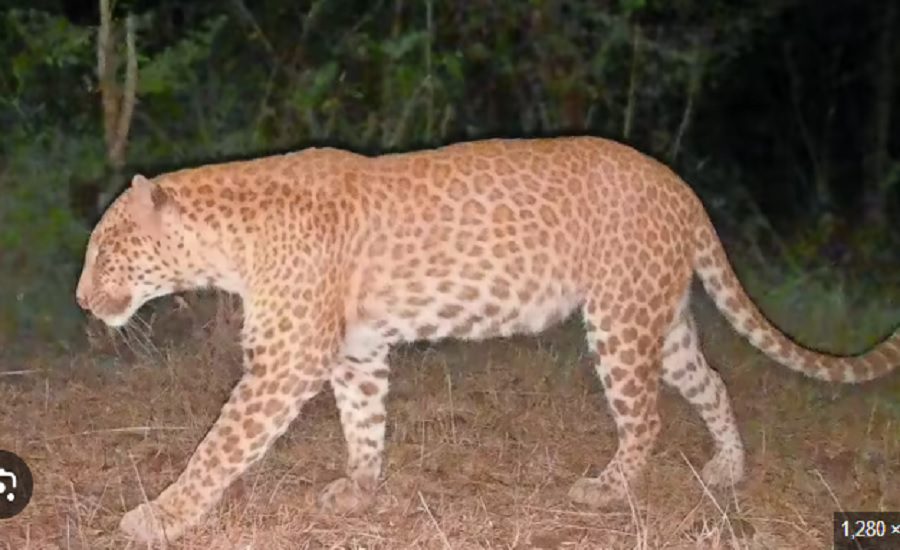
Karnataka’s rich wildlife heritage has once again drawn national and international attention with the confirmation of an exceptionally rare leopard color variant in the state. Popularly referred to as the “Sandalwood Leopard,” this unique animal has been recorded for the first time in Karnataka, underscoring the extraordinary genetic diversity of leopards found in the region. The discovery further cements Karnataka’s status as one of India’s most significant landscapes for big cat conservation.
Why Is the Sandalwood Leopard in the News?
The Sandalwood Leopard has entered the spotlight after an ultra-rare strawberry-colored leopard was documented in Karnataka. This sighting is only the second recorded instance of such a leopard in India. The first was observed in Ranakpur, Rajasthan, in November 2021. Due to its extreme rarity, the finding has generated widespread interest among wildlife scientists, conservationists, and nature enthusiasts across the globe.
What Is a ‘Sandalwood Leopard’?
Typically, leopards are characterized by a yellowish-brown coat with distinctive black rosettes (spots). However, the Sandalwood Leopard exhibits a strikingly different appearance. Its coat is light pinkish-red or strawberry-colored, with light brown rosettes, making it visually unique.
Internationally, leopards with this unusual coloration are known as “Strawberry Leopards.” Scientists attribute this rare appearance to uncommon genetic conditions such as –
- Hypomelanism – a reduced presence of black pigmentation
- Erythrism – an excess of red pigmentation
These rare genetic traits make the Sandalwood Leopard an exceptionally uncommon phenomenon in the wild.
Where and How Was the Leopard Sighted?
The rare leopard was recorded using camera traps in the Vijayanagara district of Karnataka. The discovery was made by renowned conservation scientist Sanjay Gubbi and his team from the Holematthi Nature Foundation.
According to researchers, the leopard is believed to be an approximately seven-year-old female. One of the camera trap images also captured her alongside a normally colored cub, offering valuable insight into her reproductive success and genetic traits.
Extreme Rarity at National and Global Levels
Leopards with strawberry or reddish coloration are among the rarest wildlife sightings globally. To date, such leopards have been documented only five times worldwide –
- Twice in South Africa
- Once in Tanzania
- Twice in India (Rajasthan in 2021 and now Karnataka)
The Karnataka sighting therefore represents a significant addition to global wildlife records and reinforces the scientific importance of long-term wildlife monitoring.
Why the Name ‘Sandalwood Leopard’?
The name “Sandalwood Leopard” pays tribute to Karnataka’s rich cultural and ecological heritage, particularly its iconic sandalwood forests. The name symbolically links the leopard’s rare beauty with the region’s natural wealth, emphasizing the deep connection between wildlife and forest ecosystems in the state.
Karnataka’s Leopard Diversity: A Conservation Stronghold
Karnataka is already globally renowned for its high-density population of melanistic leopards, commonly known as black panthers. The addition of the Sandalwood Leopard to this list of rare variants highlights the extraordinary genetic richness and adaptability of leopards in the region.
Such discoveries are vital for –
- Understanding evolutionary processes
- Studying genetic diversity
- Informing long-term conservation strategies
- Strengthening wildlife protection policies
Significance for Wildlife Conservation
The discovery of the Sandalwood Leopard is more than just a rare sighting – it is a reminder of the importance of habitat protection, scientific research, and sustained conservation efforts. As landscapes face increasing human pressure, such findings reinforce the need to preserve ecosystems that support rare and genetically diverse wildlife.