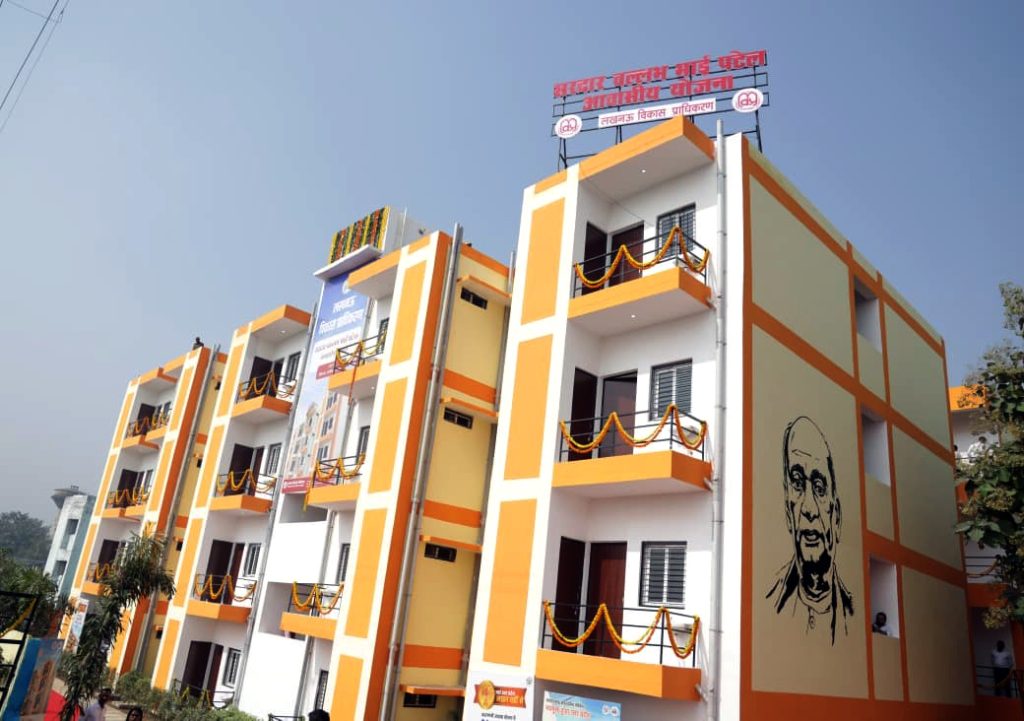
Lucknow: Under the decisive leadership of Chief Minister Yogi Adityanath, the Uttar Pradesh government has set a new benchmark in social justice and inclusive rural development by allocating a record 3.72 lakh permanent houses to the most marginalised sections of society under the Chief Minister’s Housing Scheme – Rural.
This historic achievement underscores the government’s commitment to ensuring that development reaches the weakest and most neglected communities, placing them at the centre of governance for the first time.
Chief Minister’s Housing Scheme – Rural: Backbone of Social Transformation
Launched in February 2018, the Chief Minister’s Housing Scheme – Rural aims to provide safe, dignified and permanent housing to homeless and extremely needy families in rural Uttar Pradesh. Over the years, the scheme has emerged as a key pillar of social transformation, replacing temporary huts and unsafe shelters with pucca houses.
The scheme prioritises human dignity, security and stability, recognising housing as the foundation for education, healthcare and livelihood opportunities.
Read also: UP to Hold Statewide Cleanliness Campaign on December 25 to Honour Atal Bihari Vajpayee
Need-Based Eligibility Replaces Caste-Based Exclusion
One of the most significant aspects of this initiative is the shift from caste-based entitlement to need-based eligibility. The Yogi government has ensured that economic vulnerability and social deprivation, rather than identity, determine access to housing benefits.
This approach has helped bring into the mainstream communities that had remained excluded from welfare schemes for decades.
Housing for the Neediest: Vulnerable Groups Get Top Priority
The allocation data reflects the government’s clear focus on the weakest sections:
- 93,300 houses allotted to victims of natural disasters
- 91,062 houses provided to persons with disabilities
- Over 50,000 houses allocated to members of the Musahar community
- More than 41,000 houses sanctioned for destitute widowed women
These figures highlight a governance model that places compassion, urgency and equity at its core.
From Temporary Huts to Permanent Homes
Thousands of families who once lived in makeshift huts, unsafe dwellings and extreme insecurity now have permanent roofs over their heads. The transition from fragile shelters to durable homes has significantly improved living conditions, safety and social confidence in rural areas.
Permanent housing has also helped beneficiaries gain easier access to government services, education and livelihood schemes.
Empowering the Most Backward and Tribal Communities
For the first time, communities such as Vantangia, Musahar, Tharu, Kol, Sahariya, Chero, Baiga, Nat and Banjara have received housing benefits on a large scale. These groups, long confined to policy documents and surveys, are now visible participants in development programmes.
By ensuring housing access to these communities, the Yogi government has taken a decisive step towards ending generational neglect and social marginalisation.
Bringing the Marginalised into the Development Mainstream
With ownership of permanent homes, families from the most backward communities are now experiencing social stability and economic empowerment. Housing security has strengthened their ability to pursue education, employment and healthcare, thereby integrating them into the broader development framework of the state.
A Model of Inclusive Governance
The success of the Chief Minister’s Housing Scheme – Rural reflects the Yogi government’s broader governance philosophy — “development with dignity”. By prioritising the weakest sections first, the government has demonstrated that welfare schemes can be both efficient and empathetic.
This record allocation of 3.72 lakh houses stands as a symbol of transformative governance, setting a model for inclusive development at the national level.
Read also: UP: Yogi Government Plans Massive Recruitment Drive of 1.5 Lakh Government Jobs in 2026