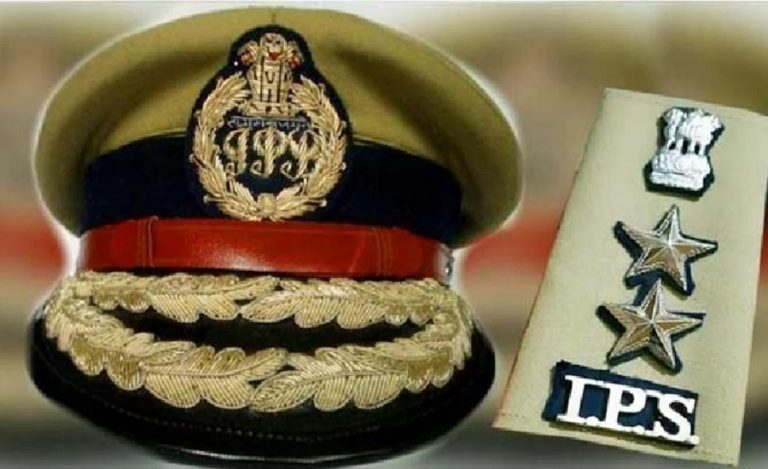
Kolkata/New Delhi: The Union Public Service Commission (UPSC) has rejected the West Bengal government’s proposal for the preparation of a panel for the appointment of the Director General of Police (DGP), citing inordinate delay in submission and advising the state to seek directions from the Supreme Court of India.
The move puts the state government, led by Mamata Banerjee, under pressure to ensure a lawful, timely appointment for the state police chief as acting DGP Rajeev Kumar (IPS:1989:WB) is scheduled to retire on January 31, 2026.
Supreme Court Guidelines Cited
In its communication to the Chief Secretary of West Bengal, UPSC specifically referred to the Supreme Court’s directives in the landmark Prakash Singh vs Union of India (2006) case.
The apex court had mandated that:
- States must forward proposals to the UPSC at least three months prior to the retirement of the incumbent DGP.
- The process must ensure transparency, timeliness, and merit-based selection.
Despite these directions, the Bengal government forwarded its proposal only in July 2025, even though the DGP vacancy arose on 28 December 2023—a delay of more than one and a half years, far exceeding the Supreme Court’s timeline.
Read also: Who Is Raghav Gupta? IRS Officer Re-designated as Director in NATGRID under Ministry of Home Affairs
UPSC Empanelment Committee Meeting
The UPSC convened an Empanelment Committee Meeting (ECM) on 30 October 2025 to review the proposal and clarifications submitted by the state government.
During deliberations:
Divergent views emerged among committee members regarding the official date of vacancy due to the delay in submission.
The Commission subsequently sought a legal opinion from the Attorney General of India.
The Attorney General’s opinion highlighted:
The delay by the West Bengal government was excessive.
UPSC has no legal provision to condone such delays and proceed with empanelment as if no irregularity had occurred.
Accepting the late proposal could deprive legitimate aspirants of their right to consideration.
If the state faced difficulty adhering to the Supreme Court timeline, the proper recourse was to seek clarification or leave from the Supreme Court.
Implications for West Bengal
The UPSC’s rejection underscores the recurring problem of procedural delays in state bureaucracies, which can lead to legal tangles and administrative uncertainty.
West Bengal now faces the urgent task of:
- Approaching the Supreme Court for guidance on DGP empanelment.
- Ensuring compliance with the Prakash Singh guidelines for a transparent and merit-based appointment.
Failure to act swiftly could leave the state police without a regular DGP, affecting governance and law enforcement oversight in the state.
Background: Prakash Singh Case
The Prakash Singh vs Union of India (2006) verdict was a landmark decision aimed at reforming police appointments and ensuring accountability. It requires all states to:
Forward DGP empanelment proposals at least three months before vacancy.
Conduct appointments in a transparent and merit-based manner.
States like Haryana have previously faced similar UPSC ire, and now West Bengal joins the list due to procedural lapses.