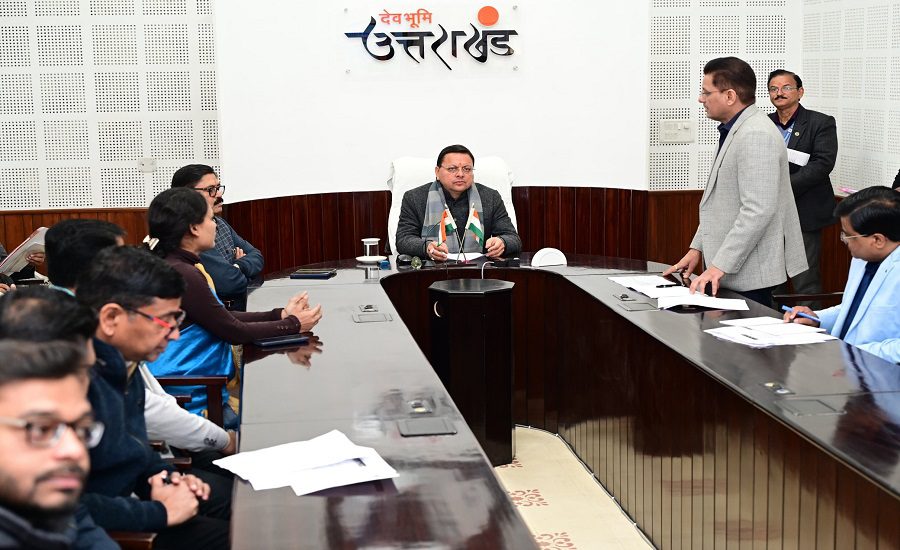
Dehradun: Uttarakhand Chief Minister Pushkar Singh Dhami on Tuesday chaired a high-level review meeting at the Secretariat auditorium to assess the progress of skill development initiatives in the state and to strengthen forward linkages between trained youth and employment opportunities.
The meeting focused on bridging the gap between skill training and actual job placement, particularly in light of rising unemployment among technically trained youth.
Skill Training Rising, Employment Outcomes Lagging: CM Dhami
During the review, the Chief Minister noted that despite an increase in the number of ITIs, technical institutions, and trained youth, adequate placement opportunities and satisfactory wages are still not being ensured. He termed this gap a shortfall in management, coordination, and availability of effective platforms, and directed officials to take immediate corrective measures.
An official release stated that the CM expressed concern over the disconnect between workforce supply and market demand.
Addressing the Skilled Worker Paradox
Highlighting a major contradiction, CM Dhami pointed out that while skilled workers such as plumbers, electricians, barbers, masons, and carpenters are often unavailable for daily work, many youth trained in ITIs remain unemployed.
He directed concerned departments to improve coordination among technical education, skill development, education, and allied departments to resolve this imbalance.
Focus on Smart Human Resources Alongside Infrastructure
Emphasising long-term planning, the Chief Minister said that along with smart infrastructure, the state must prioritise the creation of smart human resources. He stressed the need for:
- Employment-oriented curricula aligned with industry needs
- Timely revision of technical courses
- Well-trained instructors
- Upgradation of ITIs and technical institutions
He said skill development must also be aligned with future technological demands.
Integrated Skill Development Model at Local Level
CM Dhami directed officials to develop an integrated local-level model to create:
- Basic-skilled workers for daily wage jobs
- A medium-technology workforce
- A highly skilled technical workforce
This approach, he said, would strengthen efforts towards achieving the vision of Developed India @2047.
Job Tagging from Training Stage, Clear Outcome Timelines
The Chief Minister instructed that youth selected for training should be linked with potential employers from the very beginning, ensuring job security during the training phase itself.
He also directed departments to monitor outcomes at three stages:
- Short-term (six months)
- Medium-term
- Long-term
Overseas Employment and Legal Clearances
For youth opting for self-employment or overseas job opportunities, CM Dhami directed officials to share country-specific guidelines issued by the Government of India, enabling smoother adaptation abroad.
He also instructed that pending court cases related to recruitment be resolved promptly to avoid delays in declaring results.
Industry Partnership Key to Demand-Driven Skills: Ministers and Officials
Cabinet Minister Saurabh Bahuguna suggested involving industries as partners in training and curriculum design to develop demand-driven skills, ensuring better employment outcomes.
Chief Secretary Anand Bardhan directed all related departments to come together on a single platform to expedite employment and skill development initiatives.
Meanwhile, C. Ravishankar, Secretary of the Skill Development and Employment Department, made a detailed presentation outlining departmental initiatives, strategies for local and overseas placements, and ongoing efforts to improve employment outcomes.