Dehradun: The National Bank for Agriculture and Rural Development (NABARD) is playing a crucial role in expanding basic infrastructure across rural and remote areas of Uttarakhand. With limited financial resources, the state government has been relying on low-interest financial assistance from NABARD to improve connectivity and essential facilities in mountainous and rural regions.
In the current financial year, various state departments have already received ₹916 crore under NABARD-supported schemes to implement development projects across the state.
These funds are being used for rural roads, irrigation projects, bridges, reconstruction of disaster-damaged school buildings, and other key infrastructure works aimed at improving the quality of life in rural areas.
Financial Assistance Boosting Development in Remote Regions
Being a middle Himalayan state, Uttarakhand faces significant challenges in delivering infrastructure to remote mountain villages. Limited financial resources and difficult terrain make development projects both complex and expensive.
In this scenario, low-interest loans from NABARD have become an important source of support for the state government. The funding not only helps in executing essential infrastructure projects but also accelerates the overall pace of rural development.
However, obtaining financing from NABARD requires strict adherence to financial discipline, preparation of detailed project reports (DPRs), and timely implementation of projects. Only after fulfilling these conditions do departments become eligible for financial assistance.
Departments Receive Funds Against Annual Targets
For the financial year 2025–26, the state government had set a target of ₹1,100 crore in NABARD funding. So far, departments have received ₹619.12 crore, while ₹665.58 crore has been approved by the bank.
Although the state has not yet achieved the full target, officials say steady progress is being made. The government has been actively encouraging departments to submit proposals and resolve administrative hurdles quickly to accelerate fund utilization.
Slow Project Implementation Remains a Challenge
Despite the availability of funds, slow project execution remains a major concern for the government. Due to delays in implementation, nearly ₹155 crore worth of NABARD-funded projects are progressing at a slow pace.
The slow-moving projects include schemes in departments such as:
- Irrigation – 3 projects worth ₹3.01 crore
- Horticulture – 15 projects worth ₹96.47 crore
- Dairy – 2 projects worth ₹41.22 crore
- Skill Development – 3 projects worth ₹1.23 crore
- Rural Construction – 11 projects worth ₹8.04 crore
- Fisheries – 6 projects worth ₹5.74 crore
In total, 40 projects involving ₹155.71 crore are currently facing slow progress.
Additionally, some “non-starter” projects—where work has not yet begun despite approval—have also raised concerns within the government.
Government Push to Improve Utilization of Funds
To address these issues, the state government has directed departments to speed up project execution and improve utilization of NABARD funds. Officials have been instructed to move away from slow administrative processes and ensure timely implementation.
The government is also focusing on maximizing benefits from NABARD’s Rural Infrastructure Development Fund (RIDF), which provides loans at relatively low interest rates.
₹750 Crore Funding Planned for FY 2026–27
Looking ahead, the state government is preparing to accelerate infrastructure development in the financial year 2026–27 with an expected ₹750 crore in NABARD assistance.
Departments have been asked to submit proposals for projects in advance so that funding approvals can be processed without delay.
The department-wise interim funding targets for 2026–27 include:
- Irrigation: ₹145 crore
- Public Works Department (PWD): ₹125 crore
- School Education: ₹66 crore
- Rural Construction: ₹50 crore
- Minor Irrigation: ₹33.5 crore
- Technical Education: ₹40 crore
- Dairy Development: ₹73 crore
- Agriculture Mandi: ₹6 crore
- Animal Husbandry: ₹11 crore
- MSME: ₹3 crore
- Fisheries: ₹15 crore
- Drinking Water: ₹30 crore
- Horticulture: ₹128 crore
- Skill Development: ₹24.5 crore
Smaller Urban Bodies May Also Be Included
The government is also considering expanding the scope of the scheme to include urban local bodies with populations of less than 50,000.
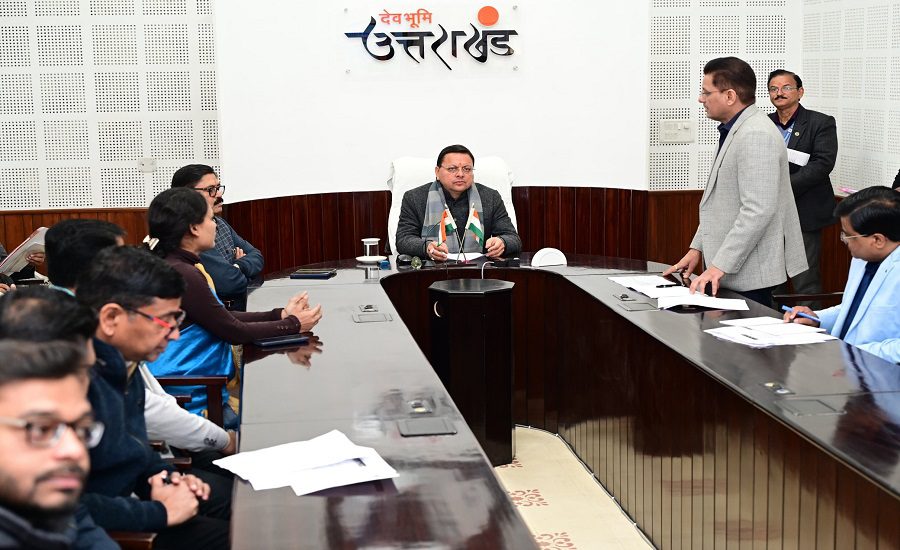
Anand Bardhan has instructed departments to prepare proposals regarding this expansion so that more towns can benefit from the infrastructure financing mechanism.
Focus on Strengthening Rural Economy
Officials believe that improved infrastructure supported by NABARD will boost agriculture, rural livelihoods, connectivity, and social services across Uttarakhand.
With continued financial assistance and faster project execution, the state aims to strengthen rural infrastructure and bring essential facilities closer to remote mountain communities.