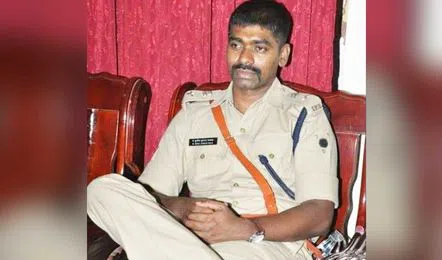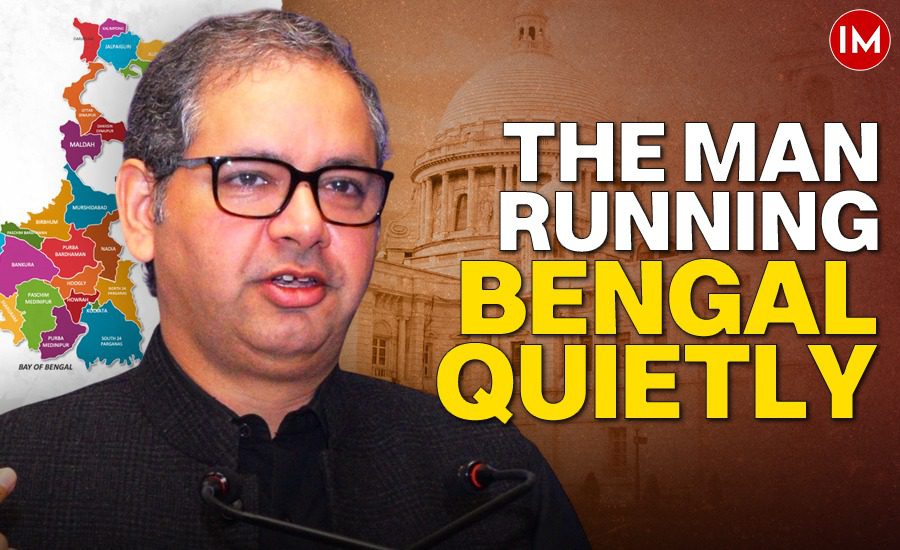
In a system where visibility often defines influence, Dushyant Nariala built his career differently. With minimal public attention, he emerged as one of the most trusted administrators within the West Bengal government.
Born on June 2, 1967, Nariala entered the Indian Administrative Service in 1993, joining the West Bengal cadre. Armed with a Bachelor of Science and a law degree, he brought both analytical and legal understanding into governance early on. He speaks English and Hindi, but more importantly, over time, he learned the language of administration… quiet execution, internal credibility, and steady control.
Very little is known about his family, upbringing, or early life. And that silence itself defines the kind of officer he has been, focused almost entirely on the system rather than the spotlight.
THE MAKING OF AN INSIDER’S ADMINISTRATOR
Like most IAS officers, Nariala began his journey with foundational training at the Lal Bahadur Shastri National Academy of Administration in Mussoorie. His association with the academy did not end there. Years later, he returned as Joint Director, an indication that his understanding of governance was valued not just in the field but also in shaping future officers.
While many of his early district-level postings are not publicly documented, his career steadily moved into positions that required coordination, trust, and institutional understanding. He became known less for public-facing roles and more for his ability to manage systems from within.
AT THE CENTER OF CRISIS MANAGEMENT
One of the most defining phases of his career came when he took charge as Principal Secretary of the Disaster Management and Civil Defence Department around 2020.
This period coincided with some of the most challenging years for governance – cyclones, natural disasters, and the COVID-19 pandemic. In a state frequently exposed to extreme weather events, disaster management is not a routine department; it is the backbone of emergency response.
Nariala’s role involved coordinating large-scale responses, aligning multiple departments, and ensuring that administrative machinery worked under pressure. His continued presence in this department for several years reflects the level of confidence placed in him during critical situations.
THE OFFICER TRUSTED WITH MULTIPLE FRONTS
As he moved into senior ranks, Nariala increasingly handled multiple departments simultaneously, often in additional charge.
He worked across areas such as Irrigation and Waterways, Tribal Development, and Correctional Administration. These are not routine assignments; they demand different administrative approaches, from infrastructure to social policy to institutional management.
This pattern revealed a clear trend, when coordination across sectors was needed, Nariala was often the choice.
NORTH BENGAL AND SENSITIVE GOVERNANCE
Before rising to the top post, Nariala served as Additional Chief Secretary in the North Bengal Development Department. This region is not just geographically distinct but also politically and socially sensitive.
His responsibilities extended to overseeing matters related to the Gorkhaland Territorial Administration, an area closely linked with long-standing regional aspirations and identity politics. Handling such a portfolio required a balance of administrative control and political awareness.
CLIMBING TO THE APEX
In 2024, Nariala was elevated to the rank of Additional Chief Secretary in the apex scale, the highest level in the bureaucratic hierarchy. It marked his entry into the final layer of leadership within the state administration.
By this point, his career had followed a clear pattern: steady progression, critical departments, and increasing responsibility without public projection.
TAKING CHARGE AT A DEFINING MOMENT
In March 2026, Dushyant Nariala assumed office as the Chief Secretary of West Bengal, succeeding Nandini Chakravorty.
The timing of his appointment was significant. It came during an administrative reshuffle linked to an election-sensitive period, when governance requires both stability and experience. His elevation signaled the system’s preference for continuity and control during a crucial phase.
As Chief Secretary, he now stands at the top of the state’s administrative structure, coordinating departments, advising the political leadership, and ensuring that governance runs without disruption.
THE POWER OF STAYING UNSEEN
Dushyant Nariala’s journey does not follow the usual narrative arcs. There are no widely known personal struggles, no public speeches that define him, no high-profile media presence.
Instead, his story is built on something quieter… years of internal trust, crisis handling, and the ability to manage complexity without drawing attention to himself.
In a world that often celebrates visibility, Nariala’s rise offers a different kind of narrative, one where influence is built behind closed doors, decisions shape outcomes without headlines, and authority grows through consistency rather than projection.
And now, as he leads West Bengal’s bureaucracy, that quiet approach is at the center of one of the state’s most critical administrative roles.