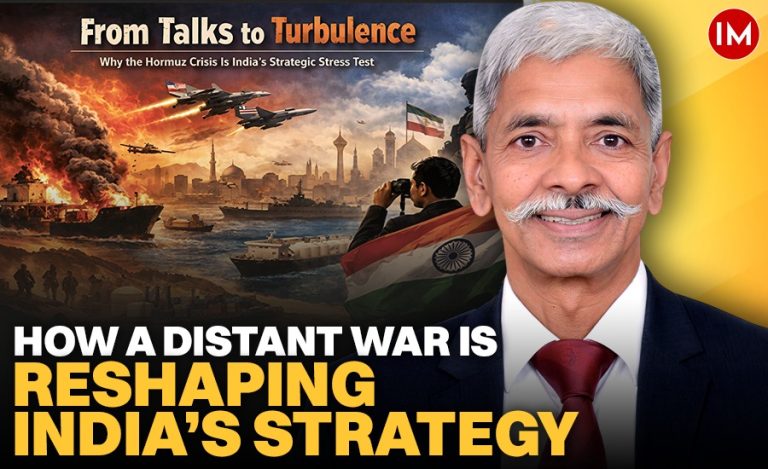
For the Iranian people, the stakes are far higher than ideological debates between governments. Their future depends not merely on who wins a geopolitical contest but on whether the country emerges from it with its institutions, infrastructure, and social cohesion intact, writes former IAS officer V.S.Pandey
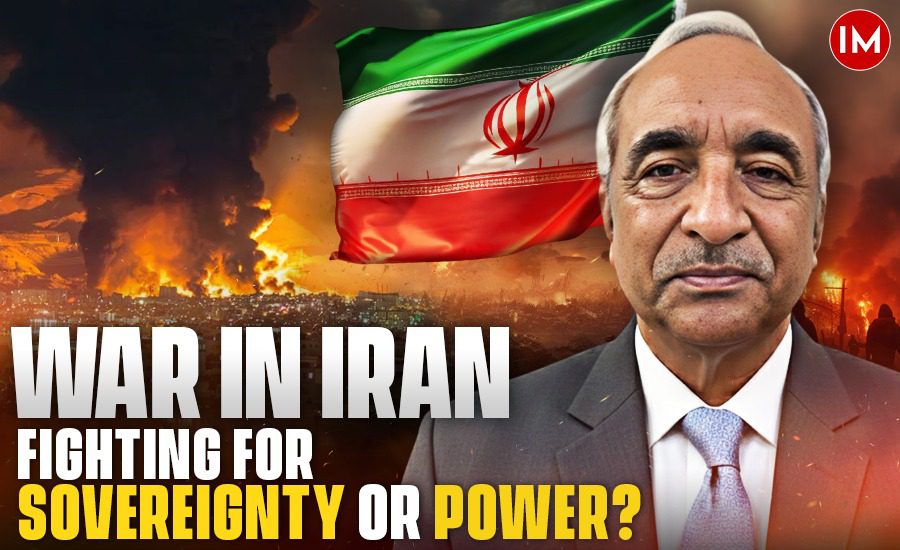
In the current war between Israel and USA vs Iran, the US and its allies are on the offensive purportedly to demolish Iranian nuclear capabilities as well as its combat capacities like drones and missiles as well as ensuring regime change. Iran says it is fighting for its very survival and sovereignty. The question is whose survival – survival of the theocratic regime and IRGC or the regime that people want. This time apparently the US is not planning on putting boots on the ground, so after decimating Iranian fire power America expects to create favourable situations for Iranians to reclaim their nation and run it as per their wishes and not follow the brutal diktats of the current regime . Discarding the past history of egregious wrongs done on both sides, currently the logic of USA and its ally seem to be much stronger as compared to the current repressive theocratic regime which appears to be quite unpopular, so must go. The logic is that those radical elements of the current regime- fighting in the name of national pride- are in fact fighting for the survival of their stranglehold on Iran and in the bargain are destroying the Iran as the longer the war continues, the more damage is inflicted on Iranian infrastructure- which adversely affects the people’s interest.
The ongoing confrontation involving Iran on one side and a coalition led by the United States alongside Israel has once again revived an enduring question in international politics: when wars are fought in the name of national survival, whose survival is actually at stake? Is it the survival of the nation’s people, or the preservation of the ruling political order?
Tehran’s leadership has framed the conflict as an existential struggle for the Iranian nation. Officials linked with the powerful Islamic Revolutionary Guard Corps argue that the country faces an external conspiracy aimed at destroying its sovereignty and independence. According to this narrative, resistance to foreign pressure—military, economic, or political—is not merely a policy choice but a patriotic duty.
However, those opposed to the Iranian government present a fundamentally different interpretation. They argue that what is being defended is not necessarily the Iranian nation but the continued dominance of a theocratic political structure established after the Iranian Revolution. This system, led by the clerical authority and reinforced by the Revolutionary Guards, has governed Iran for more than four decades and has only created chaos by supporting terrorist organisations like Hamas, Hezbollah, Houthis etc in the Middle East. In addition, the brutal suppression of people’s protests recently and in the past, has led to its legitimacy being increasingly questioned both domestically and internationally.
The central debate, therefore, revolves around the distinction between state and regime. A state represents the permanent political entity of a country and its people. A regime, by contrast, refers to the particular system of governance that holds power at a given time. The Iranian government frequently presents criticism of the regime as an attack on the state itself. But the two are not synonymous.
Another critical factor is the risk of long-term national damage. Modern conflicts frequently target economic infrastructure, energy facilities, transportation networks, and industrial capacity. Even limited warfare can leave lasting scars on a country’s development prospects. If the conflict escalates or continues for an extended period, the destruction may weaken Iran’s economy and social fabric perilously -regardless of who ultimately controls the government.
This raises a difficult moral and strategic dilemma. If the Iranian regime is indeed unpopular with large segments of the population- is external pressure justified as a means of accelerating political change? Or does such pressure merely compound the suffering of ordinary people while giving the ruling elite a convenient external enemy to blame?
The answer may depend on how the Iranian public itself perceives the situation. Political legitimacy ultimately rests not on international narratives but on domestic acceptance. If citizens come to believe that the regime is jeopardizing the nation’s future for the sake of maintaining its own authority, internal pressures for change could intensify. On the other hand, if foreign intervention is seen as an attempt to impose external control, even dissatisfied citizens may defend the existing system as a matter of national pride.
For policymakers in Washington and its allied capitals, the challenge is equally complex. Efforts aimed at weakening the Iranian regime must avoid appearing as attempts to dismantle the Iranian state itself. The distinction between opposing a government and opposing a nation is crucial but often blurred in the heat of geopolitical rivalry.
Ultimately, the central question remains unresolved: whose survival is this conflict really about? If the war primarily protects the political dominance of a ruling elite, it risks sacrificing the long-term welfare of the country it claims to defend. Conversely, if external powers pursue regime change without adequately considering the consequences for Iran’s society and stability, they may repeat the costly mistakes of past interventions.
For the Iranian people, the stakes are far higher than ideological debates between governments. Their future depends not merely on who wins a geopolitical contest but on whether the country emerges from it with its institutions, infrastructure, and social cohesion intact.
In wars fought in the name of national pride, the greatest tragedy often lies in the gap between the rhetoric of survival and the reality faced by ordinary citizens. Iran today stands at precisely such a crossroad. May peace finally prevail.
(Vijay Shankar Pandey is former Secretary Government of India)