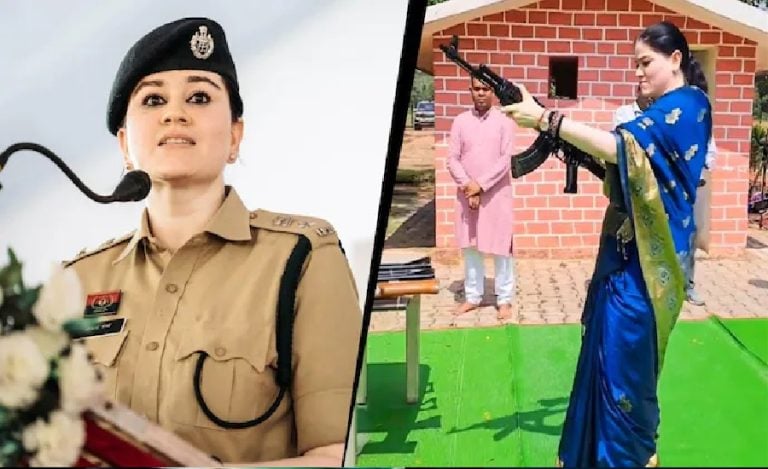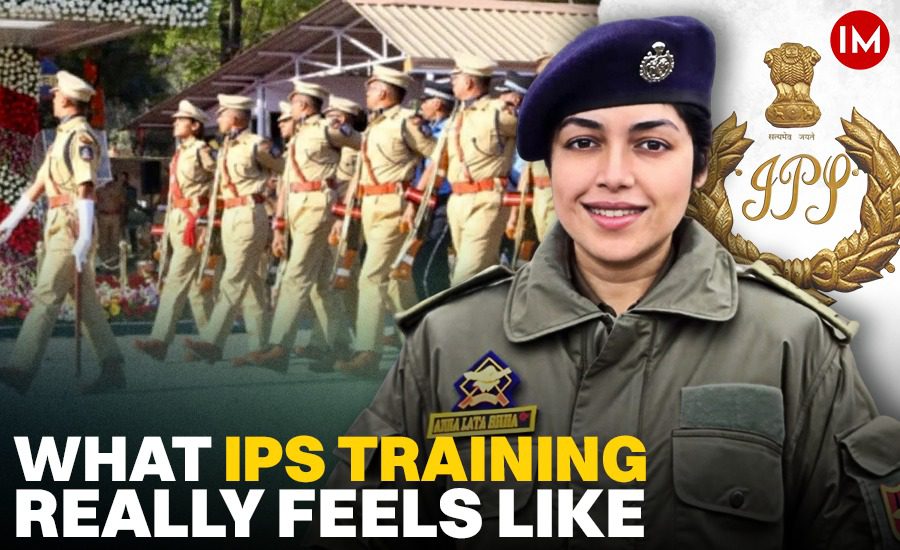
For many civil service aspirants, the journey to the Indian Police Service is often imagined through books, strategy, and discipline. But the reality of the job begins only after selection—on the training grounds, in unfamiliar terrains, and eventually in the field where real challenges unfold. For IPS Anna Sinha (2022 batch, AGMUT cadre), the experience has been nothing short of transformative. From discovering her physical endurance during training to handling one of India’s largest drug seizures and addressing grassroots addiction issues in Delhi, her journey reflects the evolving role of women in policing.
FROM INDOOR PURSUITS TO DEMANDING TRAINING
Coming from a background rooted in indoor activities like debating, Model United Nations, reading, and classical music, Anna Sinha initially found the physically intensive IPS training daunting. However, she describes the experience in one word—empowering. The transition from academic and intellectual engagements to physically demanding outdoor exercises was not easy, but it opened up new dimensions of her personality.
“At the Sardar Vallabhbhai Patel National Police Academy (NPA), I discovered strengths I did not know I possessed. Activities like long-distance running, endurance drills, and tactical exercises became opportunities to test limits. Over time, I not only adapted but also performed well, particularly in running,” IPS Anna Sinha shared in a conversation with Indian Masterminds.
The training environment, she says, allowed individuals to grow irrespective of gender.
Importantly, she notes that she did not personally face gender bias during her training. The academy fostered an inclusive atmosphere where trainers focused on helping every trainee improve. This equal approach helped break preconceived notions about gender roles in physically demanding professions like policing.
THE TOUGHEST MOMENTS BECOME THE MOST MEMORABLE
Some of the most difficult phases of IPS training often leave the strongest impressions. For Anna Sinha, these moments became defining experiences.
One such exercise was the Battle Inoculation module conducted during training in Mussoorie. Trainees were required to crawl through long stretches of cold water mixed with nettles, all while being exposed to tear gas shelling in harsh weather conditions. The combination of physical discomfort and mental stress made it one of the most intense training exercises.
Another demanding experience was the Greyhound attachment, which involved jungle survival training and exposure to anti-Naxal operations. For a week, trainees operated in continuous rain, without access to basic comforts. They cooked their own food, slept on plastic sheets, and endured nights where rainwater would soak everything. One such night, when heavy rain flooded their makeshift arrangements, felt endless.
Yet, these experiences brought a sense of achievement. Overcoming such conditions instilled confidence that no challenge would feel insurmountable afterward.
“These are the moments that reshape one’s mental framework and build a strong sense of capability,” she said.
CRACKING A MAJOR DRUG NETWORK IN ANDAMAN & NICOBAR ISLANDS
After training, Anna Sinha was posted in the Andaman and Nicobar Islands, a strategically sensitive region with unique law enforcement challenges. During her tenure, a major drug seizure operation brought national attention.
In a joint effort involving the Andaman and Nicobar Police, the Indian Navy, and the Indian Coast Guard, authorities intercepted a fishing vessel at sea. The operation led to the capture of five Myanmarese nationals and the seizure of methamphetamine valued at approximately ₹25,000 crore—one of the largest drug hauls in India.
The drug trafficking network in this region operates across international maritime boundaries. Smugglers transport drugs from Myanmar through the Indian Ocean, targeting markets in India, Sri Lanka, and even Australia. By staying close to maritime borders, traffickers attempt to exploit jurisdictional gaps, making enforcement difficult.
In India, states like Tamil Nadu and West Bengal often serve as entry points for these narcotics. The Andaman and Nicobar Islands, due to their location between these routes, become a critical interception zone.
WHY ISLAND REGIONS ARE VULNERABLE
“The vulnerability of the Andaman and Nicobar Islands to drug trafficking is shaped by geography and proximity. One major factor is its closeness to the infamous Golden Triangle, a region known globally for drug production, particularly methamphetamine,” Ms Sinha shared.
Additionally, vast and porous coastal boundaries make surveillance challenging. Unlike land borders, maritime routes offer traffickers greater flexibility and anonymity. Boats can change routes quickly, operate in international waters, and avoid detection unless intelligence inputs are precise.
While tourism exists in the islands, Anna Sinha clarifies that coastal vulnerabilities and geographic positioning play a far more significant role in enabling drug trafficking networks.
GROUND REALITY OF DRUG ABUSE IN DELHI
Later, as Station House Officer (SHO) of Kotwali in Delhi, Anna Sinha encountered a very different dimension of the drug problem. Contrary to the common perception that drug abuse is largely associated with affluent sections due to high costs, she observed widespread addiction among the urban poor.
“During field visits—often conducted in plain clothes—we came across a disturbing pattern. In one park, we noticed several homeless individuals lying in semi-conscious states. On further inquiry, it emerged that many were daily wage labourers addicted to injectable pharmaceutical drugs, including painkillers and antihistamines.”
These substances were cheap, easily available, and highly addictive. The addiction not only affected their health but also contributed significantly to petty crimes in the area. Despite this, these individuals were often dismissed as beyond recovery.
BREAKING THE BURARI DRUG NEXUS
The drug supply chain in areas like Burari revealed a structured network. Pharmaceutical drugs were diverted from government hospital supply chains through intermediaries. These drugs were then sold to local suppliers, who distributed them among vulnerable populations at relatively low prices.
Instead of relying solely on enforcement, Anna Sinha adopted a community-orientated approach. She organised a “Sampark Sabha” in the same park where she had observed the addicts. The response was overwhelming, with nearly 400–500 individuals attending.
Through direct interaction and a structured questionnaire, she identified key issues driving addiction—low wages, exploitation by contractors, irregular payments, and lack of access to welfare schemes. Many attendees expressed a desire to quit drugs and return to their families.
“Using this engagement, the police developed informant networks within the community. This intelligence-led approach helped identify suppliers, lay traps, and successfully arrest those involved in the illegal trade.”
REHABILITATION AND SYSTEMIC SOLUTIONS
Addressing addiction required more than arrests. Anna Sinha emphasised the need for systemic interventions. She recommended de-addiction camps in collaboration with civil authorities to support recovery.
Another major issue was the lack of identity documents among migrant labourers. Without valid ID proof, they were excluded from government welfare schemes, making them more vulnerable to exploitation and addiction. To address this, she suggested organising Aadhaar enrollment camps to ensure access to basic services.
She also highlighted labour-related issues, particularly non-payment of minimum wages by contractors. Tackling these structural problems was essential to reduce the conditions that push individuals toward substance abuse.
MESSAGE FOR ASPIRANTS
Reflecting on her journey, Anna Sinha believes that qualities like empathy, courage, and endurance are essential in public service. She emphasises that these attributes often come naturally to women and can be powerful assets in administrative roles.
“Move forward with confidence and purpose. The challenges are real, but so are the opportunities to create meaningful impact. Women candidates should forge ahead with courage; the future is theirs to win,” IPS Anna Sinha concludes.