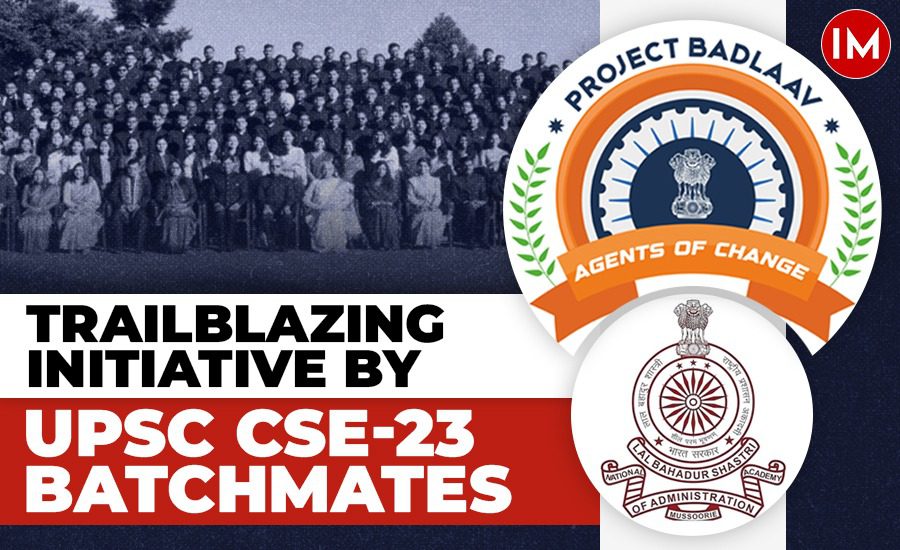
After passing the UPSC Civil Services Examination, candidates proceed to LBSNAA for the foundation course, marking the beginning of their training. Upon completion, they officially become officers and embark on their careers, often initiating projects that bring about positive change in people’s lives. However, even before the foundation course for the successful candidates of UPSC CSE-23 has commenced, many have already launched an initiative called Project Badlav. This endeavor aims not only to benefit the general public in the future but also to guide incoming trainee officers.
Project Badlaav serves as a repository for innovative ideas and best practices from around the world that can be implemented within the officers’ domains during their tenure. It provides a platform for serious discussions on how these new officers can tackle significant governance issues, sharing the impactful work they have done or will do throughout their careers.
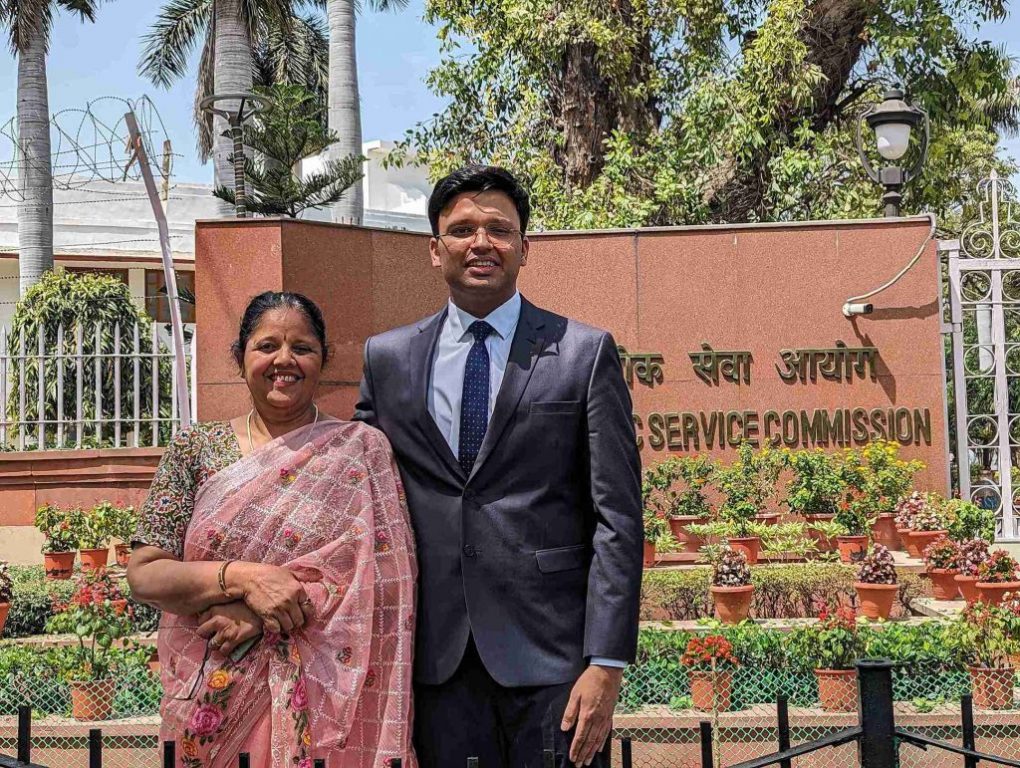
This project was initiated by a few graduates of UPSC CSE-23, including Rishabh Jain, who secured the 377th rank this year and was one of the core founders. This initiative really outlines a proactive and innovative approach taken by this year’s passouts to prepare themselves for their future roles as civil servants.
Indian Masterminds recently interviewed Mr. Jain to gain insights into this innovative endeavor.
THE IDEA: PROJECT BADLAV
Every year, all candidates who successfully clear the UPSC CSE attend the foundation course at LBSNAA, which lasts for about three and a half months. Following the foundation course, they proceed to their respective academies based on their cadre, such as IAS, IPS, IRS, or IFS, for further training.
Rishabh said that the objective was to establish a platform where we could familiarize ourselves with various initiatives and engage in projects representing our cohort.
“This meant that in the years ahead, while working after our postings, if we were to undertake any initiatives, we would already have a groundwork established during our training to support us. This platform would educate us in ways that would prove beneficial in the future. The central idea is to foster camaraderie among all services right from the foundation course itself,” he added.
What’s remarkable is that individuals here come from diverse backgrounds—some are engineers, others are doctors, and some are CAs – endowing them with extensive knowledge on various issues and potential solutions. In Project Badlva, a repository is being curated to document their best practices. This repository will serve as a valuable resource for batch members who wish to undertake initiatives after their postings.
Furthermore, a repository is being developed to compile best governance practices from around the world. Even after the batch officers have been posted, a repository of their ongoing work will be maintained. This will facilitate the sharing of initiatives among batch members.
This repository and project will remain a lifelong journey, which will keep us well knit as a team of officers and provide us with an intellectual bank of ideas to implement in our postings. The agenda for this group will be enhanced and widened along the same lines.
He said, “This will be the 99th foundation course (FC) batch in LBSNAA. Despite not having met in person yet, we initiated Project Badlav through discussions among ourselves. These conversations led us to realize the necessity of such a project.”
INSTITUTIONALIZATION
The aim is to institutionalize Project Badlav soon. Currently, a repository of governance best practices is being compiled. However, the plan is for it to become institutionalized and formalized once all the batchmates convene at LBSNAA. Moreover, it will be extended to future batches. Project Badlav is envisioned to become an integral part of every foundation course.
Rishabh elaborates that even before assuming civil service roles, candidates undergo extensive study. The objective is to translate that knowledge into practical solutions on the ground. If anyone encounters governance-related challenges after their posting, the repository prepared by the 99th FC batch will serve as a valuable resource. It will provide them with the best solutions or practices relevant to their issues.
MAKING CONNECTIONS
Rishabh and his team are gearing up to establish various channels, including a website and a unified grievance redressal portal, to efficiently address issues. They intend to kickstart these initiatives as soon as they commence the foundation course.
While the plan hasn’t fully materialized yet due to the batch not commencing, it’s already in motion. Over 500 batchmates have been enlisted for participation.
To connect with each other, Rishabh mentioned that they initially formed a WhatsApp group for candidates who had qualified for interviews after the mains result. Subsequently, once the final results were confirmed through e-summary letters, they established a dedicated group specifically for successful candidates. This process was entirely community-driven, organized, and managed by the selected candidates themselves.
He said, “A website dedicated to Project Badlav is currently in the works, and alongside this development, a core committee will be established. This committee will facilitate meetings to ensure decisions are made through a democratic process.”

WITH PRACTICAL
Rishab explains that Project Badlav is compiling a repository of best practices and solutions from around the world to address recent environmental challenges. For instance, citing the example of World Environment Day, he highlights discussions on global afforestation practices and associated issues.
During these discussions, numerous solutions were proposed to conserve water, resulting in the creation of a repository. One notable suggestion involved addressing the inefficiency of RO systems, which waste 3 liters of water to purify just one liter. The proposed solution entails implementing a system to collect this wasted water for various purposes, from washing to watering plants.
Project Badlav aims to curate a repository containing a multitude of such innovative ideas. This repository will serve as a valuable resource, enabling individuals to seamlessly sync with it and implement effective solutions in their respective areas of work.