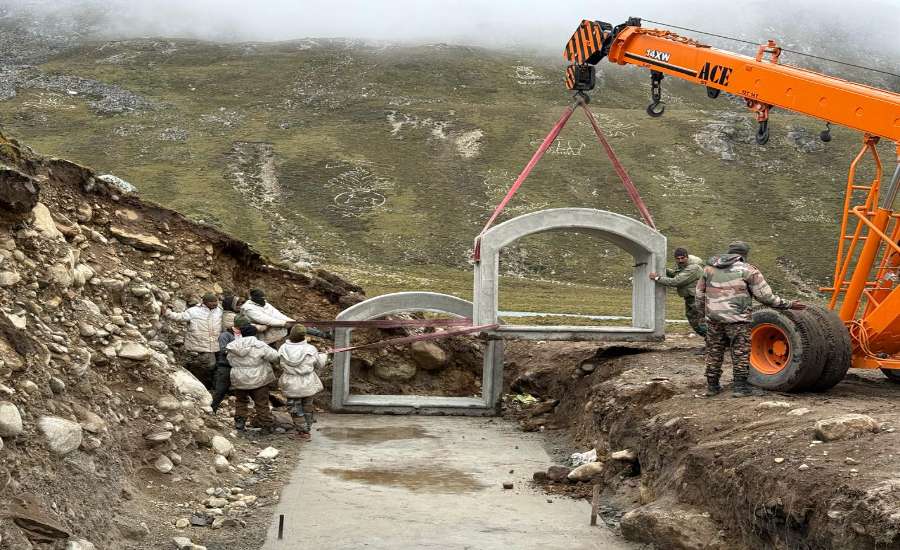
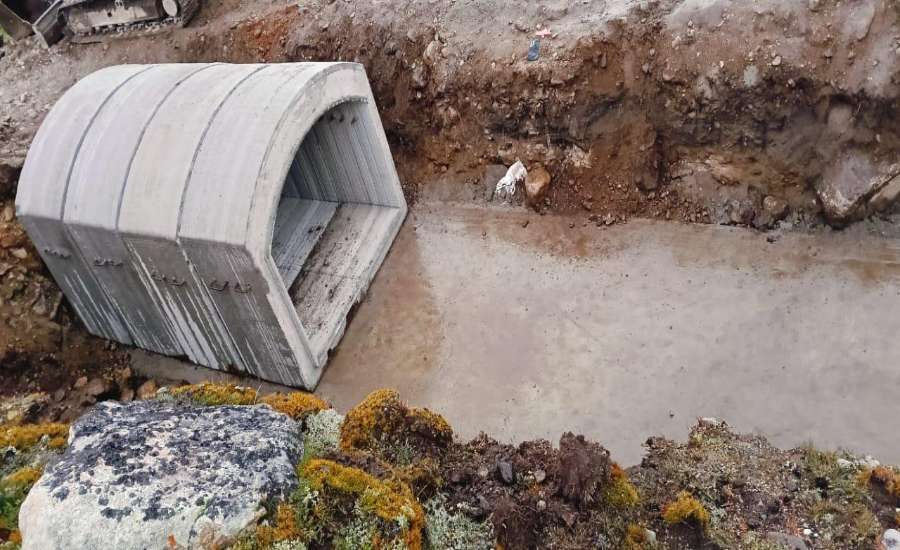
Sikkim: In a significant milestone for India’s defence infrastructure evolution, the Indian Army’s Trishakti Corps has operationalised on-site 3D Concrete Printing Technology in Sikkim and other forward locations. Developed in collaboration with the IIT Hyderabad under Project PRABAL, this advanced capability marks a major shift towards rapid, resilient, and technology-driven infrastructure creation in border regions.
This move not only enhances the Indian Army’s logistical and operational efficiency but also strengthens India’s preparedness along sensitive frontiers by enabling faster, safer, and more durable construction in challenging terrains.
Background of Project PRABAL
The Indian Army has been increasingly adopting next-generation technologies to overcome the challenges posed by harsh weather, high altitudes, and difficult terrains in forward areas. Traditional construction methods often demand long timelines, heavy manpower, and logistical challenges—especially near the Line of Actual Control (LAC).
Read also: Revolution in Defence: Indian Army Gets 500 Blast-Resistant 3D-Printed Bunkers Built in Just 7 Days!
Project PRABAL, initiated with IIT Hyderabad, seeks to transform this process through the incorporation of 3D Concrete Printing (3DCP), a technique that is already reshaping civil engineering and urban construction worldwide.
Prior trials and deployments of this technology in select locations had already demonstrated remarkable benefits. With its official operationalisation in Sikkim by the Trishakti Corps, India has taken a decisive step towards integrating 3DCP into military infrastructure development.
What Is 3D Concrete Printing Technology?
3D Concrete Printing (3DCP) is an automated construction technology where cement-based material is extruded layer by layer according to a pre-designed digital model.
The method is known for:
- High structural precision
- Minimal manpower requirements
- Rapid construction speed—from hours to a few days
- Reduced dependency on traditional formwork
- High strength and durability, even in extreme environments
- For forward military posts, this offers a transformational advantage.
Operationalisation in Sikkim: A Strategic Boost
The terrain of Sikkim, with its steep gradients, unpredictable weather, and strategic location near the LAC, demands infrastructure that is both robust and rapidly deployable.
The Trishakti Corps’ adoption of 3DCP allows the Army to:
- Build bunkers and sentry posts in significantly shorter time
- Enhance ballistic protection for troops
- Reduce the logistic burden of transporting bulky construction material
- Deploy structures with uniform quality and high precision
- Undertake construction activities even in remote, high-altitude regions where traditional equipment is hard to operate
This capability is especially crucial given the heightened strategic importance of the eastern sector.
Advantages for India’s Defence Preparedness
1. Faster Construction in High-Risk Areas: 3DCP enables rapid deployment of critical infrastructure—often within a few days—reducing exposure of personnel to enemy observation and fire.
2. Enhanced Ballistic Strength: The printed structures offer improved resistance against small arms fire and fragmentation, boosting troop safety.
3. Flexibility in Design & Deployment: Digital modelling allows customised bunker designs adapted to terrain, threat level, and tactical needs.
4. Cost & Resource Efficiency: Automation minimises labour requirements and reduces construction waste.
5. Future Integration with Autonomous Systems: In the longer term, 3DCP can be integrated with robotics, drones, and unmanned logistics systems for entirely remote construction in conflict zones.
The IIT Hyderabad Partnership: Academia Supporting National Security
IIT Hyderabad has emerged as a national leader in advanced materials and concrete printing research. Under Project PRABAL, the institute collaborated closely with Army engineers to develop:
- Specialised high-strength concrete mixes
- Portable 3D printing systems suited for mountainous terrain
- Digital design models for bunkers and protective shelters
This academia-military partnership sets a benchmark for future innovation-driven defence initiatives.
A Step Toward Indigenous, Rapid Infrastructure Technology
India’s move to operationalise 3D concrete printing in forward areas aligns with wider national goals:
- Aatmanirbhar Bharat in defence technology
- Accelerated infrastructure development in border regions
- Modernisation of the Army through indigenous capabilities
With successful deployments now underway, the technology can be scaled across other commands and adapted for civilian disaster relief, border outposts, and emergency shelters.
Read also: Project Trinetra: How Akola Police Are Using AI to Predict and Prevent Crime