Ahmedabad: Adani Green Energy Limited (AGEL) has reported strong operational and financial performance for the first half of FY2026-27, with revenue from power supply increasing 36% year-on-year to ₹8,299 crore and EBITDA from power supply rising 41% to ₹7,957 crore. The company’s energy sales grew 32% to 25,747 million units (MUs), while its operational renewable energy capacity expanded 24% year-on-year to 20.8 GW.
For the second quarter (Q2 FY27), revenue from power supply increased 45% year-on-year to ₹4,019 crore, while EBITDA from power supply rose 51% to ₹3,835 crore. Cash profit also recorded strong growth, increasing 35% to ₹4,176 crore in the first half and 45% to ₹1,951 crore in the second quarter.
The company attributed its performance to capacity expansion, improved operating efficiency and the deployment of renewable energy technologies across its solar, wind and hybrid projects. Its expansion in battery energy storage systems (BESS), particularly at Khavda in Gujarat, has also strengthened its position in India’s renewable energy storage sector.
Adani Green Energy’s Financial Performance in H1 FY27
AGEL’s financial results for the six months ended September 30, 2026, reflect growth in revenue, operating earnings and cash profit. The company recorded improvements in both its quarterly and half-yearly performance compared with the corresponding periods of the previous financial year.
Revenue from power supply increased from ₹6,088 crore in H1 FY26 to ₹8,299 crore in H1 FY27, representing growth of 36%. EBITDA from power supply rose from ₹5,651 crore to ₹7,957 crore, an increase of 41%.
The EBITDA margin from power supply also improved from 91.8% in H1 FY26 to 92.9% in H1 FY27, reflecting the company’s operating efficiency.
The key financial figures reported by the company are as follows:
| Particulars | QoQ Performance | Half Yearly Performance | |||||
| Q2 FY26 | Q2 FY27 | % change | H1 FY26 | H1FY27 | % change | ||
| Revenue from Power Supply | 2,776 | 4,019 | 45% | 6,088 | 8,299 | 36% | |
| EBITDA from Power Supply 1 | 2,543 | 3,835 | 51% | 5,651 | 7,957 | 41% | |
| EBITDA margin (%) | 90.5% | 92.0% | 91.8% | 92.9% | |||
| Cash Profit 3 | 1,348 | 1,951 | 45% | 3,094 | 4,176 | 35% | |
Source: Adani Green Energy Limited. Figures are based on the company’s reported results.
The results indicate that revenue and EBITDA grew faster in the second quarter than in the first half as a whole, while the EBITDA margin remained above 90% in both reporting periods.
Energy Sales Rise 32% to 25,747 Million Units
AGEL’s energy sales increased 32% year-on-year to 25,747 million units during H1 FY27. In Q2 FY27, energy sales rose 33% to 12,090 million units.
The company linked the increase to the expansion of its renewable energy portfolio and strong operating performance across its sites. Capacity additions in solar, wind and hybrid projects contributed to higher electricity generation during the reporting period.
The increase in energy sales also supported the growth in revenue from power supply, which reached ₹8,299 crore in H1 FY27 and ₹4,019 crore in Q2 FY27.
The company said its operating model combines capacity expansion with technology-led operations and maintenance. Its Energy Network Operation Center enables real-time monitoring of renewable energy plants across the country, helping improve plant availability and electricity generation while reducing operating and maintenance costs.
AGEL reported an EBITDA margin of approximately 93% for H1 FY27, reflecting the efficiency of its operating portfolio.
Operational Renewable Energy Capacity Reaches 20.8 GW
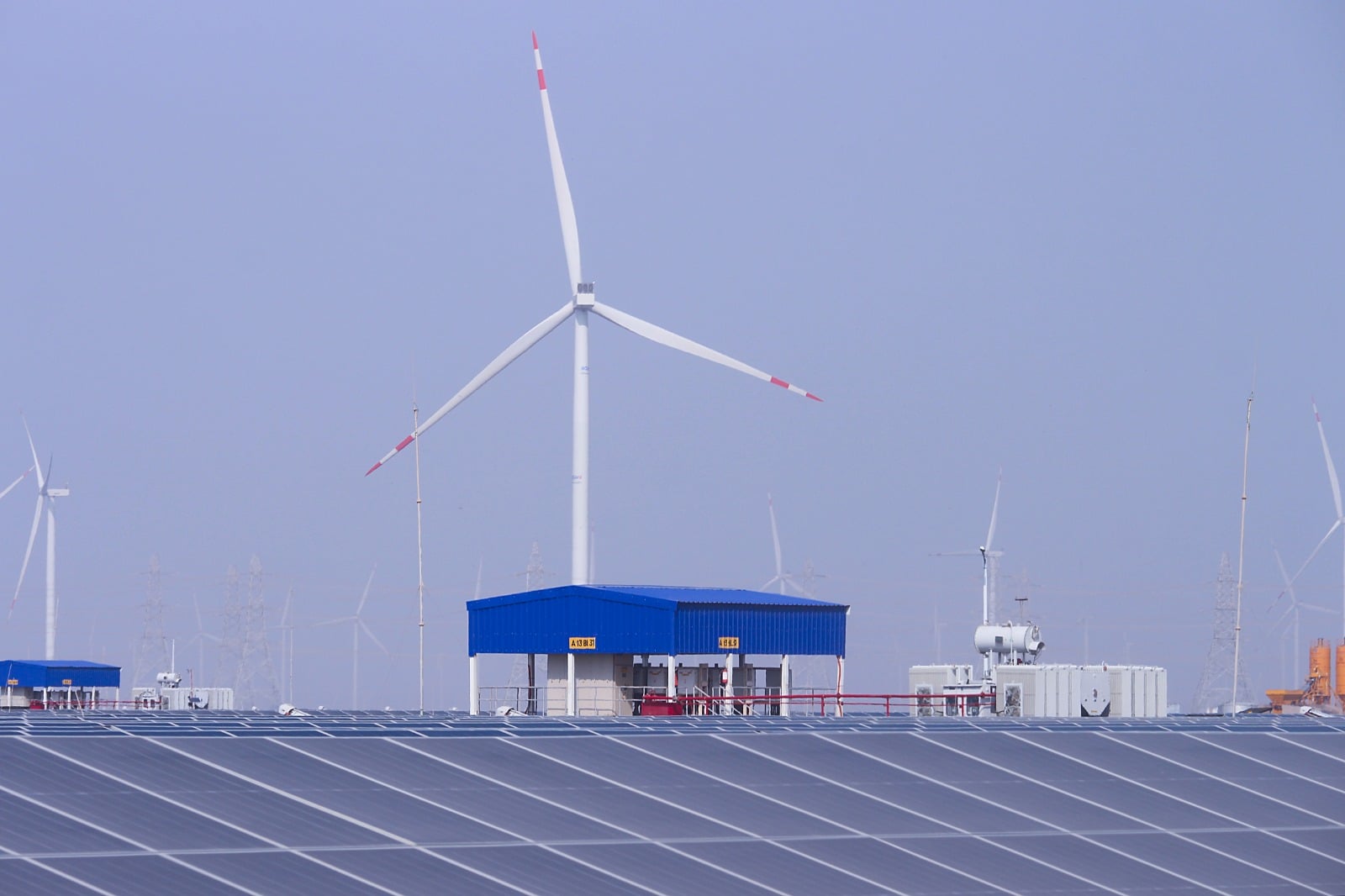
AGEL’s operational renewable energy capacity grew 24% year-on-year to 20.8 GW in H1 FY27. During the period, the company added 4,083 MW of greenfield renewable energy capacity across solar, wind and solar-wind hybrid projects.
The additions comprised 2,957 MW of solar capacity, 805 MW of wind capacity and 321 MW of solar-wind hybrid capacity.
The solar additions included 2,568 MW at Khavda in Gujarat and 389 MW in Rajasthan. Wind capacity additions comprised 666 MW at Khavda and 139 MW at Mundra, while the 321 MW of hybrid capacity was added at Khavda.
The expansion strengthens AGEL’s progress towards its target of achieving 50 GW of renewable energy capacity by 2030. The company is continuing to develop utility-scale solar, wind, hybrid and energy storage projects to support its long-term growth plans.
Battery Energy Storage Capacity Reaches 6.63 GWh
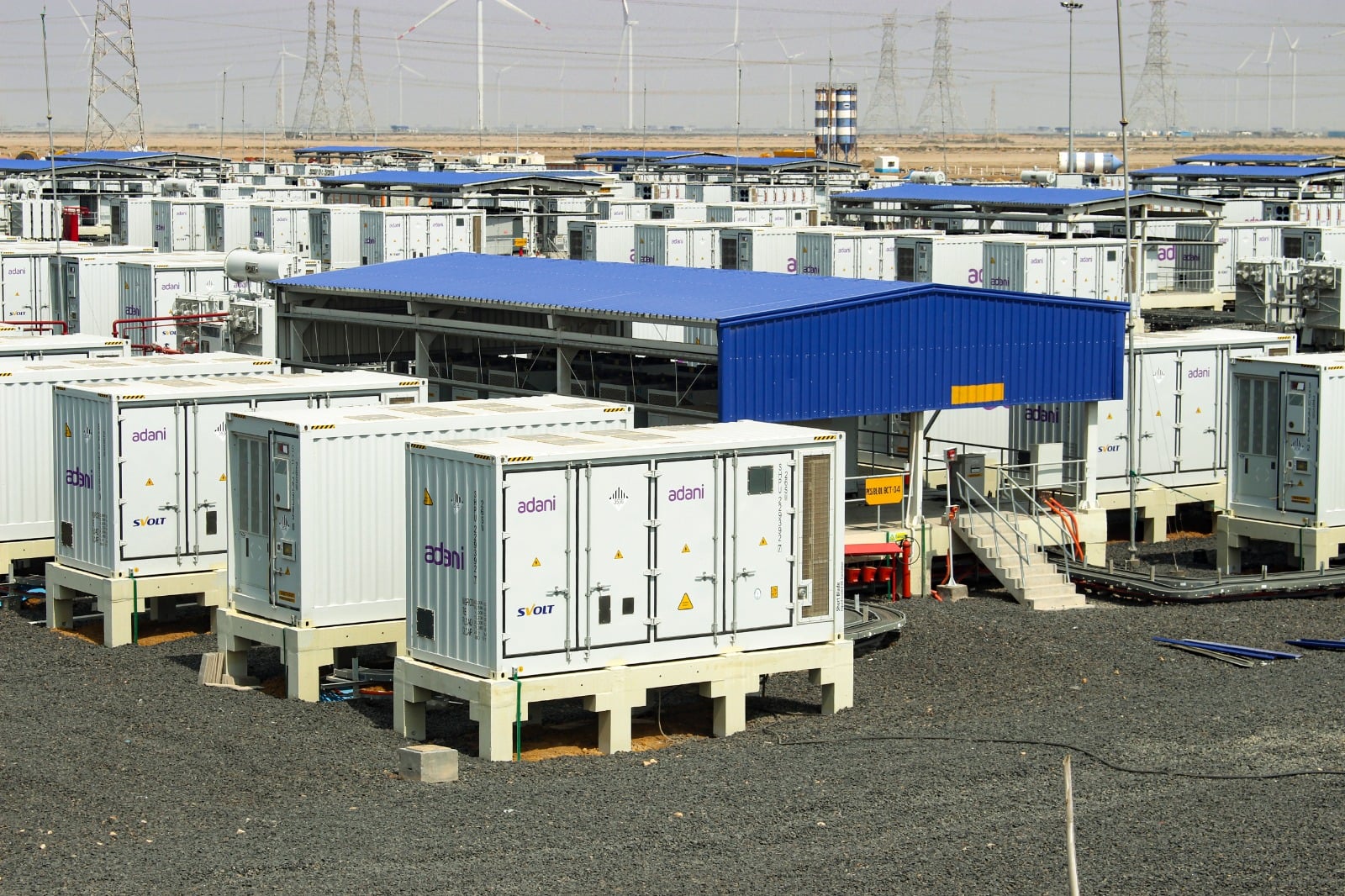
Battery energy storage has emerged as a key part of AGEL’s expansion strategy. During Q2 FY27, the company added approximately 3.08 GWh of battery energy storage capacity at Khavda, taking its cumulative operational BESS capacity to 6.63 GWh.
According to the company, its installed operational battery storage capacity accounts for more than half of India’s operational BESS capacity. AGEL also described the Khavda deployment as the world’s largest single-location battery energy storage installation.
The expansion is intended to provide greater flexibility in managing renewable energy generation. Battery storage can help store electricity when generation is available and release it when required, supporting the integration of intermittent solar and wind power into the electricity system.
AGEL indicated that its progress in battery storage could enable it to surpass its FY27 guidance of 10 GWh of BESS capacity, subject to continued execution and project development.
The company is also monitoring the availability of transmission infrastructure as it expands storage and renewable energy capacity.
Ashish Khanna Highlights Growth and Storage Expansion
Commenting on the results, Ashish Khanna, CEO of Adani Green Energy, said the company’s performance reflected strong execution during the first half of FY27.
He highlighted the 24% year-on-year growth in the operational renewable energy portfolio to 20.8 GW and the 32% increase in energy sales. According to him, the performance was supported by strong operations across the company’s solar, wind and hybrid assets.
Khanna also pointed to the company’s second-quarter performance, when energy sales increased 33% year-on-year, revenue from power supply rose 45% to ₹4,019 crore and EBITDA from power supply grew 51%.
He described the expansion of operational BESS capacity at Khavda to 6.63 GWh as a significant milestone, adding that AGEL’s storage portfolio accounted for more than half of India’s operational capacity.
The company said it would continue scaling up energy storage while keeping a close watch on transmission infrastructure availability.
Khavda Renewable Energy Project Progresses Towards 30 GW
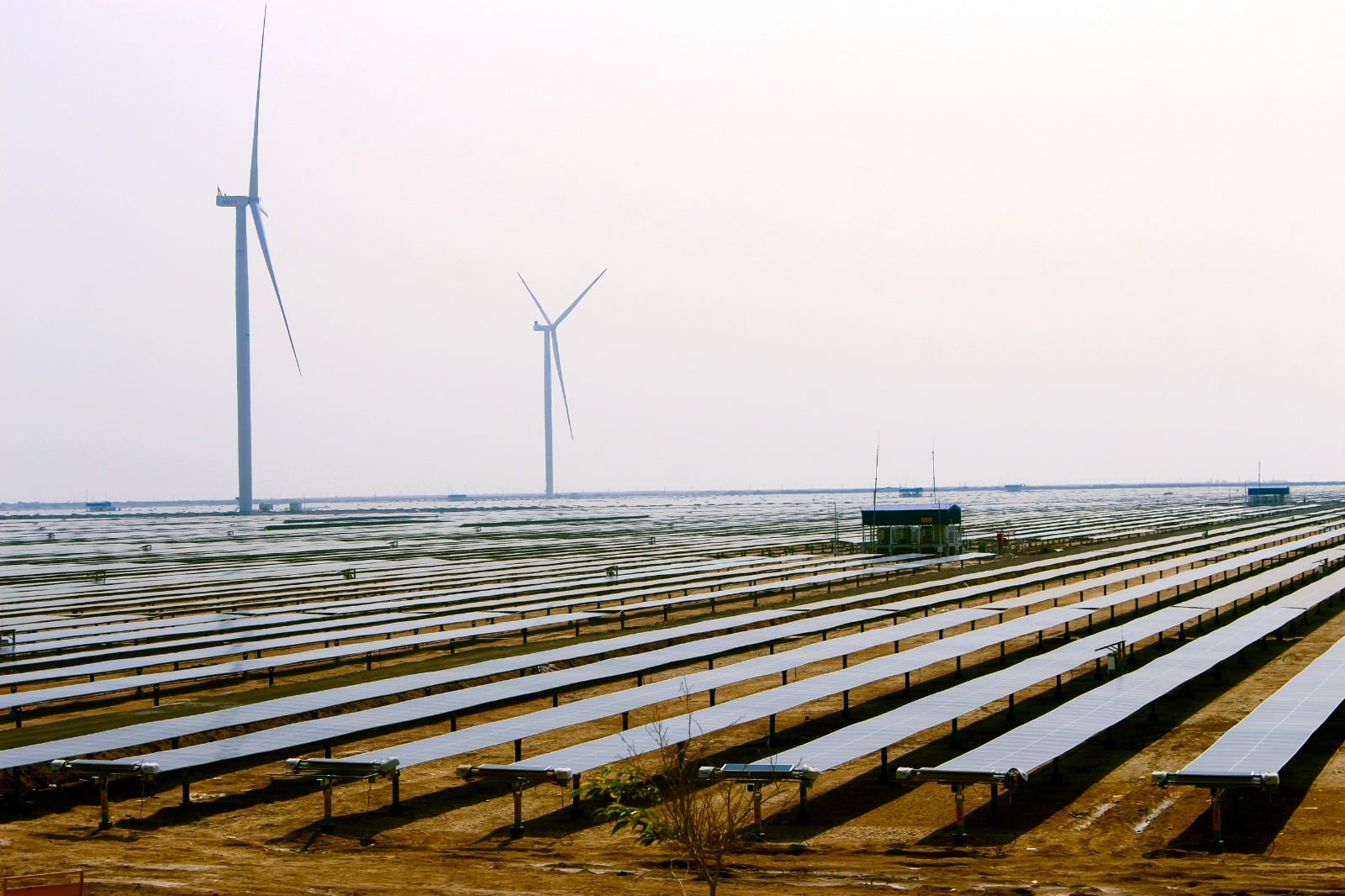
AGEL is developing a 30 GW renewable energy project at Khavda in Gujarat, spread across approximately 538 square kilometres. The company describes the project as the world’s largest renewable energy plant under development at a single location.
The area covered by the project is approximately five times the size of Paris. The development is intended to establish a global benchmark for the construction and operation of ultra-large-scale renewable energy installations.
According to AGEL, the operational capacity at Khavda has increased to approximately 10.8 GW from 7.1 GW a year earlier.
The company’s reported Khavda portfolio stood at 10,752 MW of solar, wind and hybrid capacity. This figure includes 10,002 MW of AGEL’s own generation capacity and an additional 750 MW established for other Adani Group companies.
AGEL is targeting 30 GW of renewable energy capacity at Khavda by 2029. To accelerate project execution, it is deploying a combination of manpower, localised supply chains and advanced technologies, including robotic solar module installation.
The company is also using battery storage to address renewable energy curtailment challenges at Khavda. Storage systems can improve flexibility in managing generation and help make better use of electricity produced by solar and wind assets.
Capital Expenditure Rises 38% to ₹17,160 Crore
AGEL invested approximately ₹17,160 crore in capital expenditure during H1 FY27, representing a 38% year-on-year increase.
The investment reflects the company’s continued spending on renewable energy capacity expansion and associated infrastructure. Its capital deployment supports the development of solar, wind, hybrid and battery storage projects, including the large-scale Khavda development.
The company said it remains focused on disciplined capital deployment as it expands its operational portfolio and works towards its longer-term capacity targets.
AGEL reported a net debt-to-run-rate EBITDA ratio of 5.6 times. This metric compares net debt with the company’s annualised operating earnings and provides an indication of its leverage relative to its earnings base.
Adani Green Energy Reports Strong ESG Performance
AGEL also highlighted several environmental, social and governance (ESG) recognitions received by the company and its projects.
The Khavda Battery Energy Storage System project received the Largest Project of the Year Award at India Energy Storage Week (IESW) 2026.
The company also reported the following recognitions and rankings:
- Ranked among the top 10 companies globally in ESG evaluations conducted by seven leading ESG rating agencies.
- Ranked No. 1 in the utility sector by NSE Sustainability Ratings and Analytics for the second consecutive year.
- Ranked No. 1 globally in the alternative electricity subsector by FTSE Russell for the second consecutive year.
- Received the Clean Power Generation Award at the Reuters Energy Industry Awards 2026 in New York.
- Achieved a CareEdge-ESG 1+ rating with a score of 87.3, which the company described as the highest score assigned across all sectors, for the second consecutive year.
- Ranked No. 1 in the power generation sector by CRISIL for the fifth consecutive year.
These recognitions form part of the company’s stated focus on sustainability, responsible operations and the development of renewable energy infrastructure.
AGEL also said its operating portfolio is certified as water positive, single-use plastic-free and zero waste-to-landfill.
Adani Green Energy’s Renewable Energy Targets
Adani Green Energy develops, owns and operates utility-scale, grid-connected renewable energy projects, including solar, wind, hybrid and energy storage installations.
The company currently has an operational renewable energy portfolio of 20.8 GW and operational battery energy storage capacity of 6.63 GWh, spread across 12 states, according to its announcement.
Its long-term targets include achieving 50 GW of total capacity by 2030, including 5 GW of pumped storage capacity. The company has also set a target of 50 GWh of battery energy storage capacity over the next five years.
Through its expansion plans, AGEL aims to increase renewable electricity generation, improve the integration of solar and wind power through storage and lower the levelised cost of energy through technology and operating efficiencies.
The H1 FY27 results reflect growth in renewable energy generation, financial performance and battery storage deployment as the company continues to expand its portfolio and advance its capacity targets.
Important Points
- Energy sales: Grew by 32% YoY to 25,747 MUs in H1 and 33% YoY in Q2 to 12,090 MUs
- Revenue from power supply: Grew by 36% YoY in H1 to Rs. 8,299 crore and ended 45% higher to Rs. 4,019 crore YoY in Q2
- EBITDA from power supply: Surged 41% YoY in H1 to Rs. 7,957 crore and up 51% YoY to Rs. 3,835 crore in Q2
- Cash profit: Up 35% YoY to Rs. 4,176 crore in H1 and grew by 45% YoY to Rs. 1,951 crore in Q2
- Capex of Rs 17,160 crore in H1 grew by 38% YoY; Net debt to run-rate EBITDA stands at 5.6x