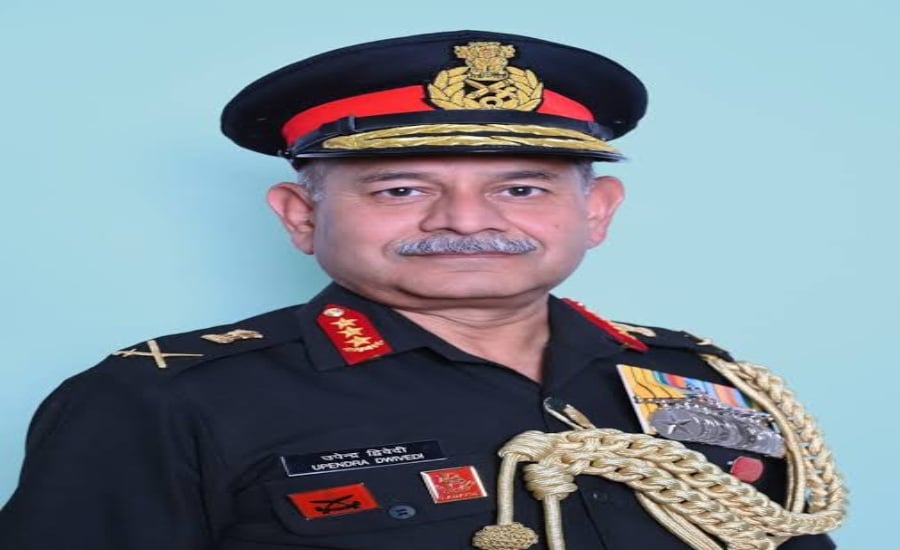
New Delhi: India’s defence manufacturing strategy needs a major change, with greater focus on developing and owning indigenous technologies. Former Indian Army Chief General Manoj Pande has called for India to move beyond the traditional Make in India approach towards Owned by India.
Speaking at the first stakeholder meeting of the ASSOCHAM Maharashtra Aerospace and Defence Council, he highlighted the importance of developing homegrown technology, intellectual property (IP) and critical defence systems to strengthen India’s long-term defence self-reliance.
Owned by India: India Needs To Move Beyond Defence Assembly
General Manoj Pande said that manufacturing defence equipment in India is not enough if the country continues to depend heavily on foreign technology.
Read also: This Make in India Drone Can Reach and Trace Pakistan Within Minutes
He explained that India needs to develop its own technologies, designs and important components instead of simply assembling equipment using technology received from other countries.
According to him, the focus is shifting towards owning the technology used in defence equipment. This will help India become more independent in developing and upgrading its military systems.
The shift is important because intellectual property ownership gives Indian companies greater control over product design, technical improvements and future development.
India’s Defence Industry Records ₹1.8 Lakh Crore Output
The meeting also highlighted the growing size of India’s domestic defence manufacturing industry.
Arun T Ramchandrani, Senior Vice President and Head of L&T Precision Engineering and Systems, and President of the Society of Indian Defence Manufacturers (SIDM), said that India’s domestic defence industry recorded approximately ₹1.8 lakh crore in output during the previous financial year.
He highlighted the industry’s steady growth, supported by domestic product development and increasing efforts towards defence self-reliance.
This growth shows that Indian companies are playing a bigger role in the country’s defence manufacturing sector. However, the next challenge will be to increase indigenous research, original product design and advanced technology development.
Maharashtra Aims To Become A Major Defence Manufacturing Hub
The ASSOCHAM Maharashtra Aerospace and Defence Council meeting brought together industry representatives and other stakeholders to discuss opportunities in India’s aerospace and defence sector.
Milind Hardikar, Chairman of ASSOCHAM Maharashtra State Council, highlighted that the future of the industry will depend not only on manufacturing capacity but also on the ability to design, develop and continuously upgrade advanced technologies.
ASSOCHAM Secretary General Saurabh Sanyal also stressed the importance of moving beyond import substitution towards indigenous design, innovation, technology development and exports.
He said Maharashtra has strong potential because of its industrial base, engineering expertise, aerospace and automotive industries, MSME network, research institutions and skilled workforce.
Key Defence Technologies Identified For Indigenous Development
The meeting identified several areas where Indian companies could increase their domestic manufacturing and technology development capabilities. These include:
- Specialised Alloys: Advanced materials required for demanding defence applications.
- Submarine Systems: Development of submarine components and related technologies.
- Stealth Technologies: Systems that help reduce the detection of military platforms.
- Aerospace Engineering: Advanced design and manufacturing of aerospace systems.
- Maintenance, Repair And Overhaul (MRO): Improving domestic facilities for maintaining and repairing aircraft and defence equipment.
- Dual-Use Technologies: Technologies that can be used for both civilian and military purposes.
Greater investment in these areas could help Indian companies develop stronger technological capabilities and reduce dependence on foreign suppliers.
Defence Council Targets March 2027 For Finalising Its Roadmap
The meeting also discussed creating a more organised system for cooperation between defence manufacturers, government departments, research institutions and the armed forces.
Participants proposed forming dedicated working groups, identifying priority areas and assigning responsibilities to industry representatives. The proposed roadmap includes the following milestones:
- Coming Months: Consolidation of priority areas and industry requirements.
- March 2027: Finalisation of the council’s charter and working-group structure.
- April 2027: Expected beginning of implementation activities.
The aim is to move beyond individual discussions and create a coordinated approach to developing Maharashtra’s aerospace and defence manufacturing ecosystem.
What Does The ‘Owned By India’ Approach Mean for India’s Defence Future
The call for moving from Make in India to Owned by India highlights an important change in India’s defence manufacturing ambitions.
Domestic production is an important step, but owning the technology behind military equipment is equally important for long-term strategic independence.
Developing indigenous intellectual property can help Indian companies improve defence products, introduce new technologies and compete in international markets.
It can also create opportunities for startups, MSMEs, research institutions and skilled engineers..However, achieving this goal will require long-term investment in research, advanced manufacturing, testing facilities, skilled manpower and stronger cooperation between industry and the government.
The discussions at the ASSOCHAM Maharashtra meeting underline the growing importance of building defence technologies in India and ensuring that Indian companies own and control more of the technology they develop.
Read also: How Indian Drone Sector Grew 65x In Just Four Years Under Make In India
FAQs
According to Arun T Ramchandrani, India’s domestic defence industry recorded approximately ₹1.8 lakh crore in output during the previous financial year.
Owned by India means developing and owning indigenous defence technologies, intellectual property, designs and critical components instead of depending mainly on foreign technology transfers and local assembly.
The proposed roadmap targets March 2027 for finalising its charter and working-group structure, with implementation activities expected to begin in April 2027.