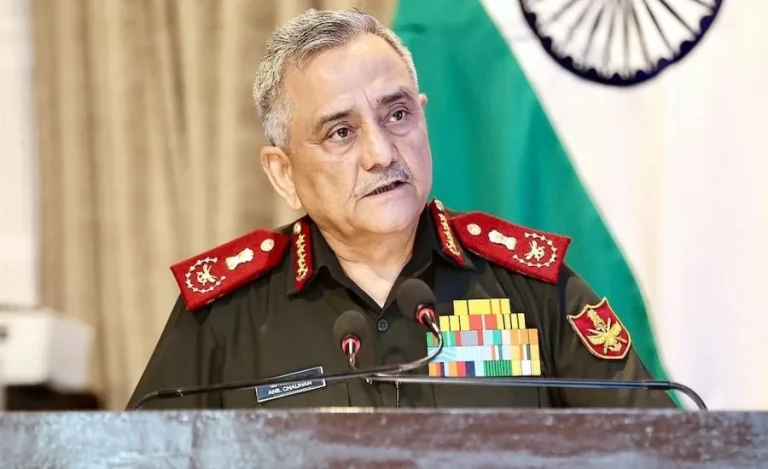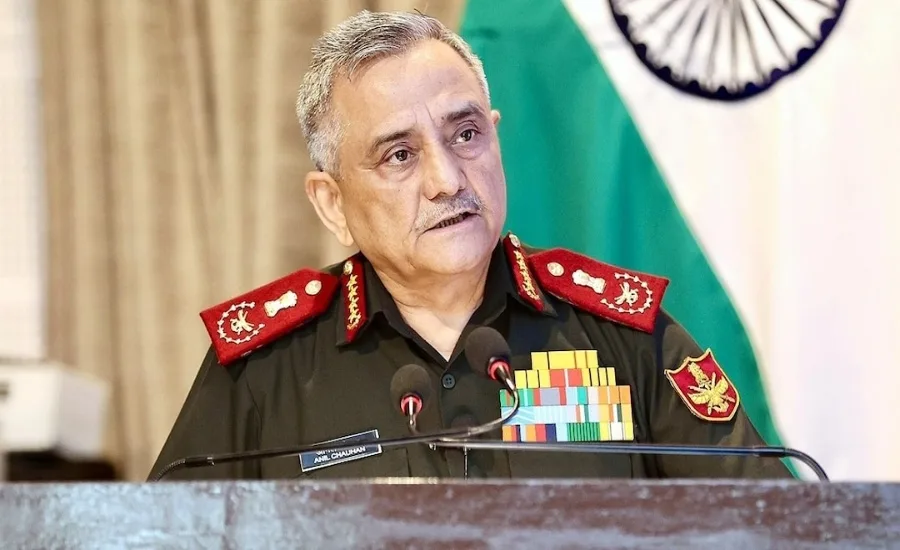
New Delhi: Former Chief of Defence Staff General Anil Chauhan has called for including strategic thinking in India’s national education system, warning that growing threats from cognitive warfare could affect the country’s national security.
He said that India’s security preparedness should not remain limited to the armed forces and government institutions. Universities, students and ordinary citizens must also understand modern security challenges and help build a stronger and more aware society.
Anil Chauhan Calls For Strategic Thinking In Education to Tackle Cognitive Warfare
General Anil Chauhan delivered the inaugural lecture on ‘Strategic Culture of India and National Security’ at Jawaharlal Nehru University (JNU) on November 3, 2026.
Read also: What Is Cognitive Electronic Warfare? Why Indian Army Is Investing Big in It
During his address, he highlighted the need to improve India’s understanding of strategic affairs by including Indian political thought, military history, diplomacy, statecraft, technology and national security in academic discussions.
He also stressed the importance of connecting universities with military war colleges. According to him, strategic awareness should become an important part of the country’s wider education system.
“The first task is to make strategic thinking part of national education,” Chauhan said.
Cognitive Warfare Emerging As A Major National Security Threat
The former CDS identified cognitive warfare as a growing challenge to India’s national security.
He explained that modern threats are no longer limited to traditional military attacks. Deepfakes, fake information, influence operations and social media can also be used to shape public opinion and influence people’s thinking.
He warned that misleading information can spread quickly and influence public perceptions before the actual facts become clear. Such activities can create confusion, increase social divisions and weaken public trust.
Chauhan said cognitive warfare should not be treated simply as a battle of competing stories or a public relations exercise. Understanding this threat must become an important part of India’s national resilience.
Why Informed Citizens Are Important For National Security
General Chauhan also explained that national security is much broader than protecting geographical borders or maintaining military strength.
According to him, security also includes political, ideological, cultural and technological areas. Therefore, citizens must understand the challenges that can affect the country.
He stressed that an informed society is an important strength for national security.
“No power, I repeat, no power can threaten the frontiers of a nation whose citizens are aware and informed,” he said.
He also highlighted the need to improve public awareness so that people can identify manipulated information and understand its possible impact.
Cognitive Warfare: Chauhan Highlights The Importance Of Dharma And Kautilya
Speaking about India’s strategic approach, Chauhan highlighted the importance of combining the principles of dharma with Kautilya’s ideas of statecraft.
He said India should maintain ethical values and responsible conduct while also developing strong strategic thinking, preparedness and a realistic understanding of international relations.
According to him, ethical responsibility and practical security planning should work together.
He also explained that peace cannot be maintained through good intentions alone. A country must have the ability to protect its interests and respond to emerging challenges.
“A mature society understands that peace is best preserved by preparedness and by resilience,” he said.
Economic And Technological Competition Becoming A Security Challenge
Chauhan also warned that international competition is expanding beyond traditional military power.
He pointed out that countries can use economic and technological resources to influence or pressure other nations. These areas include:
- International trade and finance
- Critical minerals and energy resources
- Advanced technology and artificial intelligence
- Global supply chains
- International standards
- Data and information
He explained that economic connections between countries can also become tools of pressure during international competition.
“Economic interdependence is being weaponised,” Chauhan said, highlighting the growing importance of economic and technological security.
Chauhan Calls For Promoting Indian Strategic Thought In Indian Languages
The former CDS also stressed the importance of developing an Indian strategic vocabulary.
He said India’s strategic ideas and perspectives should be communicated in Indian languages so that ordinary citizens can understand them easily.
According to him, strategic knowledge should not remain limited to military institutions, experts or academic discussions.
Making these ideas accessible to the wider population can improve public awareness and strengthen national preparedness.
“Indian thought must be articulated in Indian languages and in the language which Indians understand,” he said.
Why Strategic Thinking Is Important For Cognitive Warfare
General Anil Chauhan’s remarks highlight how national security is changing in the modern world.
While military strength remains important, threats involving artificial intelligence, deepfakes, cyber operations and information manipulation are creating new challenges.
His message focuses on building a society where educational institutions, government organisations, defence experts and citizens understand their role in national security.
The growing connection between technology, information and international competition makes public awareness and strategic education increasingly important for India’s long-term security.
FAQs
Cognitive warfare is the use of information, psychological influence, deepfakes and other methods to shape people’s thinking, public opinion and decision-making. It can create confusion, spread misleading information and weaken public trust.
General Anil Chauhan called for making strategic thinking an important part of India’s national education system. He also stressed the need to include national security, military history, diplomacy and Indian strategic thought in academic discussions.
He said informed citizens are essential for national security because they can recognise misleading information, understand emerging threats and help protect society from manipulation and division.