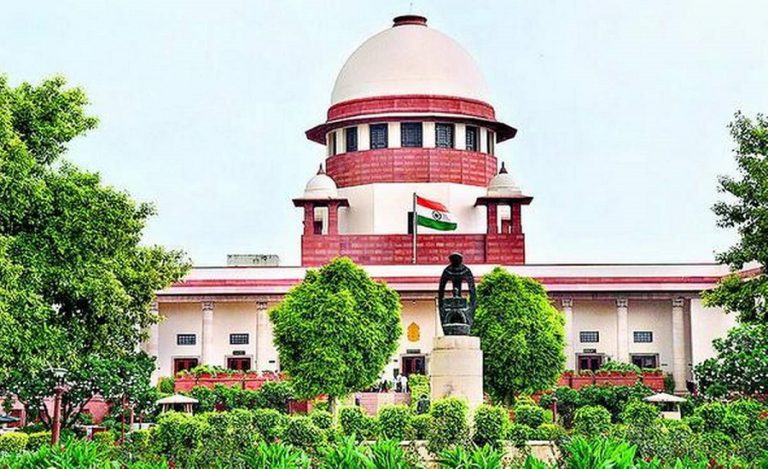
New Delhi: The Supreme Court has directed the Uttar Pradesh government to identify undertrial prisoners who have been granted bail but remain in jail because they cannot fulfil bail conditions. The exercise will cover all 75 districts of the state.
The Court has also directed the government to work with District Legal Services Authorities (DLSAs) to help these prisoners secure release. The order aims to ensure that people do not remain behind bars simply because they cannot arrange money, bail bonds or sureties.
UP Undertrial Prisoners: Supreme Court’s Directions To Uttar Pradesh Government
A bench of Justice MM Sundresh and Justice PB Varale issued the directions on November 4, 2026, while hearing a suo motu case related to bail reforms.
Read also: Why This Supreme Court Judgment Could Change Human Rights Litigation In India
The Court directed the Uttar Pradesh government to identify all undertrial prisoners who received bail but could not leave jail because they failed to meet the conditions imposed by trial courts.
The exercise must be conducted with the help of the respective District Legal Services Authorities (DLSAs).
The Court also clarified that the directions will apply across all 75 districts of Uttar Pradesh, not just the districts for which information has already been provided.
106 Undertrial Prisoners Still Waiting For Release
During the hearing, the Uttar Pradesh government informed the Supreme Court that 264 undertrial prisoners across 20 districts had received bail but were not immediately released.
Out of these 264 prisoners, 158 had been released, while 106 were still in jail due to difficulties in fulfilling bail conditions, including arranging sureties.
The information showed that the problem was not limited to a few individuals. It also raised concerns about the implementation of bail-related directions across the state.
The Court was further informed that the available figures covered only 20 districts, while information from the remaining 55 districts was still required.
Supreme Court Says Private Lawyers Cannot Be A Reason To Deny Legal Assistance
One of the important parts of the Supreme Court’s order was its clarification about legal assistance.
The Court said that undertrial prisoners must receive help from District Legal Services Authorities even if they have already hired private lawyers.
It made clear that prisoners cannot be treated differently based on whether they receive legal assistance through DLSA or have appointed their own advocates.
The Court observed that both groups face the same problem when they cannot fulfil bail conditions. Therefore, the benefit of legal assistance should not be denied to anyone simply because they have a private lawyer.
Trial Courts Asked To Relax Bail Conditions Where Necessary
The Supreme Court also requested the concerned trial courts to examine cases identified by the District Legal Services Authorities.
If necessary, courts should suitably modify or relax bail conditions so that eligible undertrial prisoners can be released.
The Court specifically highlighted that the responsibility for ensuring their release lies with the State government.
This direction is important for prisoners who have received bail but remain in custody because they cannot arrange sureties or meet other financial requirements.
Background: Why Undertrial Prisoners Remain In Jail After Getting Bail
An undertrial prisoner is a person who is facing a criminal case but has not yet been convicted by a court.
Sometimes, courts grant bail, but prisoners cannot leave jail because they are unable to arrange the required bail bond, money or surety.
For economically weaker prisoners, these conditions can become a major obstacle even after they receive a bail order.
The Supreme Court has previously taken steps to address this problem through its January 31, 2023, judgment on bail reforms.
The earlier directions aimed to create a permanent system for the speedy release of undertrial prisoners after bail is granted.
Under that framework, jail authorities are expected to contact the District Legal Services Authority if a prisoner is not released within seven days of receiving bail.
The DLSA can examine the prisoner’s financial and social circumstances and submit a report to the concerned court for possible relaxation of bail conditions.
Supreme Court’s Earlier Findings Highlight The UP Undertrial Prisoners Problem
The issue has been part of the Supreme Court’s ongoing efforts to improve the criminal justice system.
A report submitted by the National Legal Services Authority (NALSA) in 2023 identified around 5,000 undertrial prisoners who remained in jail despite receiving bail.
Of these, 2,357 prisoners received legal assistance, while 1,417 were released.
The findings highlighted several reasons for delayed release, including multiple pending cases and the inability to arrange bail bonds or sureties.
The latest directions seek to address these difficulties through better coordination between the state government, DLSAs and trial courts.
Read also: NDPS Act Reform Plea: Why Is the Supreme Court Concerned About Drug Trafficking in India?
FAQs
The state informed the Supreme Court that 264 undertrial prisoners across 20 districts had received bail. Of these, 158 were released, while 106 remained in jail due to difficulties in fulfilling bail conditions.
The Supreme Court has directed the Uttar Pradesh government to identify undertrial prisoners who have received bail but remain in jail due to their inability to fulfil bail conditions across all 75 districts.
Yes. The Supreme Court clarified that undertrial prisoners can receive assistance from District Legal Services Authorities even if they have hired private lawyers. Both categories must receive equal consideration.