Ahmedabad: Union Home Minister and Minister of Cooperation Amit Shah has set December 31, 2028, as the target for making Gujarat drug-free, a year ahead of the Centre’s December 31, 2029 deadline for a drug-free India. He also announced that a dedicated control room would become operational from December 1, with a mechanism to ensure action within three hours of receiving information about drug-related activities.
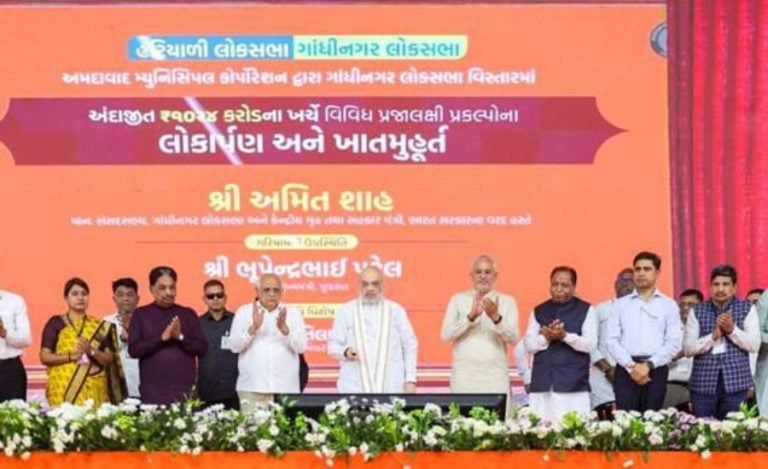
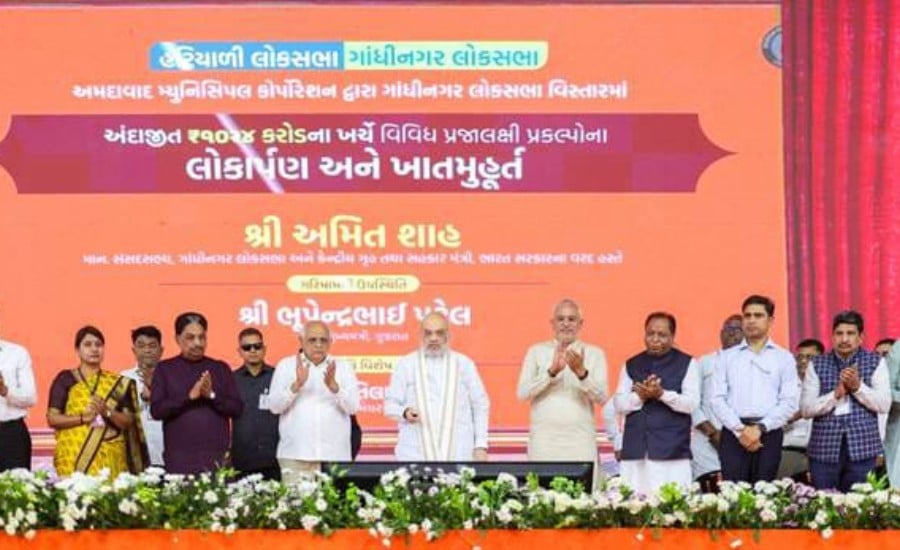
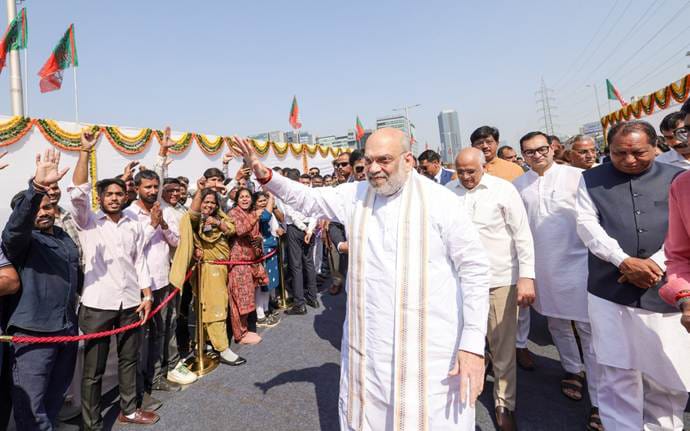
Shah made the announcements while addressing a public programme in Ahmedabad on November 9, 2026, where he inaugurated and laid the foundation stones for development projects worth approximately ₹1,400 crore. Gujarat Chief Minister Bhupendra Patel and other dignitaries were present.
Of the total projects, works worth around ₹1,024 crore have been undertaken by the Ahmedabad Municipal Corporation (AMC), while projects worth approximately ₹400 crore have been completed or initiated through the Gujarat Government’s Roads and Buildings Department and the Government of India.
Gujarat Targets Drug-Free Status by December 2028
Addressing the gathering, Shah said the Centre had set December 31, 2029, as the deadline for achieving a drug-free India after making progress towards the goal of a Naxal-free country. He urged citizens to help Gujarat achieve the target a year earlier, by December 31, 2028.
Read Also: Gujarat Sets 20% Green Cover Growth Target for Cities Over Next Decade
He highlighted the role of citizens, teachers and parents in identifying and reporting drug-related activities, stressing that the fight against substance abuse cannot be left to the government alone.
Key measures and appeals outlined by the Union Home Minister include:
- Drug information helpline: Citizens can report information about the sale or consumption of drugs by calling 1033. The identity of informants will remain confidential.
- Three-hour response mechanism: A dedicated control room is scheduled to become operational from December 1, with arrangements to initiate action within three hours of receiving drug-related information.
- Monitoring in schools: Teachers should arrange for testing and consult parents if they notice significant changes in a child’s behaviour.
- Public participation: Residents have been urged to report suspected drug-related activities in their neighbourhoods.
- De-addiction facilities: Centres are being established to support young people struggling with substance abuse. Shah assured that the identities of those seeking treatment would remain confidential.
Shah described drug abuse as a serious threat to the physical and mental health of young people, their concentration and the country’s security. He also said the government had developed a scientific mechanism to act against drug networks and ensure that those running the trade are brought to justice.
Ramapir No Tekro Slum Rehabilitation to Benefit Over 55,000 People
A major component of the development programme concerns the rehabilitation of residents of Ramapir No Tekro in Ahmedabad.
Shah said the initiative to provide permanent housing to slum dwellers had been launched by Prime Minister Narendra Modi in 2007, when he was Gujarat Chief Minister. The project is now being taken forward by the Bhupendra Patel-led state government.
Under the rehabilitation initiative, residents are being provided with permanent flats. Once the entire project is implemented, more than 55,000 people are expected to benefit from access to social security, recreational spaces, educational facilities and healthcare services within an integrated complex.
Shah also referred to an earlier initiative to rehabilitate nearly one lakh slum dwellers in Ahmedabad by providing them with permanent housing.
He urged residents to prioritise their children’s education and referred to the inauguration of two primary schools in the area. He added that the Ahmedabad Municipal Corporation had converted primary schools in the locality into smart schools.
Bopal-Ghuma Drainage Project and ISKCON Overbridge
The development package also includes infrastructure projects aimed at improving connectivity and addressing civic challenges in Ahmedabad.
Among the major works announced were:
- Bopal-Ghuma drainage: Foundation stone laid for a pump house to improve rainwater drainage and address waterlogging in the area.
- ISKCON overbridge: Work commenced on a four-kilometre-long overbridge intended to improve connectivity between Sarkhej and Gandhinagar.
- Jalasapur Water Treatment Plant: The facility was inaugurated as part of the region’s water infrastructure development.
- Education infrastructure: Two primary schools were inaugurated in the Ramapir No Tekro area.
Shah said the Bopal-Ghuma drainage system was being developed to prevent recurring waterlogging. He also stated that the ISKCON overbridge project was expected to be completed within three years, reducing travel time between Sarkhej and Gandhinagar.
₹25,000 Crore Development Works Completed in Gandhinagar Constituency
Shah said development projects worth approximately ₹25,000 crore had been completed in the Gandhinagar Lok Sabha constituency over the preceding seven years, including the works announced at the programme.
Reiterating his commitment to the vision of a “Green Gandhinagar and Developed Gandhinagar” constituency, he highlighted the pace of infrastructure and civic development under the leadership of Prime Minister Narendra Modi and Chief Minister Bhupendra Patel.
The Union Home Minister also referred to a recent meeting between the Union Ministry of Home Affairs and Gujarat’s Home Department, where discussions covered the implementation of the new criminal laws, modernisation of the state Home Department and measures to make Gujarat drug-free.
He concluded by urging citizens to participate actively in the campaign against drugs and extended his Diwali and Gujarati New Year (Bestu Varas) greetings to the people of Gujarat.
Read Also: Gujarat Launches ₹10-Crore Growth Fund for Startups, Offers Up to ₹2 Crore in Funding