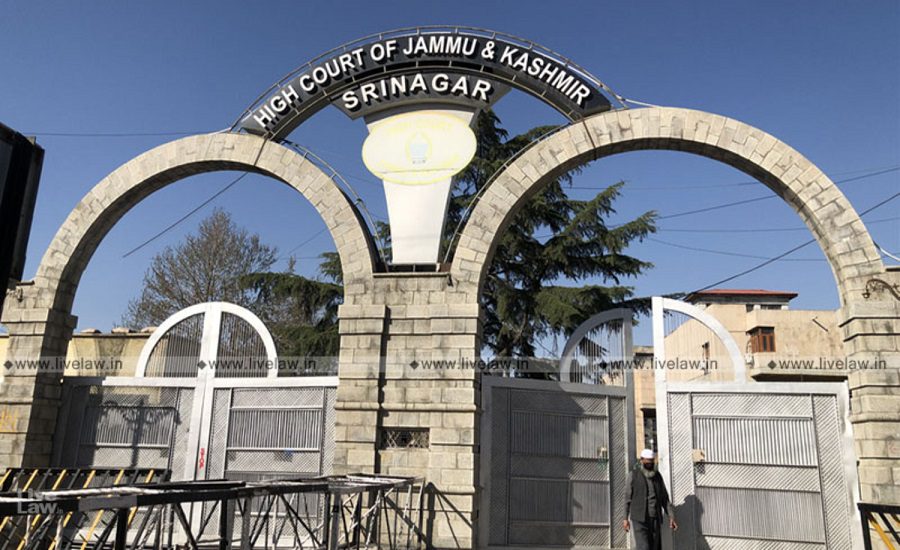
Advanced-stage recruitment cannot be abandoned without rational basis, the has ruled while setting aside the cancellation of a Gramin Dak Sevak (GDS) post. The Jammu and Kashmir high court held that once a recruitment process reaches an advanced stage, authorities cannot cancel it without valid and reasonable grounds. The judgment reinforces fairness, transparency, and accountability in public recruitment, especially in government job selections.
The decision came while hearing a petition challenging the cancellation of a GDS recruitment process that had already progressed substantially.
Background of Jammu and Kashmir High Court Ruling on Advanced-Stage Recruitment Rule
The case involved the cancellation of a Gramin Dak Sevak (GDS) post under the Department of Posts.
Read also: J&K High Court Rules Cross-LoC Trade With PoK as Intra-State Under GST, Reaffirm PoK as Part of J&K
The recruitment process had already moved forward. Candidates had applied. Merit lists were prepared. The process had reached an advanced stage. However, the authorities later cancelled the recruitment without clearly explaining any strong or rational reason.
The aggrieved candidate approached the High Court, arguing that the cancellation was arbitrary and unfair.
Advanced-Stage Recruitment Rule: Court’s Key Observation
The High Court made an important legal observation.
It said that:
- The government has the power to cancel a recruitment process.
- But such power cannot be used arbitrarily.
- If the recruitment has reached an advanced stage, cancellation must be supported by a valid and rational basis.
The Court emphasized that administrative decisions must follow the principles of fairness and reasonableness.
What Does “Advanced Stage” Mean?
The Court explained that when:
- Applications are invited,
- Candidates are shortlisted,
- Merit lists are prepared, and
- The process is near completion,
then it becomes an advanced-stage recruitment process. At this point, cancelling the process casually affects the rights and legitimate expectations of candidates.
Why Did the Court Set Aside the Cancellation?
After examining the records, the Court found:
- No strong justification was provided for the cancellation.
- There was no clear policy decision or legal requirement shown.
- The authorities failed to demonstrate compelling reasons.
Because of this, the High Court ruled that the cancellation was not legally sustainable. It therefore set aside the cancellation order and granted relief to the petitioner.
Legal Principles Applied Behind the Advanced-Stage Recruitment Rule
The High Court relied on well-established legal principles:
1. Doctrine of Legitimate Expectation
When a recruitment process progresses substantially, candidates develop a legitimate expectation that it will be completed fairly.
2. Non-Arbitrariness Under Article 14
Administrative decisions must not be arbitrary. They must be reasonable and supported by logic.
3. Transparency in Public Employment
Public jobs must be filled through transparent and fair procedures.
The Court reiterated that public authorities cannot act without accountability.
Impact of Advanced-Stage Recruitment Rule on Government Recruitment
This judgment has wider implications.
It sends a strong message that:
- Recruitment cannot be cancelled casually.
- Authorities must record clear reasons.
- Candidates’ rights must be respected.
The ruling is significant for thousands of candidates applying for GDS and other government posts across India.
The recruitment in question was related to the Department of Posts, which operates under the Government of India.
Read also: J&K Arms Licence Scam Case: High Court Awaits Final Call from Home Ministry on IAS Officers