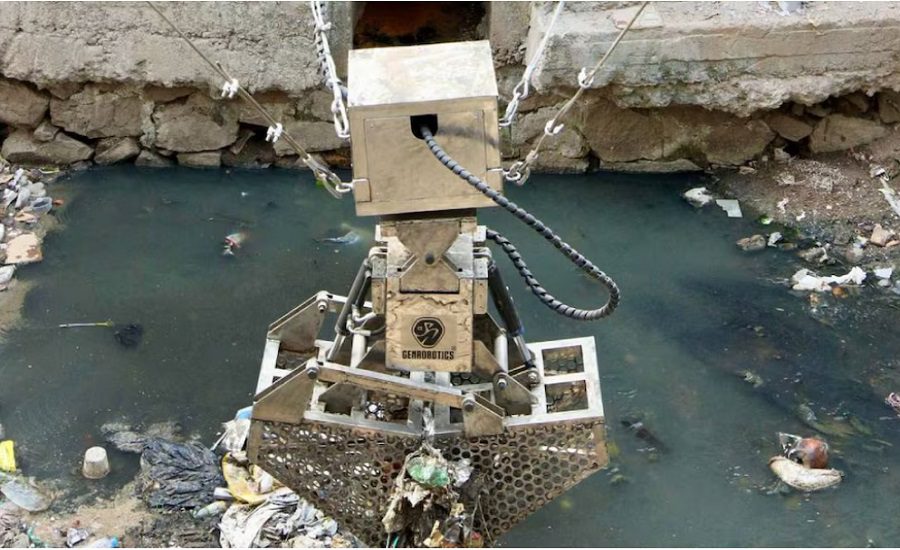
Thiruvananthapuram: In a significant step towards eliminating manual scavenging and improving worker safety, the Thiruvananthapuram Municipal Corporation has deployed G-Spider, an artificial intelligence-powered robotic canal-cleaning system, at the Amayizhanchan Canal near the railway station premises at Thampanoor.
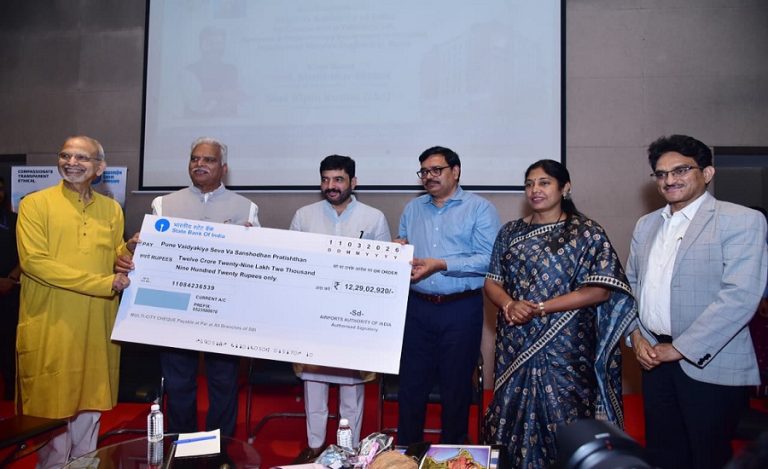
The initiative, implemented under Swachh Bharat Mission–Urban 2.0, aims to ensure safe, efficient, and human-free waste removal from high-risk and inaccessible drainage networks in the city. The robotic system was commissioned by Kerala’s Minister for Local Self-Governments, M. B. Rajesh.
A Solution to a Long-Standing Urban Sanitation Challenge
The Amayizhanchan Canal, particularly the covered stretch beneath Thampanoor Railway Station, has long posed operational challenges for sanitation workers. The section has restricted vertical clearance, continuous water flow, confined working conditions, and no safe entry points for workers, making conventional cleaning methods extremely difficult.
These challenges often required manual intervention in dangerous conditions. The deployment of the G-Spider robotic system is designed to eliminate such risks while ensuring regular and efficient canal maintenance.
Collaboration Between Government and Tech Innovators
The initiative is a collaborative effort between the Thiruvananthapuram Municipal Corporation and Technopark-based Genrobotic Innovations, the company behind the well-known robotic scavenger Bandicoot, which has been deployed across several cities in India to eliminate manual scavenging.
Officials said the project represents a major step towards technology-driven sanitation and safer waste management practices in urban areas.
How the G-Spider Robot Works
The G-SPIDER Automated Canal Cleaning Robot is specifically engineered to operate in complex and hazardous canal environments without requiring human entry.
The robotic system is built on Cable-Driven Parallel Robotics (CDPR) architecture and powered by AI-enabled vision and sensor intelligence, allowing it to detect, assess, and remove accumulated waste with precision.
Using advanced machine vision, the system can automatically identify various waste types and adapt to changing conditions such as water flow and structural obstacles within the canal.
The robot features a five-degrees-of-freedom robotic mechanism equipped with a biomimetic claw-type grabber, enabling it to securely pick up mixed and irregular debris.
Once extracted, the waste is directly transferred into designated collection vehicles, enabling a completely hands-free canal cleaning process from detection to disposal.
Improving Worker Safety and Sanitation Efficiency
Municipal officials highlighted that the deployment of the robotic system significantly improves the safety of sanitation workers by eliminating direct exposure to toxic gases, contaminated water, and hazardous waste materials.
The system can function even during high water levels and continuous flow conditions, ensuring uninterrupted cleaning operations.
The robot is capable of safely removing plastic waste, sharp debris, and other hazardous materials, improving sanitation standards while protecting workers from dangerous environments.
Boosting Drainage Efficiency and Preventing Urban Flooding
Regular and systematic cleaning through robotic intervention will also improve the efficiency of the city’s drainage networks.
Authorities said that better canal maintenance will help prevent blockages and reduce the risk of urban flooding, particularly during heavy rains.
By strengthening drainage efficiency, the initiative contributes to creating a cleaner and more resilient urban infrastructure system.
A Scalable Model for Other Cities
Officials believe the deployment of the G-Spider robot represents a transformative shift toward mechanised and technology-driven sanitation management.
By eliminating the need for workers to enter hazardous environments, the initiative safeguards sanitation workers’ lives while improving operational efficiency.
The model is expected to be replicable across other high-risk canals and drainage systems across Kerala and the country.
Advancing the Vision of Swachh Bharat Mission
Aligned with the objectives of the Swachh Bharat Mission, the adoption of advanced sanitation technology demonstrates how cities are increasingly using innovation to modernise urban waste management systems.
Such initiatives not only enhance cleanliness and infrastructure but also ensure the dignity, safety, and well-being of sanitation workers, a key priority in India’s sanitation reforms.