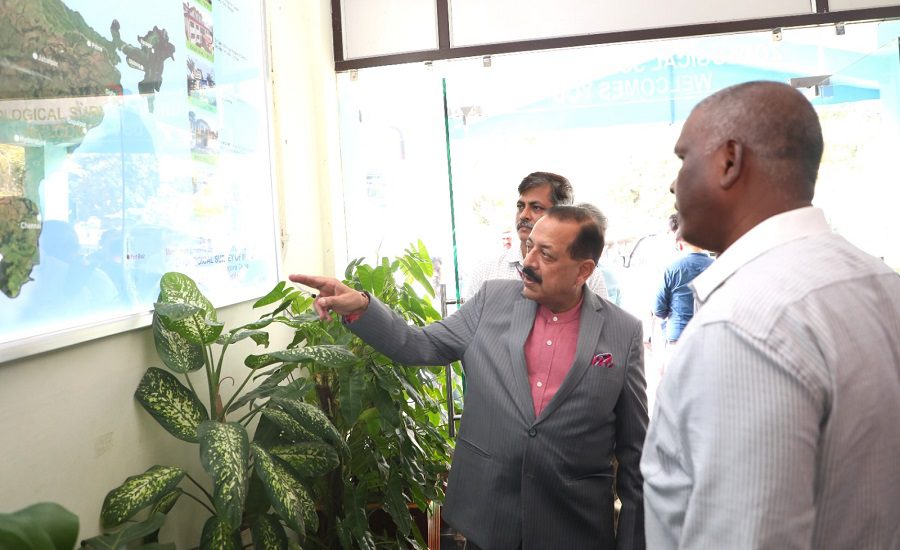
Sri Vijaya Puram / New Delhi: Union Minister of State (Independent Charge) for Science & Technology and Earth Sciences, and MoS for PMO, Personnel, Public Grievances, Pensions, Atomic Energy and Space, Dr Jitendra Singh, has underscored the critical importance of the Andaman & Nicobar Islands’ biodiversity for India’s environmental sustainability, climate resilience, and economic security.
The Minister made these remarks during his visit to the Andaman & Nicobar Regional Centre of the Zoological Survey of India (ZSI) at Sri Vijaya Puram, describing the island ecosystem as a “living laboratory of biodiversity” where science, conservation, and sustainable livelihoods must work in unison.
Island Biodiversity Vital for Climate Resilience and Blue Economy
Addressing scientists and officials, Dr Jitendra Singh highlighted that island biodiversity holds strategic significance not only for conservation but also for ocean-based economic growth, disaster resilience, and climate adaptation.
He stressed that authentic scientific data generated by institutions such as ZSI is essential for shaping national policies related to:
- Biodiversity conservation
- Climate resilience
- Marine and coastal ecosystem management
- India’s Blue Economy vision
According to the Minister, strengthening scientific institutions is key to ensuring that development and conservation progress together.
ZSI’s Role in Generating Evidence-Based Biodiversity Knowledge
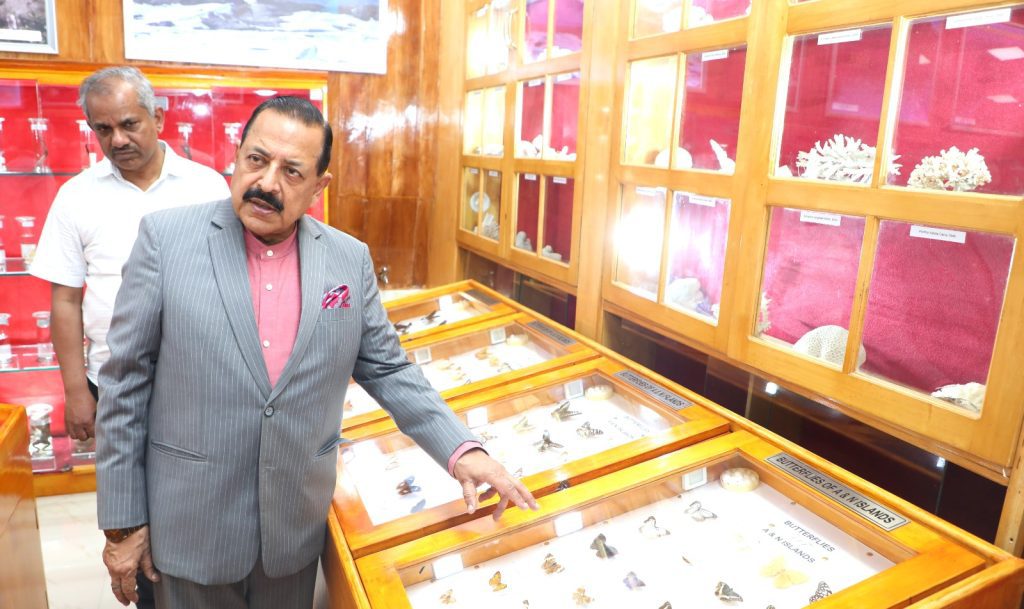
During the visit, Dr Jitendra Singh was received by Dr C. Sivaperuman, Scientist-F and Officer-in-Charge of the Andaman & Nicobar Regional Centre of ZSI. Dr Sivaperuman briefed the Minister on the Centre’s mandate, ongoing research initiatives, and its pivotal role in documenting and monitoring the islands’ unique faunal diversity.
The briefing highlighted ZSI’s work in:
- Taxonomy
- Molecular systematics
- DNA barcoding
- Biodiversity assessment
- Capacity building and training
The Minister noted that such scientific efforts provide a strong foundation for informed policymaking and conservation planning.
Five Decades of Scientific Service by ZSI Andaman & Nicobar Centre
Established in 1977, the Andaman & Nicobar Regional Centre of ZSI has completed five decades of sustained scientific research and service. Over the years, it has emerged as a nodal institution for tropical island biodiversity research.
Key achievements of the Centre include:
- Completion of nearly 90 research programmes across multiple faunal groups
- Publication of 85 books
- Publication of over 850 research papers in reputed national and international journals
These contributions have significantly enriched India’s biodiversity knowledge base and enhanced global understanding of island ecosystems.
ZSI Museum: A Hub for Education and Public Outreach
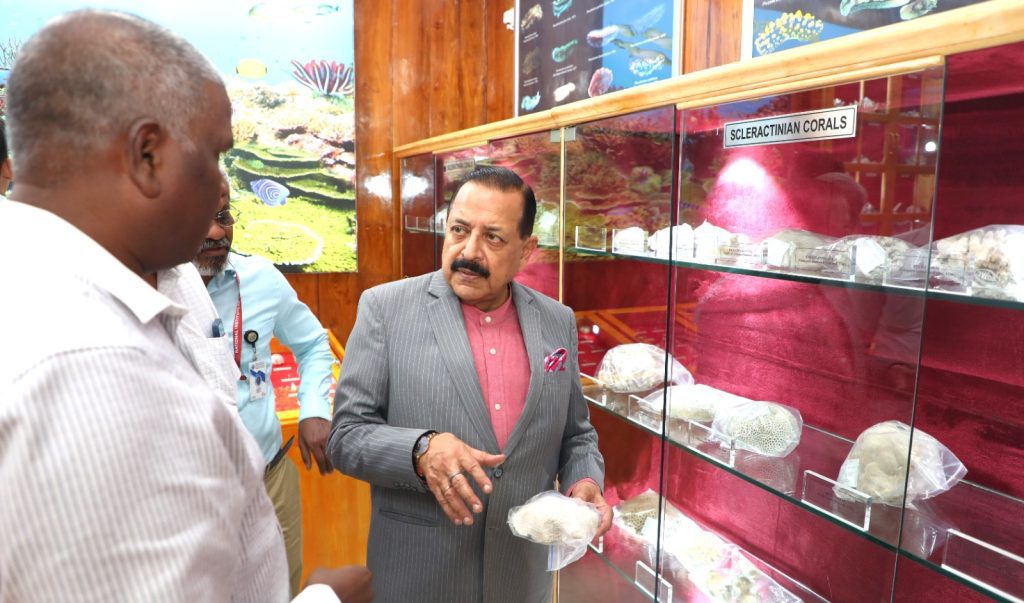
Dr Jitendra Singh also visited the ZSI Museum, one of the prominent educational and tourist destinations in the Andaman & Nicobar Islands. The museum houses approximately 3,500 specimens representing 22 faunal groups.
Officials informed the Minister that the museum attracts an annual footfall of 75,000 to 1,00,000 visitors, including:
- Students
- Researchers
- Tourists
- The Minister showed keen interest in:
- Curated reference collections
- Type specimens
Exhibits showcasing endemic, endangered, and threatened species of the archipelago
He appreciated the museum’s role in spreading awareness and fostering public interest in biodiversity conservation.
Discovery of New Species Highlights Global Importance of Islands
The Minister was briefed that scientists of the ZSI Andaman & Nicobar Centre have:
- Reported more than 20 species new to science, including the Narcondam Tree Shrew
- Documented nearly 900 new faunal records from the Andaman & Nicobar Islands, India, and Southeast Asia
These discoveries underscore the global ecological significance of the region and the need for continued scientific exploration and protection.
National Coral Reef Research Institute and Marine Conservation
Dr Jitendra Singh was also informed about the Centre’s role as the nodal institution for India’s first National Coral Reef Research Institute (NCRRI).
The NCRRI aims to:
- Strengthen coral reef research
- Monitor fragile marine ecosystems
- Support evidence-based marine governance
The Minister emphasized that such focused institutions are vital for safeguarding coral reefs and sustaining marine biodiversity amid climate change.
Integrating Science, Policy, and Community Awareness
Interacting with scientists and staff, Dr Jitendra Singh stressed the importance of integrating scientific research with public policy, conservation planning, and community engagement.
He noted that robust scientific institutions are central to:
- Achieving India’s environmental goals
- Protecting fragile ecosystems
Realizing the full potential of the Blue Economy in a sustainable and inclusive manner
Minister Praises ZSI’s Work and Public Outreach
Expressing his appreciation, Dr Jitendra Singh thanked Dr C. Sivaperuman and the ZSI team for the comprehensive briefing and museum walkthrough. He described the visit as an “extremely informative and educative experience.”
The Minister remarked that well-curated zoological collections not only advance scientific understanding but also inspire public consciousness about India’s rich and irreplaceable biodiversity heritage.
Read also: GMDC Acquires Indigenous Rare Earth Processing Technology from BARC for Ambadungar Project