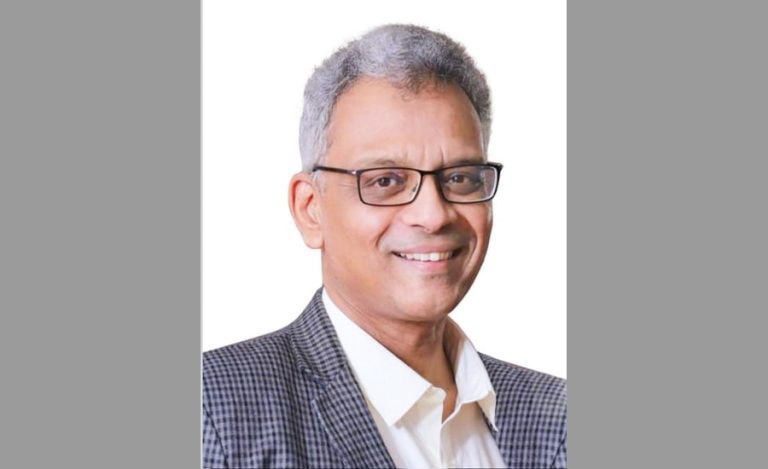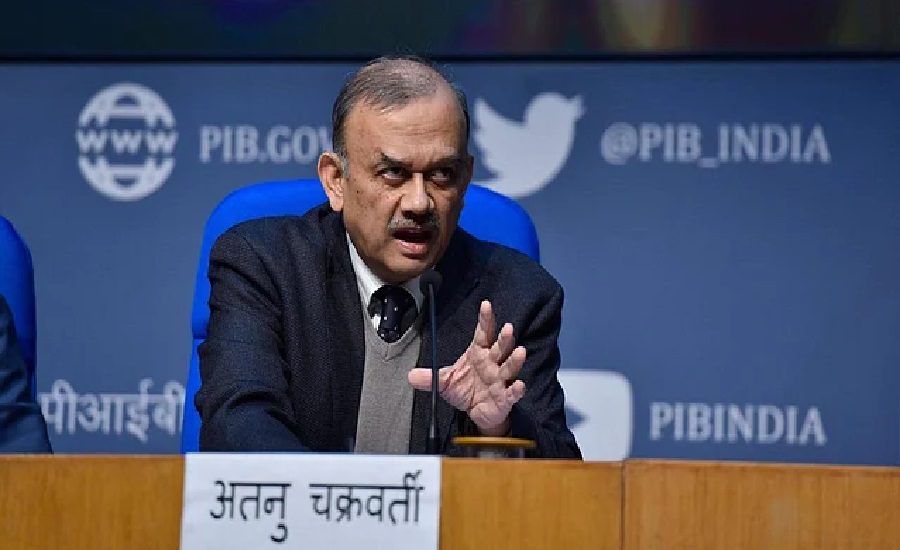
New Delhi: Atanu Chakraborty, a retired 1985-batch IAS officer of the Gujarat cadre, has come into sharp public focus after resigning as part-time chairman of HDFC Bank with immediate effect, citing ethical concerns and differences over internal practices.
His abrupt departure triggered strong reactions across Dalal Street, with HDFC Bank shares falling sharply and investors closely tracking the implications for governance at India’s largest private lender.
Sudden Resignation from HDFC Bank Over Ethical Concerns
Atanu Chakraborty resigned on March 18, 2026, stating that certain internal practices observed over the last two years were not aligned with his personal ethics and values.
According to his remarks, the decision was based on a breakdown between institutional functioning and his own principles.
He later stated publicly that his ideologies no longer matched with the organisation, making it appropriate to step away.
Resignation Sparks Sharp Market Reaction
His exit caused immediate concern in financial markets.
HDFC Bank shares reportedly fell nearly 9 percent during trading, leading to a market value erosion estimated at more than ₹1 lakh crore.
The sharp decline reflected investor sensitivity because of the significance of the chairman’s position in governance perception.
RBI Moves Quickly to Stabilise Governance
Following the resignation, the Reserve Bank of India moved to ensure continuity.
Keki Mistry was named interim chairman.
He has assured continuity in governance and business operations.
Atanu Chakraborty’s IAS Background
Atanu Chakraborty belongs to the 1985 batch of the Indian Administrative Service and served in the Gujarat cadre.
During his long bureaucratic career, he handled several important economic, finance and infrastructure assignments at both state and central levels.
Educational Background
He has a strong technical and financial academic profile.
His qualifications include:
• B.Tech in Electronics and Communication Engineering from National Institute of Technology Kurukshetra
• Postgraduate Diploma in Business Finance from ICFAI
• MBA from University of Hull
Senior Roles in Gujarat Government
During his service in Gujarat, he held several top administrative posts.
These included:
• Additional Chief Secretary, Industries
• Principal Secretary, Finance Department
These roles placed him at the centre of industrial and fiscal policy in the state.
Leadership in Major Gujarat Public Sector Institutions
He also led several major state-linked enterprises and institutions.
His positions included:
• Chief Executive of GSPC Group
• Chief Executive of Gujarat State Fertilizers & Chemicals
• Chief Executive of GSFS Limited
• Vice Chairman and CEO of Gujarat Maritime Board
• CEO of Gujarat Alkalis and Chemicals Limited
• CEO of Gujarat Infrastructure Development Board
Key Positions in Union Finance Ministry
At the Centre, Atanu Chakraborty held some of the most influential finance-related positions.
He served as:
• Secretary, DIPAM
• Secretary, Department of Economic Affairs
Both roles came under the Union Ministry of Finance and involved major financial policy responsibilities.
Role in National Investment Institutions
He also served as Chairperson of the National Investment and Infrastructure Fund.
This role connected him directly to large-scale infrastructure financing and sovereign investment policy.
International Financial Representation
Atanu Chakraborty represented India internationally in important financial institutions.
He served as:
• India’s Alternate Governor on the Board of the World Bank
• Member of the central board of directors of the Reserve Bank of India
Retirement from Government Service
He retired after serving as Economic Affairs Secretary between 2019 and 2020.
His retirement marked the end of one of the most finance-focused bureaucratic careers among senior IAS officers of his batch.
Appointment as HDFC Bank Chairman
In 2021, his appointment as chairman of HDFC Bank received approval from the Reserve Bank of India.
His selection was seen as bringing strong regulatory and governance experience to the bank.
Why His Exit Matters
His resignation carries weight because:
• he was seen as a governance-oriented institutional figure
• he had deep credibility in policy and finance circles
• he exited citing ethics rather than routine reasons
This has intensified public attention.
Why Dalal Street Reacted Strongly
Markets interpreted the resignation not merely as a leadership change but as a signal raising questions about internal institutional alignment.
That is why the reaction was immediate and sharp.
A Rare Bureaucrat-to-Banking Leadership Trajectory
Atanu Chakraborty remains one of the few retired IAS officers to move from top government finance positions into leadership of a major private banking institution.
His resignation has therefore become significant both in governance and market discussions.