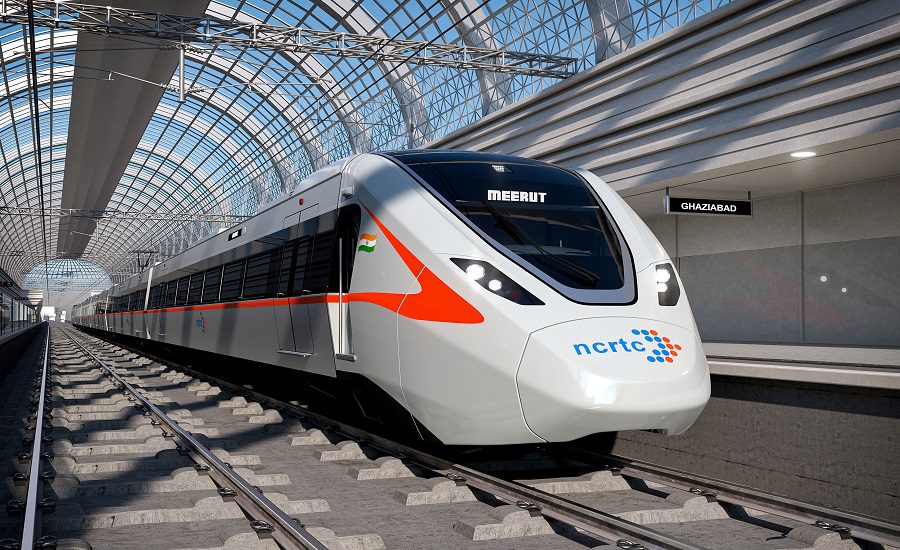
New Delhi: India’s ambitions to indigenously design and manufacture a high-speed train just took a major leap forward as the BEML–Medha consortium moves to lock in the final design and begin production of the country’s first domestic high-speed trainsets in mid-2026.
Backed by a strategic contract from Integral Coach Factory (ICF) awarded in 2024, this project represents a pivotal step in India’s broader aim to transition from imported rolling stock to high-speed trains designed and built within the country.
Details of Mumbai–Ahmedabad High-Speed Rail Project
The design phase of India’s first indigenous high-speed train is nearing its conclusion, with key subsystems already frozen.
This crucial advancement clears the path toward manufacturing, slated to begin between April and June 2026 — a timeline aligned with the Mumbai–Ahmedabad High-Speed Rail (HSR) project’s deployment goals.
Parallel Design Streams for Faster Delivery
To compress the development schedule and stay on track, design work on critical components is being conducted in parallel. These include:
- Car body structure
- Bogies and suspension systems
- Door and interior systems
Once finalized, production can begin without delay, a strategy intended to support the targeted prototype rollout in December 2026 and commercial readiness in 2027.
Key Features of Mumbai–Ahmedabad High-Speed Rail Project
Each initial trainset will include eight coaches—seven standard chair-car coaches and one executive coach. Key characteristics include:
- Operational speed: 250 km/h
- Design maximum speed: 280 km/h
- Passenger amenities: Modern seating, pantry services, contemporary toilets, and ergonomic interiors
The layout is inspired by the familiar Vande Bharat style, but significantly upgraded to meet high-speed rail standards.
Consortium Strength: BEML & Medha’s Roles
The project is executed by a consortium of:
BEML Ltd: Tasked with carbody fabrication at its Bengaluru facility — a plant experienced in metro and rail coach manufacturing.
Medha: Responsible for bogie manufacturing and critical control systems, including the Train Control and Management System (TCMS) — a digital backbone essential for safety, traction, braking and diagnostics.
The TCMS systems will be integrated with Siemens’ signalling solutions to ensure full compatibility with dedicated HSR signalling and train protection architecture.
Testing, Certification & Operational Goals
The inaugural prototype’s December 2026 rollout will mark the beginning of intensive testing, expected to extend into mid-to-late 2027.
Test phases will include:
- Static tests — electrical, braking, HVAC, door operation
- Dynamic trials — speed performance, ride comfort, stability
- Safety audit checks — electromagnetic compliance, system redundancies
These will be overseen by the Research Designs and Standards Organisation (RDSO) to secure compliance with Indian rail and adapted high-speed norms.
What is the Importance of Mumbai–Ahmedabad High-Speed Rail Project
The 508-km Mumbai–Ahmedabad corridor will transform inter-city travel, drastically cutting journey times between Maharashtra and Gujarat. Designed with advanced signalling, safety features, and dedicated high-speed tracks, the rail line has already made global headlines as a flagship project demonstrating India’s rapidly growing transport infrastructure capabilities.
Originally planned around imported Shinkansen technology, the shift toward indigenous trainsets marks a transformative move in India’s railway modernization strategy — balancing cost, maintenance readiness, and future upgrade pathways.